
Tashi, 29, arrived in the UK in November 2012 from Dharamsala, India. He was 18 when he fled Tibet in a three month journey through the borders of Tibet, Nepal and India, until he finally found sanctuary in a UN Refugee registration office. When I asked Tashi how he made this journey he replied “I walked”. He let a wide smile spread across his face, noting my shock. Once in Dharamsala there was no asylum process that would deem Tashi a Refugee, instead, in accordance with India’s relations with the Tibetan people, Tashi was given registration papers that deemed him a foreigner, to work, but not own his own home or his own land. These would be renewed every year. But arriving in Dharamsala, over 9000 miles from his home and culture, Tashi felt “half of his purpose” had been realised.
Related: Tibet: Inside the Occupation
Leaving home
Speaking of the reason in which he fled his family and home, Tashi’s case demonstrates a lack of political activity, conflict or even a real involvement with state affairs. Mirroring many other refugees, Tashi had little involvement in a decision that shaped the rest of his life. In a country and environment where freedom is severely restricted, individuals often have to flee for fear of an association with ‘separatist’ or ‘terrorist’ organisations, whether in reality this association exists or not. In a country such as China, where rule of law is weak and national security trumps the value of human life, it is not a gamble many would take. Schooled in Dali, North East China, Tashi returned to Tibet every summer. In the summer of 2002, unknowing to the severe repercussions they would have on his life, Tashi stood alongside his friends while they waved a flag unrecognisable to him. It was only later that Tashi discovered this was the Tibetan National flag. Two of his friends were immediately detained by the Chinese officials. During this time, Tashi’s prefecture’s school called a meeting, the community feared for his safety. Their advice was to hide.
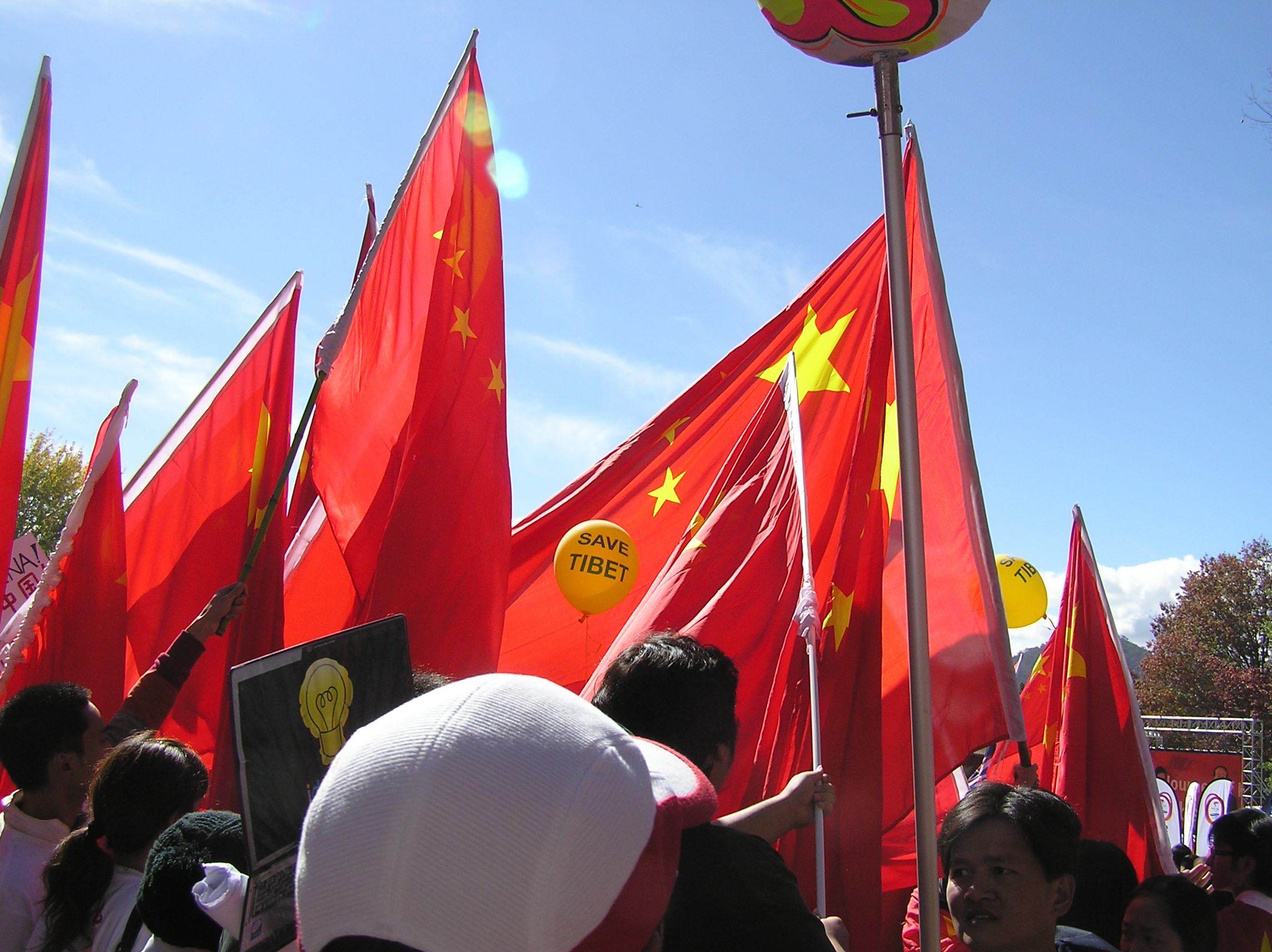
A small Free Tibet protest with balloons is surrounded by Chinese flags. 2008 Olympic torch relay in Commonwealth Park Canberra. Image credit: Graeme Bartlett
Meeting a Nomadic Tibetan, similar to his own family’s Nomadic heritage, Tashi left his prefecture and followed the Nomad on his pilmigrage. It was on this trip that he met the young Tibetan boy that was crossing the border to India. It was only then that the idea of escape, and the route he would take, became a reality to Tashi. He was asked for 700 Yuan (around £75), told to buy leather shoes, a jacket and biscuits. Patiently waiting, 2 weeks later and in the pitch black of the night, Tashi and the other young Tibetan began to walk in the pitch darkness. After a while, they found themselves being led to a large group, also made up of male adults and boys. The stronger of the Tibetan communities, Tashi recalls. Many others were fleeing too.
Related: Zanta: A Story of Humanity Amongst the Many Faces of Suffering
The Walk
For the next few months, disguised as a casual worker, Tashi walked through the landscape of Tibet. Now close to reaching some kind of political safety, Tashi and the group were met with physical danger. To cross into Nepal and avoid detection, the group would have to cross the sweeping current of a major river, and in pitch darkness. In order not to be swept away, Tashi banded together with the others and tied their bodies together with rope. Working as a team, they crossed the river safely.
Seeking Refuge
It is hard to imagine how long this journey must have felt to Tashi, or the adrenaline that must have rattled him each time an official studied his strategically purchased worker tools. After almost 3 months, Tashi entered Nepal. He was detained, but released after 1 day, a clear demonstration of the now sadly swiftly declining humanitarian relations between the Nepalese government and the Tibetan people. Even though Tashi could have stayed in Nepal and joined a large Tibetan community there, when I asked why he did not, he noted that this was not even a thought he had entertained. He was a Tibetan. Once you have the freedom to breach the walls of Tibet, there is only one person and one place that your journey stops at. His holiness the Dalai Lama in Dharamsala.
At the border of Nepal and India, Tashi entered the UN office set up especially for Tibetan refugees. Meeting with a representative of the Tibetan Government in Exile, Tashi was talked through his rights as an Asylum Seeker in India. He would not be protected, or allowed to buy land, but would be able to work and live permanently as a foreigner in India. He was interviewed by journalists and NGOs, eager to learn about the situation inside Tibet. A week later, Tashi began his travels to Dharamasala. He spent 1 night in Delhi, and was shocked by his surroundings. He had pictured India differently, and couldn’t believe that his surrounding environment was the real India. When he arrived in Dharamsala, he was equally disappointed. He had expected a large city, still expecting the ideals of India he had built as a child in Tibet. Tashi felt alienated by his surroundings and was riddled by sleep deprivation.
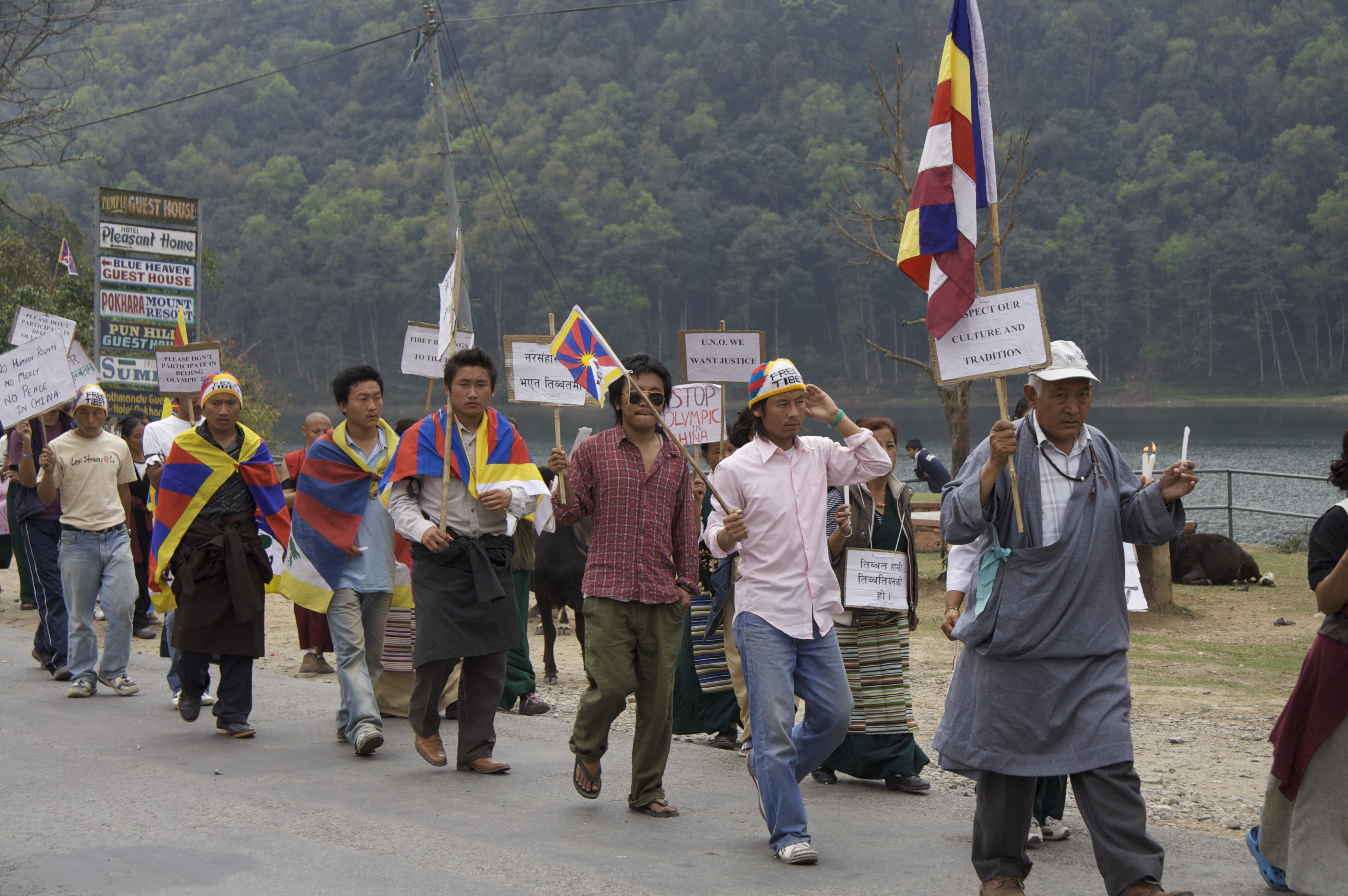
Pro-Tibet protest in Pokhara, Nepal. Image credit: Tom Booth
Our History
But Dharamsala brought more important things to Tashi. As all other fleeing Tibetans are graciously granted, Tashi was given a reception with the Dalai Lama. What shocked me the most about Tashi’s reception with the Dalai Lama, was the fact that this was the first time he had been told the history of Tibet. The history of his birthplace and his home, its past history as a separate sovereign kingdom, its relations with the rest of the world, its relations with China, the invasion in 1949 and the developments since. As a foreigner who has studied history and visited Tibet, the fact that Tibetans themselves don’t know their own history beyond China’s nationalistic education, is still shocking. After listening to the Dalai Lama’s encouragement of education, “education is the key to open everything”, Tashi enrolled in a Tibetan transit school for 5 years. He studied English, Tibetan language, culture and history.
Related: Tibet: Inside the Occupation (Part 2)
“Accepting reality for what it is”
Even Tashi, who had been used to travelling back and forth between lifestyles, from his school in Dali, China, back to his home in Tibet every summer, found the transition to a different landscape and a different identity, difficult. Used to having his own possessions in Tibet, in India, Tashi had to get used to second hand clothing and extreme economic dependence. Feeling torn between huge appreciation and a dissatisfaction of his dependence on others, as an individual Tashi felt confounded, “(You) have to picture who you are yourself…(you have to) accept the reality for what it is”. Given only 100 rupees a month by his school in Dharamsala, Tashi missed the independence that his lifestyle in Tibet and China allowed. After working in a fancy western restaurant in Dharamsala, Tashi began doing research and analyst work for Tibet Watch. He also worked as a translator assisting a Tibetan writer translating the history of Ambdo into Chinese.
Reaching the UK
Now established as a good ‘go between’ for foreign NGOs working on Tibet (I first met Tashi at a China human rights meeting where he translated for Kirti Rinpoche) Tashi was first able to visit the UK in 2009 for work. Over the years Tashi had suffered from increasing interference in his life by the Indian intelligence. His work with Tibetan and foreign NGOs and mounting political pressure by China meant India was cracking down on activism and individuals involved in Tibetan human rights. Persuaded by the education and health care, Tashi decided to apply for Refugee status in the UK. Armed with support letters from organizations such as the BBC, whom had worked with Tashi for a documentary, Tashi tells me he passed the process with relative ease, and within two weeks was granted Refugee status. Originally living in Cardiff, Tashi tells me the worst thing about moving to the UK was probably the weather. Something we can all relate to.Another huge difference was the bureaucracy. In India, Tashi notes that things were a lot more flexible and less strict.He is currently waiting for news of employment from an international human rights organization, but he tells me here, these things take weeks, if not months to go through the structures. Whilst he is waiting, he is enrolling in a social media course.
As we come to the end of the interview, I ask Tashi a few questions that have been playing on my mind. I have known of many Tibetans being treated with huge discrimination and racism by Han Chinese, when at school in Dali, did he encounter the same? What does he think is important to the young Tibetan generation and what can we do to stop them losing their heritage and their human rights? Tashi answers that luckily he never encountered any discrimination. In his school he was one of only two ethnic minorities, and other students never disagreed when he stated his Tibetan identity. As such a small ratio existed, Tashi feels the oppositional identity that exists to many other Tibetans, was not created in his school. He tells me even on paper his nationality was stated as Tibetan.
But Tashi tells me that many Tibetan parents expect their children to get a good job and this means sending them to Chinese schools away from their Tibetan homeland. That soft power such as this, pushing Tibetans towards the Chinese government, and Chinese identities is also the strategy that produces the railway and building developments inside Tibet. But to Tashi, and the Tibetan community, Monastic schooling is hugely important. Currently monks try to teach voluntarily to balance out the state driven education that ignores subjects such as Tibetan history, culture and language.
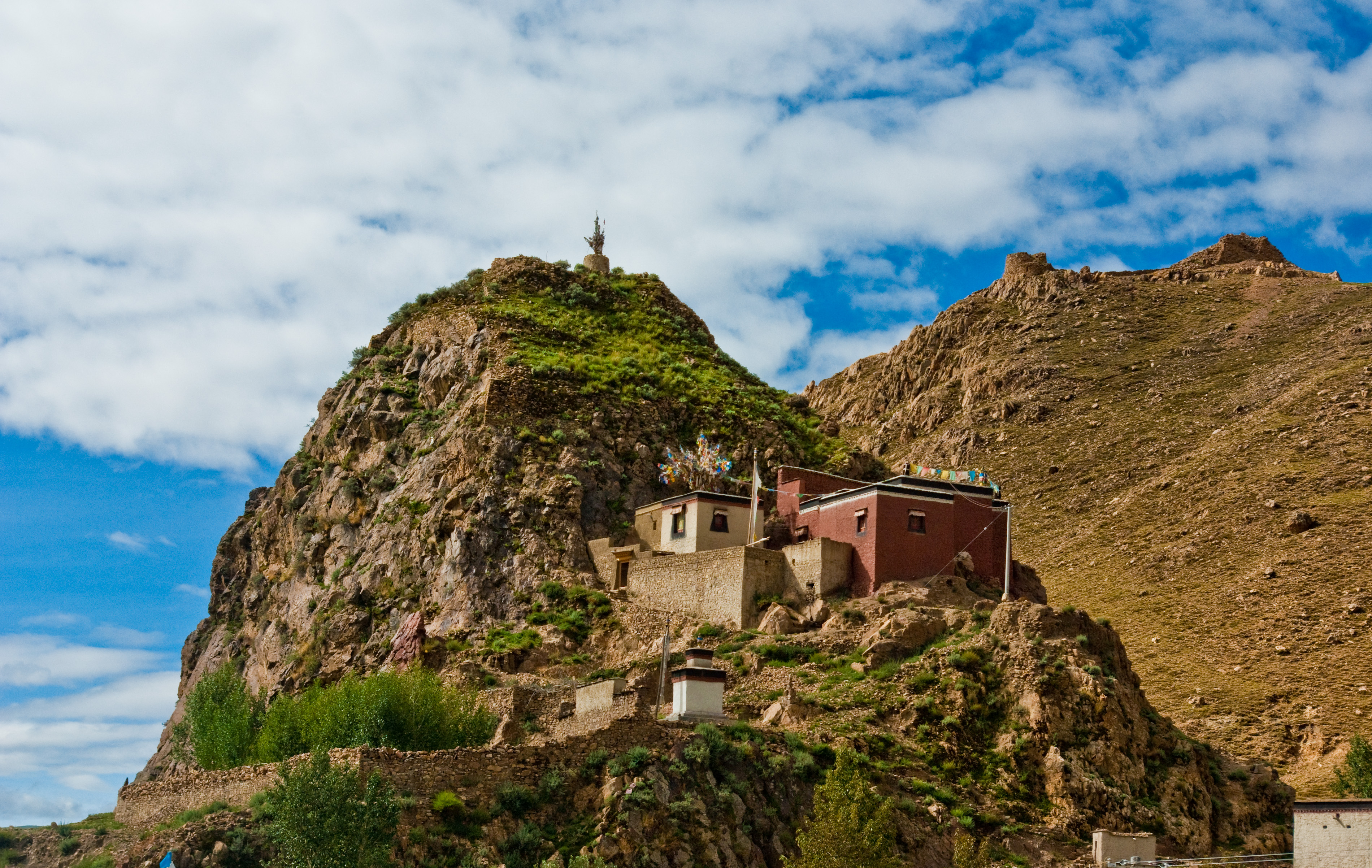
A little monastery on the road from Shigatse to Everest. Image Credit: Antoine Taveneaux
Before we depart Tashi stresses that pressure from Europe and the West is needed to change things in Tibet. Made even worse by the economic crisis, governments are bowing to China when it comes to human rights in Tibet. In order to bring about political change in Tibet, and therefore change for the people China rules over, the other nations of the world will need to work as a team. Tashi doesn’t consider himself an activist. His whole life and pathway has been dictated by the fact he was born in Tibet, to a traditional Nomadic Tibetan family. His schooling, his escape, his journey across thousands of miles, and his new life in the UK are not decisions he has made freely or without intervention. Like thousands of others, his past, present and future have been dictated by the only thing he knows: he is a Tibetan.
Tashi’s name has been changed in this article due to security concerns for his family back in Tibet.
About the Author






great read; made me more away of the political issues in Tibet.