
Atrocities have filled our media outlets for decades. Yet despite evidence, many are either ignored or defended by leading academics and national officials, causing human rights violations to go largely unnoticed.
“As human beings we have the most extraordinary capacity for evil. We can perpetrate some of the most horrendous atrocities.” – Desmond Tutu
The Genocide Prevention Project defines “atrocity crimes” to be formed of the following:
- Genocide
- Crimes Against Humanity
- War Crimes
- Ethnic Cleansing
Under this ethos, below are five particularly pertinent examples of atrocities from the 20th and 21st centuries that are still defended in spheres outside of extremist organisations.
Mao Zedong
Chairman Mao was China’s first communist leader, founded the People’s Republic of China in 1949, and reigned as Chairman of the Communist Party of China until his death. His controversial reign is typified in the biography, “Mao: The Unknown Story” written in 2005. It said:
Mobo Gao in his 2008 book “The Battle for China’s Past” believed Mao brought about important land reforms, as well as uplifted women’s positions through literacy and education programmes. Thomas Bernstein of Colombia University argued that Mao wished to avoid all deaths. He believed that the greatest death count of any 20th Century peace time leader, 27 million, was largely unintended, and was instead the consequence of famine.

Image Credit: Augapfel
Rwanda
The Rwandan Genocide was one of the most famous late 20th Century atrocities to reach world headlines. Over approximately one hundred days, over 500,000 were killed, according to the Human Rights Watch estimate. Other estimates of the death toll have ranged up to 1,000,000.
The process to democracy was heralded across the world as a sign of positive change in the country. In 2000, Paul Kagame was made President after his predecessors resignation, being re-elected in 2003 and 2010. Under his presidency, Rwanda has become seen as the prime example of where development aid can work, with primary school attendance trebling, and the first public library being constructed.
However, in his 2010 election, Kagame’s 93% majority win was questioned when three major opposition parties were excluded from the ballot. Two leaders were jailed and in 2012 were still imprisoned. Critics have accused Kagame’s government of state sponsored death squads, and Jean Baptiste Icyitonderwa, general secretary of the Social Party Imberakuri, claims its leader has been tortured in jail. He said:
Evidently, there are still atrocity accusations that slightly diminish the positive light in which Kagame has been thrown so far.
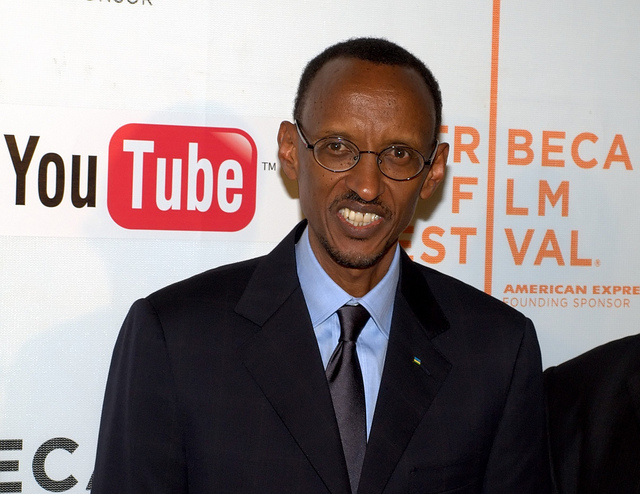
President Kagame. Image Credit: david_shankbone
Firebombing in Germany
Where there are atrocities, there are controversies. The firebombings as Germany are seen by some as one of two things: as a war winner; as retribution. The bombings themselves, the most famous being Dresden, Hamburg, and Cologne, flattened the German cities. Dresden particularly was a site with around two industrial areas, but with a large refugee population, who were especially harmed during the bombings. In Hamburg, 50,000 people died in one night.
In the context of the war, the Allied bombings of Germany resulted in nearly six times as many deaths as the Hiroshima and Nagasaki bombings combined. A report by the U.S. Air Force Historical Division concluded that:
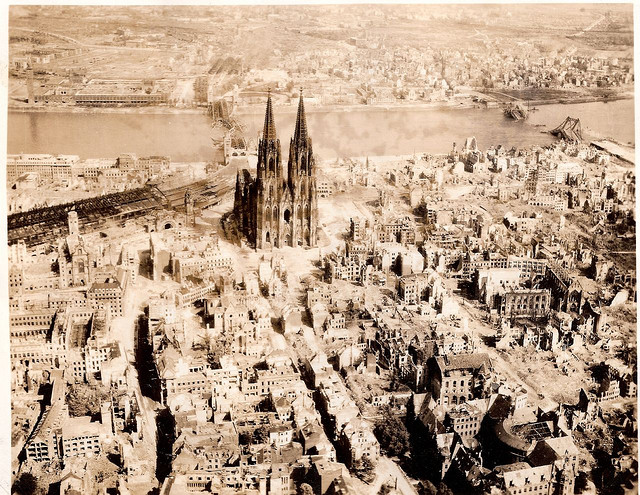
Cologne post bombing / Image Credit: David C. Foster
Pinochet’s Regime
Augusto Pinochet catapulted to power in 1973 when he overthrew the then elected Chilean government in a military coup. Until his transfer of power via democratic elections in 1990, his government committed a number of human rights violations, most notably setting up special camps in the Atacama Desert. Here, inmates were tortured, raped, and murdered, and many of their remains have yet to be found by grieving family members.
In spite of this, Pinochet is continually hailed as one of the main factors behind bringing democracy to Chile. He introduced enormous market reforms, and it is argued that his ousting of a socialist government was supporting under the Cold War ethos. Academics Robert Packenham and William Ratliff wrote a paper with the byline:
Hardly a true condemnation on behalf of the estimated 40,000 left dead by his regime.
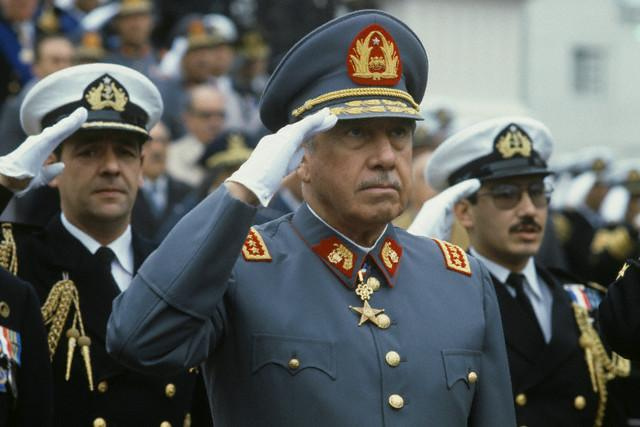
Augusto Pinochet / Image Credit: fpealvarez
Iraq
The Iraq War has fast become the most controversial venture of the U.S. and its allies to date. Under the pretence of weapons of mass destruction, the war began in 2003, and led to an occupation that ended in December 2011. General estimates for the deaths caused by the war vary between 100,000 to 1,000,000, the majority of whom being civilians.
Moreover, the war has left Iraq in one of the most broken situations of any current country. In July 2013, over 1,000 were killed, the highest monthly death toll in years. In addition, the war gave way to reports of torture, killing of surrendering insurgents, and helicopter “gun runs” over areas were no insurgency had been reported.
Although the war has produced an enormous amount of criticism, it is still a foreign policy defended by many, particularly in the U.S. It has remained shadowed by events in Afghanistan, Iran, and now Syria, but ultimately represents one of the greatest atrocities of this century.
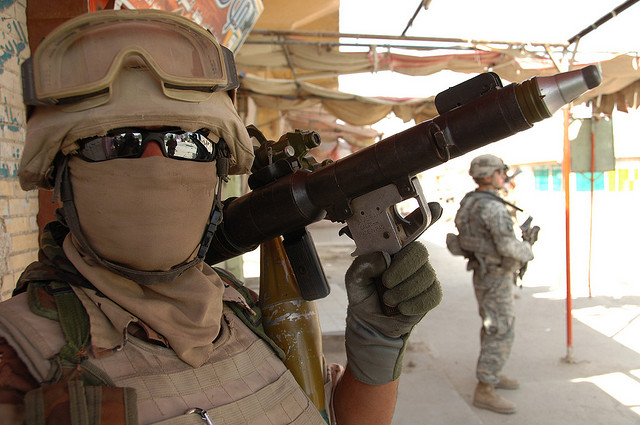
Iraq War / Photo Credit: The U.S Army
This article was originally published on the Urban Times.
About the Author






Nice article, however you have failed to include the British empire. The rape, pillage and plunder of innocent nations to serve the interests of Britain’s evil imperialist ego – the biggest example of organised crime the world has ever seen.
also add Armenian Genocide, which is not defended, but also not accepted by those who committed it – Ottoman Turkey and its successor government.
Your article is of an utter stupidity, you claim firstly that these are ‘five particularly pertinent examples of atrocities from the 20th and 21st centuries that are still defended in spheres outside of extremist organisations.’ Yet in the case of Kagame he was responsible for the overthrow of the Hutu led dictatorship largely responsible for the genocide and is not therefore defending it. There is a difference between a genocide and a dictatorship which Kagame is supporting. Then considering the Iraq war, it is still defended by a few, but you can hardly blame the US for causing all the deaths in the absolute. Saddam as a Sunni oppressed the majority shiite community in Iraq and the only way he held the country together is by terror. So while the deaths would not have happened without the US invasion, Iraq was a colonial invention of the British (oops forgot to mention that) and a powder keg ready to explode. Inter religious violence and extremist religious groups are by far responsible for the majority of problems. I am sorry for the tone of this comment but it would be wise to do more research and to examine the cases you are talking about correctly.