
What have we learned from the Egyptian revolutions? Yes, Mubarak was a dictator and taking down his regime was the ‘right thing to do’, but, countries surely do not fix themselves overnight. Two years after the first revolution, one has to wonder: what do the Egyptian people want? Mohammad Morsi and the Muslim Brotherhood were welcomed with open arms after democratic elections and expectations ran high that they would be a government that would reflect and include all political tendencies. Unfortunately, Morsi quickly developed an inclination towards an ideologically motivated autocratic style of government and the country began its descent into chaos. The indecisiveness of the Egyptian population has created a vacuum that worries young liberal thinking Egyptians. Is this what the revolution was meant to achieve? The switch from a dictatorship to a democracy might be a noble endeavour but without proper leadership ‘all hell can break loose’.
Related: Egypt: “I Literally Felt a Bullet Pass Over my Shoulder”
“We are Egyptians and we must unify under one flag and put our political differences aside” said a local Egyptian youth. It seems the Egyptian ‘dot com’ generation wants the country to grow and unite but are restricted by a pre-Mubarak bureaucracy still deeply entrenched in all the social and economic fabric of Egyptian society not least in the army itself. Political forces from all horizons are still deeply marked by a culture of intolerance and pre-revolution morals where a political opponent is an enemy by default. The latest massacre of pro-Morsi supporters by the police and army is an example of this deep flaw which continues to hamper the emergence of a new culture in governance based on democratic ideals and dialogue between the multiple forces of Egyptian society.
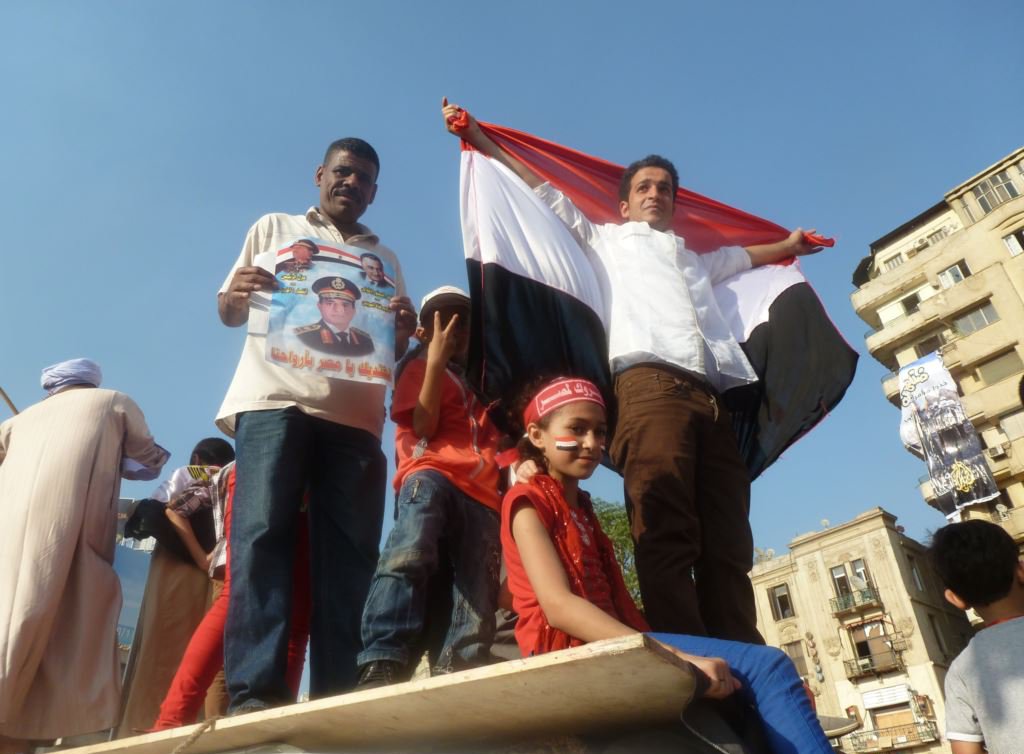
Morsi’s ouster celebrations. Many of those who rallied in Tahrir Square brought their families and children, July 7, 2013. Image credit : S. Behn VOA
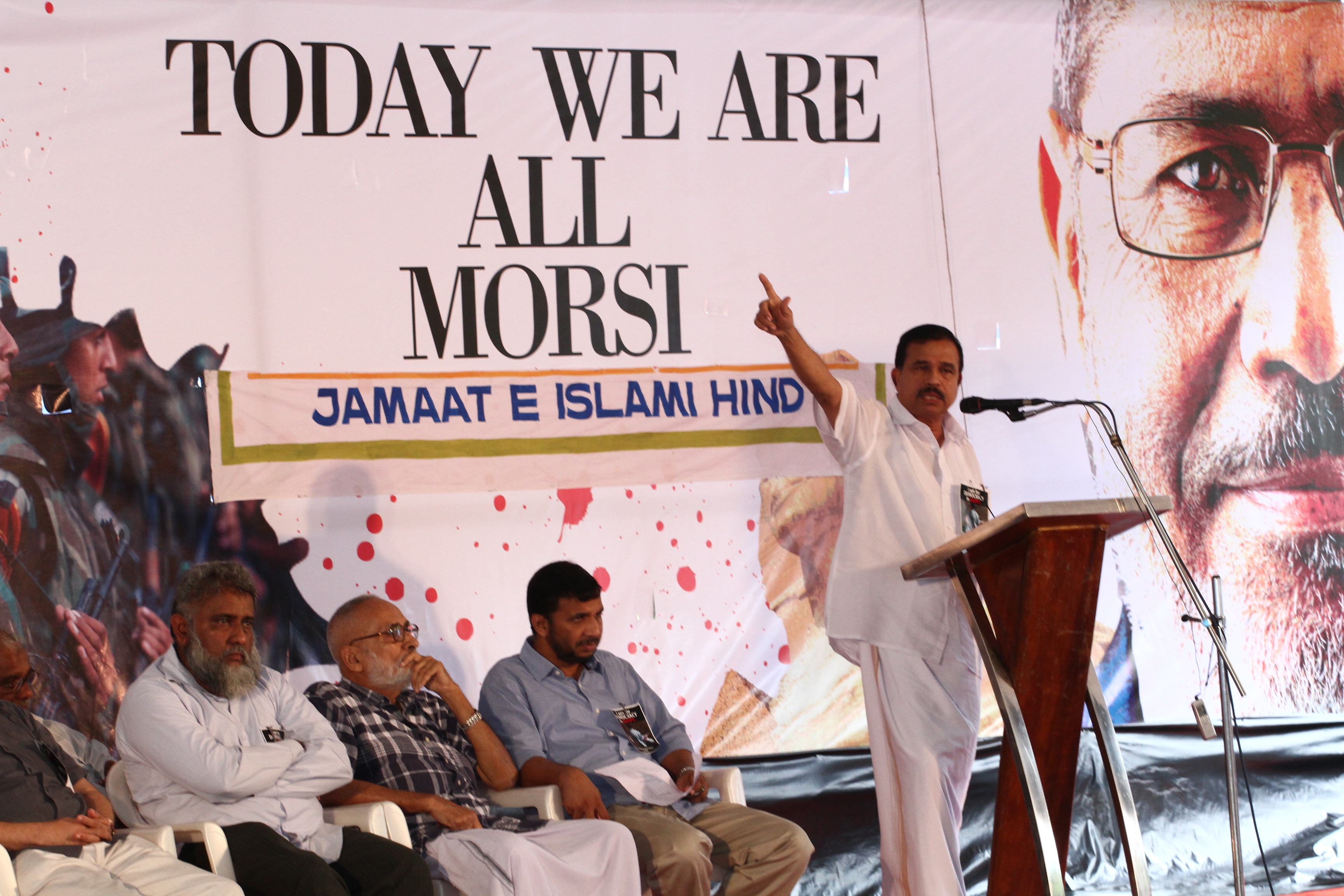
Pro Morsi Mass Movement. Image credit: Zuhairali
What we now know is that the generals ruling the country are not the answer to a peaceful and democratic Egypt. The resignation of Muhammad ElBaradei, one of Egypt’s most important moral references and advocates of international diplomacy may have come at a time when his skills were most needed. However, there is still hope; “we are very confident that things will change, for the good” stated a young Egyptian living in Cairo. What the post-Mubarak generation now knows is that violence is not the answer; now is the time for a democratic Egypt; a young Egypt, an Egypt that can show the world that democracy can work in the Middle East. However let us at all times, particularly during this tragic period when hope of any democratic outcome seems evanescent, let us bear in mind that “a revolution is not a bed of roses. A revolution is a struggle between the future and the past.” (Fidel Castro-(http://www.goodreads.com/quotes/18567-a-revolution-is-not-a-bed-of-roses-a-revolution)
More Egypt coverage can be found here.
About the Author






[…] proclaiming “Go photograph Egypt and show the world something important”, referring to the current violence and political unrest throughout Egypt sparked by a military backed government coup in early […]
[…] A New Hope? […]