
August 28th marked 50 years since Dr Martin Luther King, jr. stood on the steps of the Lincoln Memorial and explained his dream; an America in which his children would not face the same barriers he did due to the colour of their skin.
The coverage of the March On Washington has heralded it as the epitome and pinnacle of the Civil Rights Movement; while the fact that King’s dream has not been realised has been given lip service in most accounts, there is a high degree of conformity to traditional schools of thought regarding the Black freedom struggle. Yet this history omits an alternative reality, excludes courageous and inspirational individuals such as Angela Davis and portrays the Civil Rights Movement and indeed Black America in a very one dimensional way. To a certain extent this can be forgiven, after all Dr King was and remains virtually unrivalled as a fairly universal figurehead of equality, morality, freedom and peace. Few can hear the words King uttered, or rather personified, 50 years ago today without welling up; the effect is magnified if the speech is watched in full because the electricity of the crowd can be appreciated. He led a movement that provided the news reel of the Civil Rights Movement and brought the struggle for racial equality to white America and the rest of the world, who watched on as peaceful, nonviolent, dignified protesters faced brutal police attacks and a white supremacist backlash. The pressure from these protests and images ultimately led to ground breaking judicial and legal wins for Black America.
However, that does not tell the whole story of the fight for African American civil rights and equality in the twentieth century, the second half of the twentieth century or even the 1960s. These narratives in which King is held up as the face of the Black freedom struggle tend to forget the other faces and other dreams.
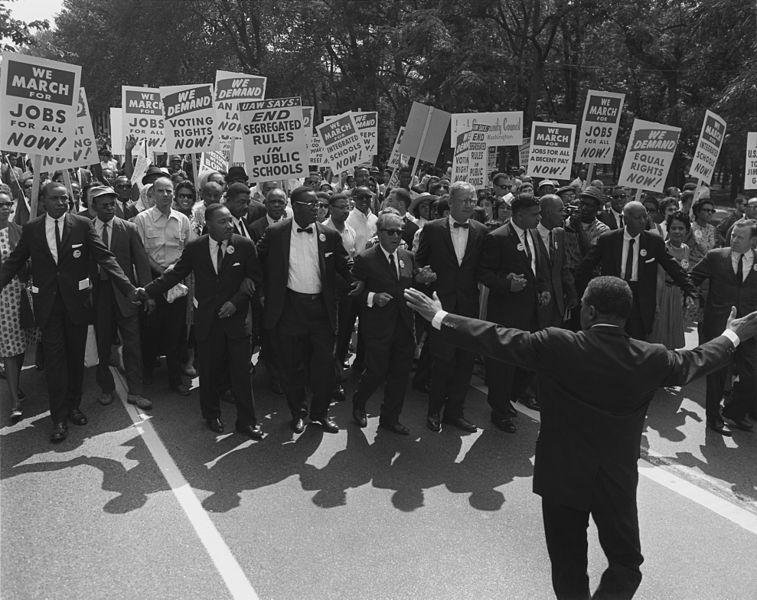
This United States Information Agency photograph of the March on Washington, August 28, 1963, shows civil rights and union leaders, including Martin Luther King Jr., Joseph L. Rauh Jr., Whitney Young, Roy Wilkins, A. Philip Randolph,Walter Reuther, and Sam Weinblatt. Image credit: United States Information Agency
These were highly intelligent men and women, the ideological and intellectual descendants of many before them, who recognised the problems facing Black Americans and sought grassroot solutions. They did not appear in 1954, with the Brown vs. Topeka Supreme Court Ruling, or in 1965 with the Watts Riots. Nor did they develop as a result of impatience with the conventionally accepted Civil Rights Movement. They had been there all along. It was Stokely Carmichael’s cry of “Black Power” that alerted America to their presence, and the Black Panther Party’s extensive political and social programme that kept them in the public eye (though unfortunately not always for the right reasons).
These weren’t angry, racist, violent thugs, set on causing chaos, as the conventional narrative of the Civil Rights Movement suggests. The most prominent political Black Power group, the Black Panthers, were not Black supremacists, and they preached self defence, not violence. Their community programmes fed thousands of hungry children, clothed countless poor families, tutored numerous aspiring young pupils, registered several thousand black voters and ensured citizens who were stopped by the police knew their rights and were treated fairly. This is a far cry from the images of leather jackets, black berets, guns and violence. Yet until recently the only image of the Panthers available was the latter, despite several prominent academics, Dr Peniel Joseph of Tufts University at the forefront, working tirelessly to change this perception and open the world’s eyes to the complexities, achievements and courage of the Black Power Movement.
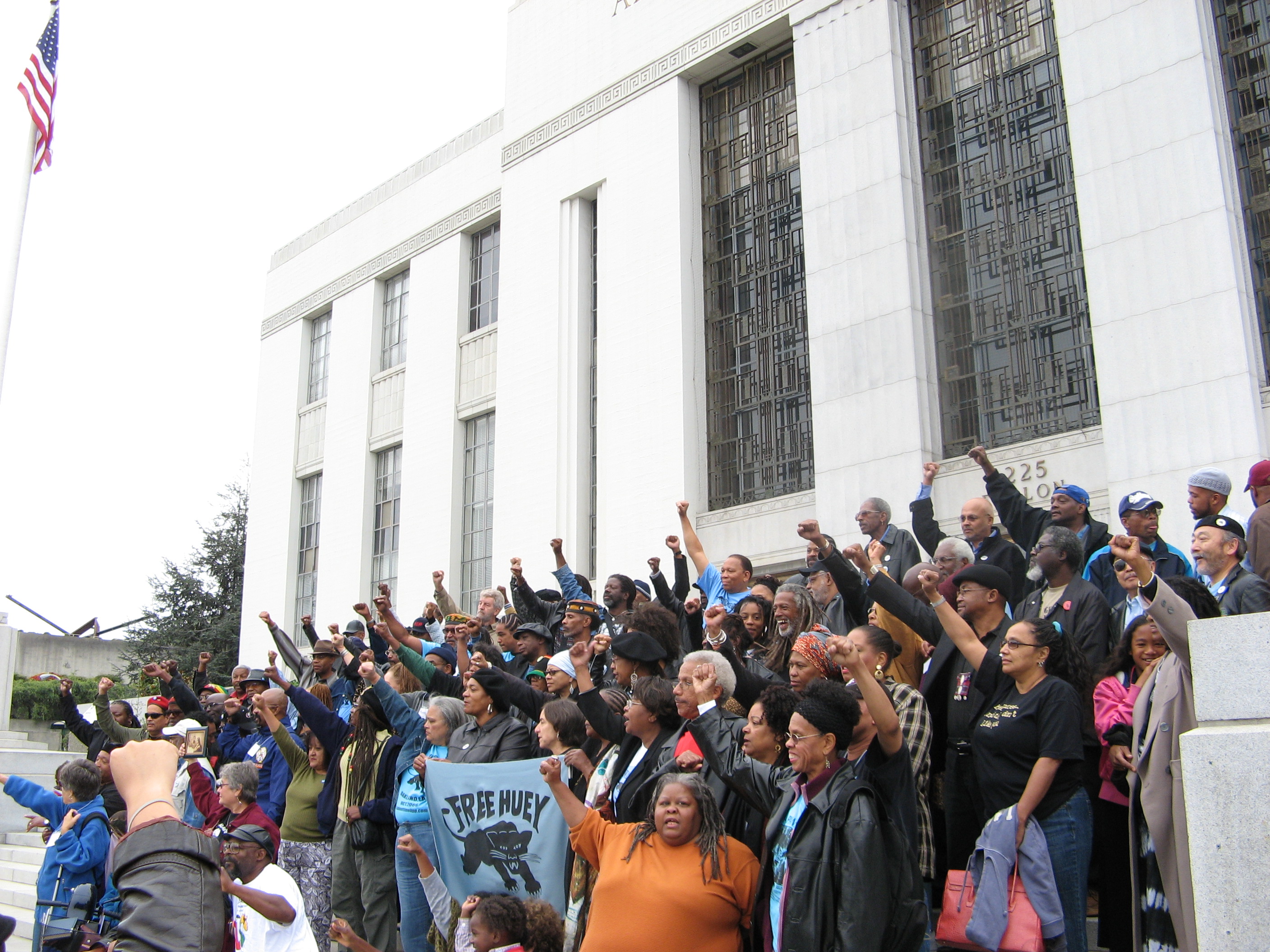
40th Reunion of the Black Panther Party in Oakland, California, 2006. Image credit: TalkAbout
In fact, the Panthers’ message remains highly relevant today. In conjunction with several Black Student Unions, they espoused a form of leftist Black nationalism that placed the experience of Black Americans in a wider context of structural and institutional discrimination. Within this framework, the key to achieving equality and progress was solidarity amongst the Black community, fostered by a strengthening of African values and culture and a distinct focus on practical schemes in the community to provide immediate relief for some of the worst excesses of American racism and discrimination. If anything, this discourse provided a viable alternative to some of the more controversial Black nationalist ideals which rejected ‘White’ culture and values; the system that maintained the rigid race based segregation throughout American society was held responsible, not the individual White Americans who may have directly or indirectly contributed to it. And yet at one point the Panthers were considered the most serious internal threat to the United States. It was their armed neighbourhood patrols that proved the most controversial; it seemed that many people did not like to see citizens making the most of their second amendment rights to protect their communities when the police were not doing so and in some instances actually posing a threat themselves.
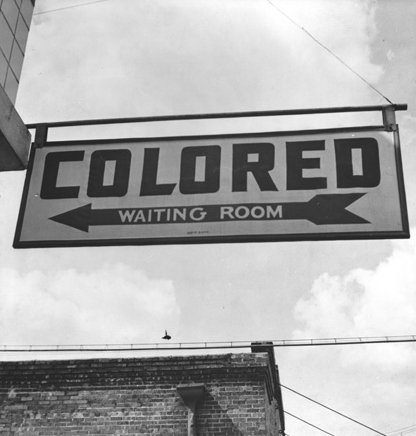
“Colored Waiting Room” sign from segregationist era United States. Image credit: Esther Bubley
However, the brave men and women who made up these patrols are unlikely to be given the attention the March on Washington has received on its fiftieth anniversary. The inspirational men and women who ran tutorial programmes have not and are unlikely to have streets named after them. The determined men and women who went to every corner of America registering voters won’t be heralded as upholding the Founding Fathers’ vision of American democracy. And, as long as Dr King and the southern protesters are held up as the embodiment of the Black Civil Rights Movement, the one sixth of Black men who have been to prison will not be seen as the victims of the Founding Fathers’ failures, nor will the extensive, institutionalised racialism that feeds economic and social inequality ever be truly addressed. The other dream, that of the Black Panthers and the Black Power Movement, is ultimately the same as Dr King’s; an America in which “all men are created equal”. It seems that, sadly, 40 years on, the arguments of Stokely, Angela, Elaine, Huey and Bobby have stood the test of time and remain relevant. While it is no longer legal to separate Black and White Americans at the lunch counter, to segregate education based on race, or to disenfranchise due to skin colour, Dr King’s dream has not been realised. And it will never be realised until those proponents of Black Power, with their conceptions of Black poverty and endemic racism, are listened to as well.
About the Author