
As India’s population rapidly increases, the nation’s tendency to prefer that women give birth to a son is likely to have detrimental effects on women and development.
‘Look, I’m going to tell you something about my life at home’ Mrinalini said in her thick Bengali accent, ‘I know that my whole family would have been happier and better off if I had been born a boy. For this, they have never forgiven me, my sister or my mother.’
Mrinalini is a 23 year old woman I met in India recently. She is not a girl, but undeniably a woman; a woman who has been aware of her gender from day one. Mrinalini lives in Calcutta and is studying for her Masters in Hospital Management. She lives in an apartment in the more affluent region of the city with her sister, parents, and father’s parents.
Mrinalini tells me another story which again involves her mother and her grandparents. She describes an argument they had when her mother had recently given birth to her second daughter.
Mrinalini’s description of these events, moved uneasily between being a casual recount of an event to an emotional upheaval. Mrinalini, like so many women in India, knew that these occurrences were common practice, but this in no way alleviated the real suffering she felt. Obviously, this behaviour is not limited to India; but the nation’s latest census (2011) shows that the child sex ratio (number of girls per 1,000 boys among children in the age group 0-6 years old) is at its lowest since 1947, when India gained independence. India and China are the only countries in the world in which female infant mortality rates are higher than that of males. India’s ‘missing women’ will have clear detrimental implications as the population spirals and is actually predicted to overtake China as the most populated country by 2030.
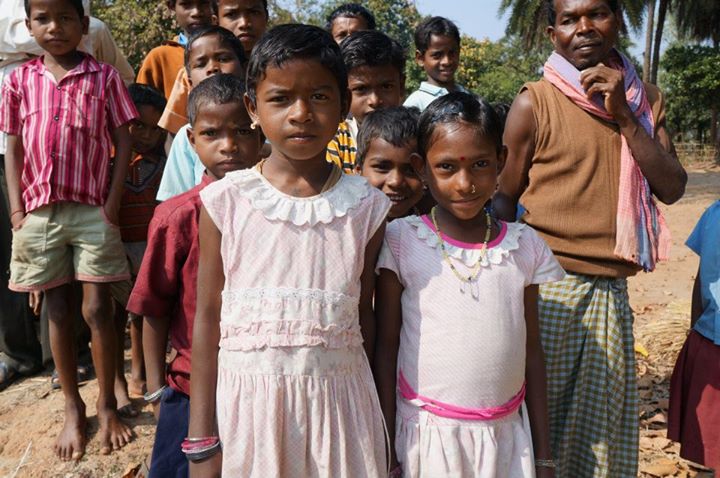
Image credit: Flo Carson
India is a nation split by caste, wealth, gender, and faith. Son preference is a phenomenon which, despite not being a cross national case, is a clearly visible inclination for many across these social divisions. It seems that India society applauds the birth of a son, it imparts status and money in the form of a dowry (which though illegal is still common across India). Like most instances such as this, there is no single factor which leads to this decision made by women and families. However, it does comes as a surprise to learn that economics does not play a massive role; a study from the International Center for Research on Women (ICRW) found that whether a person comes from a wealthier, urban background or relies on more traditional sources of wealth, it has no influence on son preference. They found that ‘women and families in wealthier households and communities merely change the way they implement son preference, not the preference itself’.
What does make a difference is women’s education and media exposure. The higher the level of education a woman receives, the larger impact it will have on reducing this preference. Additionally, having access to global media, such as the cinema and the internet significantly weakens it. In fact, the effect of female education reaches far beyond the individual; ICRW research reveals that ‘women in villages with higher levels of female literacy are less likely to prefer sons than women in villages where most women are illiterate’. Fittingly, Kerala, one of India’s more educated states has a female:male ratio of around 1.04 which is similar to that in Europe and America. It becomes appearent that providing women with alternative visions of what their daughters can achieve and presenting women with the option of education and independence have visible effects on the choices they make about their body and sex selective abortion.
Image credit: Flo Carson
It is essential to consider the consequences of son preference, not as something which simply impacts on skewed population figures and policy decisions but how it actually influences women and girls. Women like Mrinalini have spent their lives feeling inferior from the moment they were born. The prejudice they face from within their own family, will consistently permeate their relationships and sense of identity. One of the biggest concerns is that decades of research and policy efforts has made no little difference. In fact, the sex ratio is worsening.
It strikes me that policies need to shift focus to understanding the reasoning of the women and communities in India who do not express a son preference, and encouraging educated women to communicate these reasons beyond their typical social circles. I asked Mrinalini whether she foresees any improvement in the situation, her reply was ‘Though people say that there is equality between men and women, when the real moment comes for supporting a woman, everybody backs out…The future isn’t bright’.
About the Author





