
As part of the Tomorrow’s Cities season the BBC is looking at how our lives will be changed by technology in the future. Delivery drones, farmscrapers and robo-taxis, is this what our future world looks like? Experts predict that by 2050 three-quarters of the world’s population will be living in a city. The BBC has put together this interactive graphic showing us how our cities could look in 40 years time.
Forget about pizza delivery boys on mopeds, imagine a drone delivering your pizza! Domino’s the take-away pizza delivery service has already tried and tested this delivery method coining their drone the DomiCopter, and it doesn’t end there, the Chinese company SF Express has begun trial runs delivering packages long distance via drones. These unmanned machines are best known for their military and surveillance uses but as technology advances will we see them all over the skies of our cities. National Geographic shows how drones are being used for perhaps some more practical means such as 3-D Mapping, protecting wildlife, search and rescue, farming and hurricane hunting.
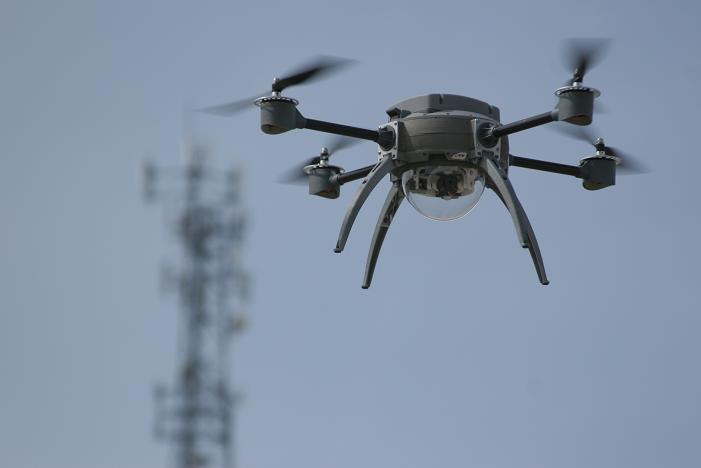
Aeryon Scout UAV in flight. Image credit: Dkroetsch
http://www.youtube.com/watch?v=i0pLHdQNzaM
Drones are just one element of our future cities. Imagine multi-purpose skyscrapers that function as huge vertical farms becoming mini ecosystems in the city making use of green energy and recycled waste as well as providing space for residents, retail and recreation. Or self-driving taxis that eliminate the need for traffic lights.
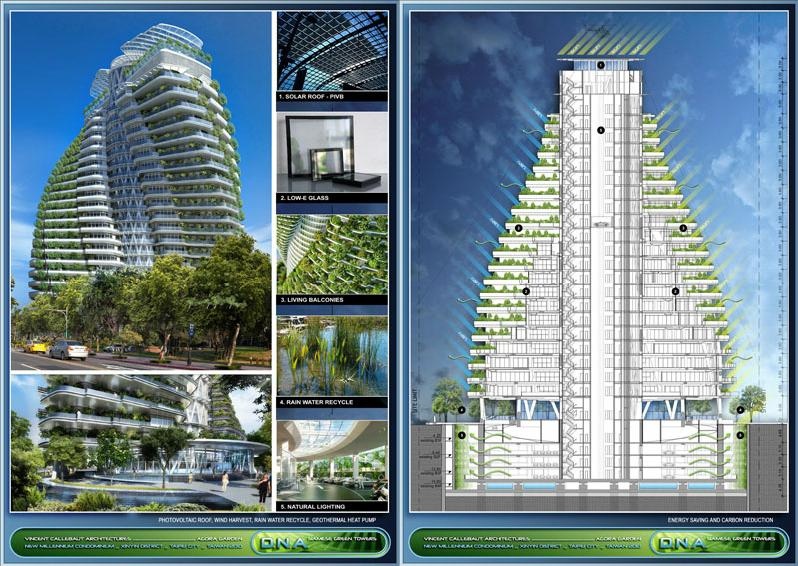
Vincent Callebaut -Taipei Agora Garden luxurious residential tower. Image Credit: Forgemind ArchiMedia
Perhaps one of the most fascinating predictions for the future of our cities is the concept of living street lights. Cambridge University has already been working on the concept of glowing trees that will line our pavements replicating street lights. Inspired by bioluminescent creatures such as fireflies, scientists have started to look into how plants can glow without chemical supplements. There is still much development to be done but in the future our streets could one day be lined with glowing trees and the same concept could provide those who live off an electricity grid with light.
PJ Steiner who performed an advisory role to the Cambridge team.
No-one knows how our cities will really look in the future, but with 50% of the worlds population currently living in cities and the 75% expected increase by 2050 how will our cities change and develop to deal with this and effectively make use of the developments in technology?
The BBC’s Tomorrow’s Cities series will be running until the end of September.
About the Author






[…] Read full article… […]