
Amidst the Westgate attack and terrorist threats to Kenya hundreds of tourism industry experts converged in Kenya to converse about green tourism. Events and management groups, travelers, conservationists, hoteliers, tours and travel agents, among other professions from far and wide across the globe shared their views, practices and ideologies on ecotourism.
“A perfect balance between nature, people and the environment” was the definition given to ecotourism by the Kenyan Cabinet Secretary of Eastern African Affairs, Commerce and Tourism, Ms. Phylis Kandie, through her speech read by a representative Mr. Mohammed Ibrahim.
What came out strongly from all the discussions was the need for community inclusion in tourism activities. As the African Wildlife Foundation Vice president for Programs operations, Mr. Daudi Sumba, puts it “Which mechanism can be put to place to strengthen community partnership with eco-tourism ventures?”
Ecotourism investors must implement plans that partner with the community; not only to empower the community but in order for them to prosper. Some of the ways are; hiring the staff from the community, training them in tourism opportunities, using the local culture as a tourist attraction, and so forth. Tourism and poverty should not co-exist in the same area. In the same respect, there is a need for innovation that can lead wildlife away from human settlement to decrease human/wildlife conflict.
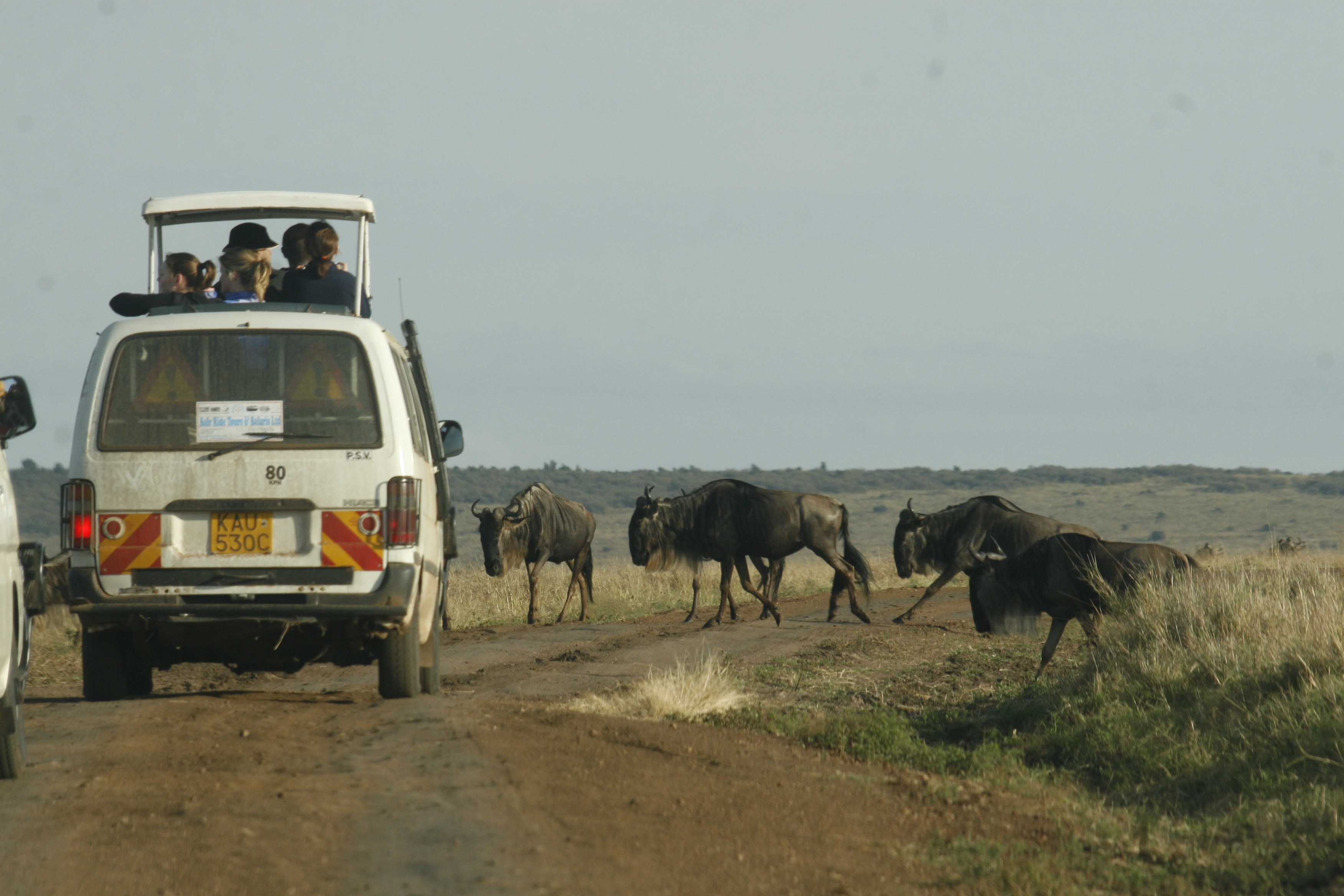
Tourists drive through the Masaai Mara viewing Wildebeests, Kenya. Image credit: DEMOSH
A renown editor Mr. Costas Christ said that local people are the custodians of the areas that are being conserved. The old model of conservation pushed local people away from the conservation areas and alienated them, which did not work out well. The new model is seeing to it that the community is in the heart of conservation.
According to National Geographic ecotourisms earliest roots can be traced to Kenya, approximated to be in the late 1960s to 1970s around the Amboseli national park. This gives Kenya great responsibility in ensuring that it remains constant in upholding ecotourism as it is the birthplace. Kenya is Africa’s 5th largest tourism destination with many of its visitors attracted to the wildlife.
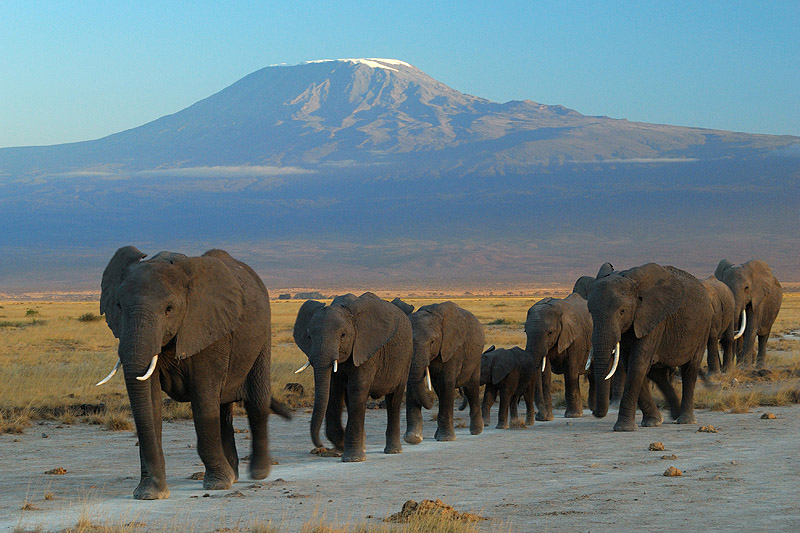
Elephants at Amboseli national park against Mount Kilimanjaro. Image credit: Amoghavarsha
“We are selling nature and culture – that is what tourism sells” said Mr. Costas Christ, a viable business model that most of the key players in the tourism sector are adapting to. If the annual 1.8 billion travelers (expected by 2030) are exposed to communities and nature this will build a network of relations and promote caring for the environment.
The major challenge that was noted is the price of experiencing ecotourism. Is ecotourism over-priced? Is it meant for only the elite? Were some of the questions that cropped up. In defense an expert explained that it cuts across the spectrum of prices. But the best explanation came from Zeitz Foundation founder, Jochen Zeitz “Things may [be at a] cost high in the beginning but with years the prices will come down.”
What the conference offers is an atmosphere for experts to share their success stories and strategies afresh on ecotourism. An annual opportunity spearheaded by the International Ecotourism Society. This year’s conference from the 24th-27th September proceeded without fear or intimidation from the terrorist attacks in Kenya.
About the Author