
1. A Dignified Affair
Germany’s polls make a refreshing change for the seasoned election observer, more dignified than the circus of American votes and with more exciting coalitions than in Britain.
Election campaigns are brief, compact and cheap. Candidates spend weeks rather than months travelling so it only costs a fraction of the billions invested in the 10-month US election cycle. This allows for a very different kind of relationship between politicians and their financial backers, a more digestible amount of advertising on television and even a less hostile form of negative campaigning.
Coalition politics is new to Britain, with the first such government since World War II, but in Germany the intrigues of building alliances are an essential part of the election. This year could see a range of different options including the return of a Grand Coalition that brings together right-wing and left-wing parties or a Traffic Light alliance encompassing the Greens, Liberals and Socialists. Despite being a system designed for stability, to keep dissent within the political system, German coalition negotiations are a must for the diary of any self-respecting electoral fan.
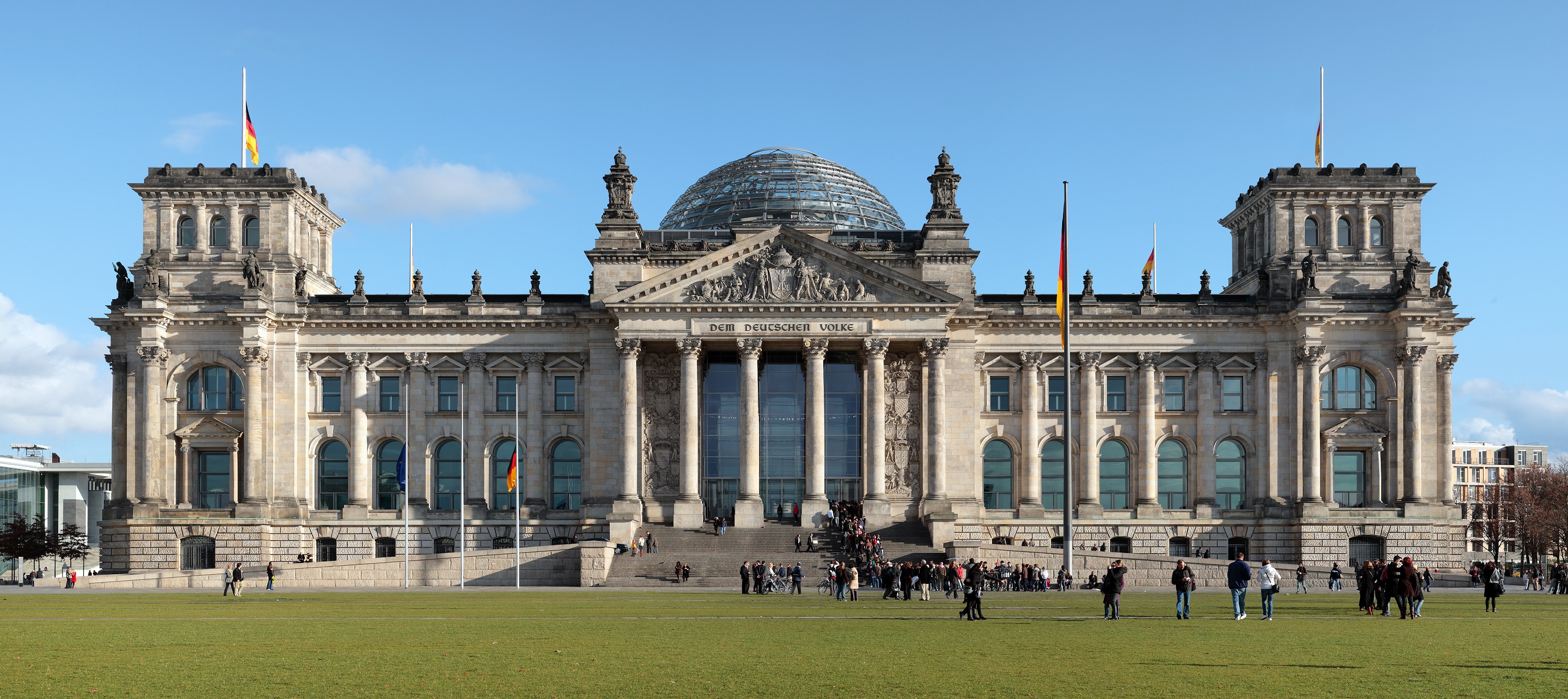
The Reichstag: Home of the German Parliament
2. The Green Green Party of Business
The German Green Party are one of the most successful environmental political parties in the world, playing a key role in government from 1998 to 2005. Their success is due to their ability to appeal to a wider demographic than just the stereotypes of eco-warriors and hippies.
They demonstrated their political maturity with their support for wars in Kosovo and Afghanistan but also proved they still held onto their principles by turning Germany away from the use of nuclear energy.
Their future looks bright, with a studyfrom the German Institute for Economic Research (DIW) suggesting they attract more support from affluent societal groups than their business-friendly rivals. Making environmental awareness fashionable with the rich, and establishing that they are not anti-business is a massive breakthrough for a party that has traditionally failed to capitalise on the national mood.
With strong gains in local elections in recent years, 2013 could be a great year to be Green.
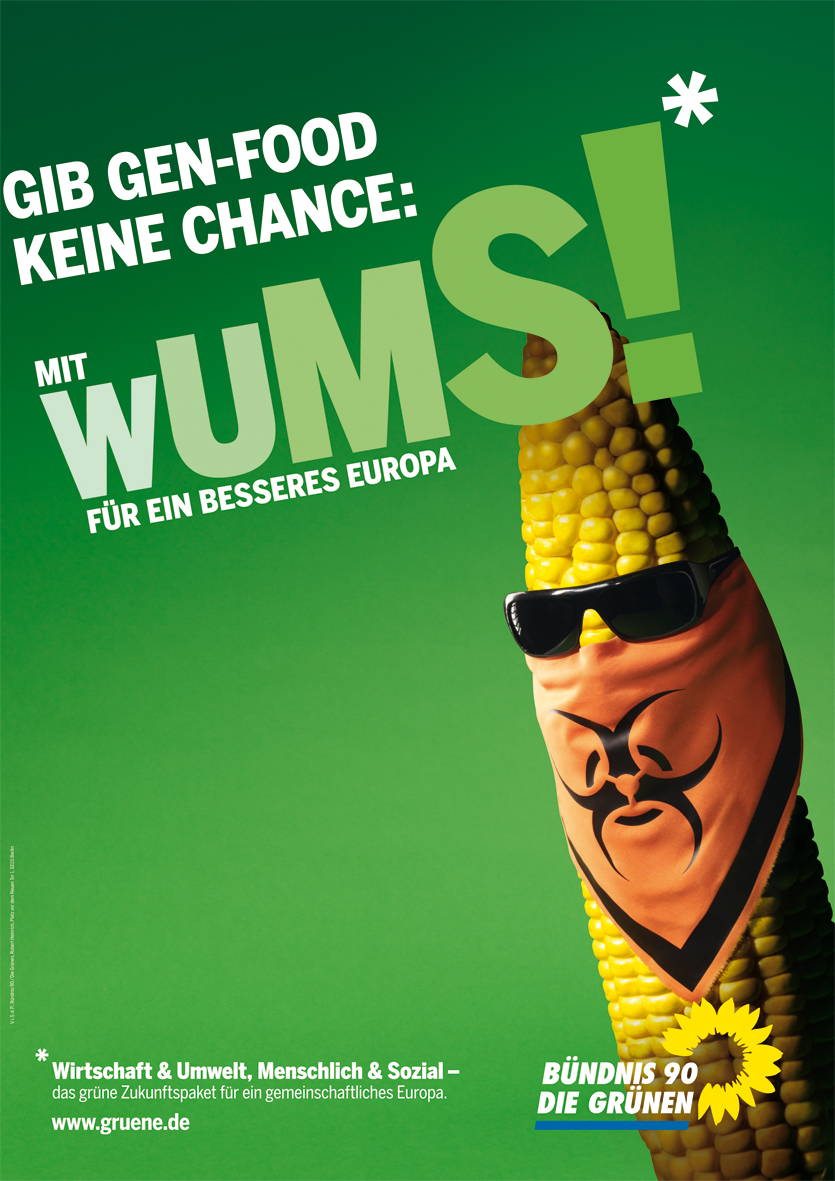
The friendly face of German Environmentalism
3. The Outspoken Herr Steinbrück
Peer Steinbrück, a former Finance Minister and the candidate of Germany’s Social Democrats, is channeling the spirit of gaffe-prone politicians on both sides of the Atlantic. Last year, speculation grew that his campaign was over before it began following a catastrophic interview in which he complained that the chancellor’s salary, over £210,000 a year, was “was way too small”. He also faced criticism for his attempt to pay tribute to Chancellor Angela Merkel’s success “in a man’s world”, saying she benefited from a gender bonus. Shortly after, Steinbrück was exposed as offering to use his political position to benefit the ThyssenKrupp corporation, on whose board he sat at the time.
Steinbrück managed to recover from these setbacks, putting in a unexpectedly strong performance to “draw” a television debate with Merkel, watched by an audience of 17.6m. Unfortunately, this success is better explained by extremely low expectations building up to a ”better-than-expected” appearance than any rhetorical prowess on his part. Steinbrück will need to pull off an even more spectacular surprise to overcome Merkel’s strong lead in the polls.
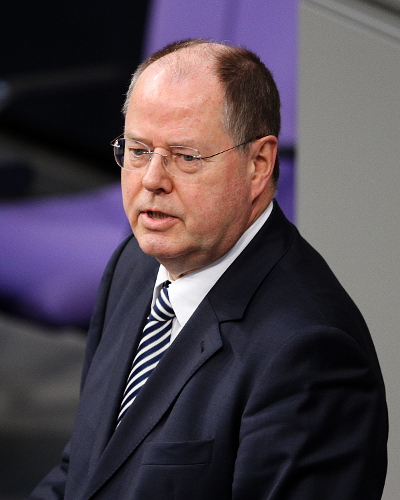
Peer Steinbrück in action
4. A Powerful Rhombus
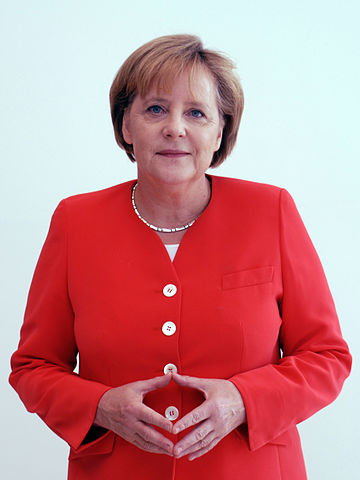
Angela Merkel is close to becoming Europe’s longest-serving female head of government and Germany’s second-longest-serving postwar chancellor. But her real achievement is channeling the spirit of Jay Z and pioneering an iconic diamond-shaped hand gesture, the Merkel Raute. The symbol has been the subject of headlines (“The strength is in the diamond”- Die Welt), used to publicise industrial glue and even the subject of the Germany’s largest ever election poster.
Merkel’s triumph in projecting her personal brand has allowed her to reposition her party to the centre of the political spectrum and build a political movement on the back of her success in projecting German influence across Europe. Although she has been derided for her origins on the wrong side of the Iron Curtain, for stifling political debate and for forcing tough policies on troubled Southern European states, she remains adored by Germans as “Mutti” (Mother) of a successful economic powerhouse. With strong support in the polls, she remains the candidate to beat.
Originally published on the Urban Times.





