
In a region where the Arab Spring took off partly due to the high rates of youth unemployment, job creation is arguably one of the main concerns for governments and the private sector alike.
In the Middle East, at least 100 million jobs must be created by 2020 in order to close the employment gap. Lebanon itself suffers from a 35% youth unemployment rate and a high level of brain drain.
Enter Circular 331. This bold initiative led by Lebanon’s Central Bank (BDL) has gotten the local start-up scene talking, and commercial banks are beginning to perk up to the idea of investing in new and innovative companies. In August of 2013, BDL issued Circular 331 which aims to inject funds into Lebanon’s fledgling start-up ecosystem through the commercial banking sector – up to $400 million could be used to invest in Lebanon-based start-up companies. If a bank is willing to invest in a start-up company, BDL will subsidise 75% of the equity investment, minimizing the bank’s risk of investing in a sector as of yet, untouched. Such a programme can potentially help local entrepreneurs succeed and slowly begin to reverse the brain drain through job creation.
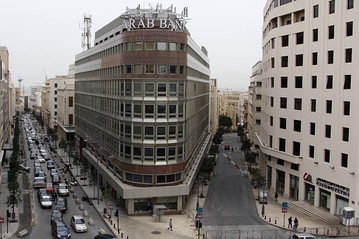
Image Credit: Mohamed Azakir/Reuters
A two-day conference aimed at shining the spotlight on start-ups in Lebanon and across the Middle East took place in Beirut last week. Featuring more than fifty speakers from Lebanon and abroad, the BDL Accelerate Conference was the first of its kind to hit the Lebanese capital – namely because, unlike other start-up conferences, this one was sponsored by Lebanon’s Central Bank.
During the course of the conference, one Lebanese venture capitalist commented that “Banks have no idea how to invest in technology,” voicing a worry that has beset the local start-up community since the announcement of the Circular. As can be expected with any new initiative, there are some well-founded complaints.
Wary of handing shares to banks
Entrepreneurs are worried about handing over a large percentage of their fledgling companies in the form of equity to banks, especially since the Circular states that banks can take up to 80% equity shares. If Lebanese bankers stick to their conservative approach of looking to lend to companies just for the sake of returns, then there is cause for start-ups to worry.
However, a year after the announcement of the circular, the first Lebanese start-up has benefited from it; in June, Al Mawarid Bank announced that it had invested $200,000 in local start-up Presella for an equity stake of around 20%. With the first Lebanese commercial bank stepping into the local start-up ecosystem, it can be hoped that other banks will want to keep up with the latest trend. In fact, programs launched by several banks have been implemented in the hopes of fostering entrepreneurship in Lebanon. BLC’s “WE Initative” is one such programme, which focuses on training and empowering female entrepreneurs, while Al Mawarid Bank recently launched YOUThinc, an initiative which aims to support young entrepreneurs whose start-ups will benefit the knowledge economy.
These initiatives join the burgeoning start-up ecosystem of various programmes and schemes launched by NGOs, incubators, and training centres, among others. Arguably, Lebanon’s NGO and private sector have done much to foster the start-up scene and encourage a knowledge economy to take hold in the country, through venture capital funds and other forms of lending. In order for the most to be made out of Circular 331 and the potential benefits that can be made for the sake of its economy, Lebanon’s banks must shake off their conservative views and learn how to deal with start-ups, ideally by setting up separate branches or departments that specialise in such investments.
Without an effective central plan laid out by the government, these sorts of initiatives may pop up for a relatively short time and, without government support or the correct infrastructure in place, may fade away without creating the impact they’re meant to make. And without drastic improvement to Lebanon’s infrastructure, especially its internet capabilities, local start-ups may seek to settle in greener pastures. It certainly is a flaw to fix when successful entrepreneurs visiting Lebanon make it a point to complain about the state of the country’s internet, as was the case at the BDL Accelerate conference. Reversing any country’s brain drain is an uphill battle, but with more initiatives aiming to grow Lebanon’s knowledge economy, then there may be hope yet for Lebanon’s start-up scene.
About the Author





