
You’d think a house was primarily a place for someone to live, but the quintessentially capitalist reduction of housing to just another commodity may price out entire generations from buying in their locality.
As housing hits the headlines in Britain it is apt to remind ourselves how unsupportive current market conditions are to many whose dream of owning their own house seems destined to remain exactly that, a dream.
There is surprisingly little that protects first time buyers in particular from speculators and investors who see houses not as homes but instead a mere means to profit.
The question we must ask is whether our governments are doing enough to mould the market for the benefit of all, or whether instead current incentives mean that the booming industry that is “buy-to-let” is set to destroy the ambitions of those seeking “buy-to-live” for the foreseeable future.
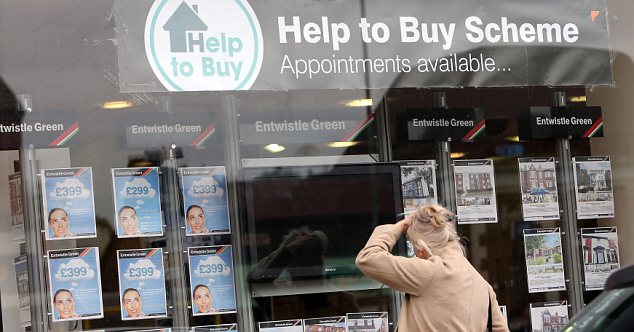
Image Credit: This Is Money http://bit.ly/1zbP9nu
Housing on the British Agenda
Housing is an issue of growing urgency. This was one of the take-home messages reinforced by a busy week for British politics.
It was the Chancellor’s announcement on stamp duty that dominated the post-Autumn statement headlines: an eye-catching policy that will see 98% of home-buyers pay less but the top 2% pay more (and from his perspective hopefully derail any momentum behind Labour’s “mansion tax”).
Arguments between the Conservatives and Labour centre on the means by which wealthy homeowners might contribute to efforts to redress the fiscal predicament Britain finds itself in, but stamp duty reform also hints at another damaging problem rife in the current economic climate.
As we have been sometimes reminded, first time buyers are struggling to get onto the property ladder, with prices in many areas vastly outstripping the purchasing power of wages at present. The recent move from Mr. Osborne might be a nod to their difficulties, with the reduction in stamp duty enjoyed by many aiding the majority of prospective buyers without particularly extravagant personal wealth.
This announcement was by no means isolated in its nature. Before George Osborne took centre stage we were told of fresh investment in garden cities from the coalition government: an attempt to ease pressure in a housing market where stunted investment in building is clashing with an ever rising population.
Finally, outside the realm of mainstream party politics, a new breed of politico (or revolutionary if you go by the title of his book) Russell Brand stepped in to help push the concerns of residents on the New Era estate in East London towards the top of the news agenda. The group were protesting the sale of the estate to a US private equity firm earlier this year, amid widespread fear that their rent might soon triple, pricing them out of their homes and leading to mass evictions.
This conflict between the value of housing as an economic commodity, and its value to people in a more social manner is a specific example of a deep and troubling problem in this market.
The Buy-to-Let Boom
The autumn statement of course brought great media attention to the state of Britain’s post-recession finances. The general conclusion appeared to be that regardless of the Chancellor’s optimism not much had changed. Things still aren’t particularly great, but they could be even worse.
However one industry seemingly unaffected by general post-2008 economic gloom is residential investment or “buy-to-let”.
Prior to the financial crash, property investment was a trademark component of the boom years. Investors awash with cheap credit (showered on them by lenders engaging in somewhat questionable practice) were enthusiastically buying properties in pursuit of profit, sometimes before they had even been built.
However even once the aforementioned questionable practices of the financial services industries were finally proven to be unsustainable, and markets across the world crashed, residential investment remained surprisingly buoyant.
For many, both wage levels and the availability of mortgages were severely constrained in the aftermath of the crisis. Alongside these tangible effects, confidence in the property market, once seen as a safe bet, also plummeted. The consequence of this was that for those involved with residential investment, a great stock of potential renters developed.
The government’s response to recession was a slashing of interest rates, and for the wealthy minority (whose income in contrast to the many remained resilient, even growing in plenty of cases) buy-to-let remained a highly lucrative opportunity with contextual events making it all the more attractive.
The result is that despite general economic bust in recent years, buy-to-let has boomed, reaching the point in October this year where 1 in 5 homes in Britain is now owned by a private landlord. A shift towards viewing property as merely another profit returning commodity is a critical part of this trend.
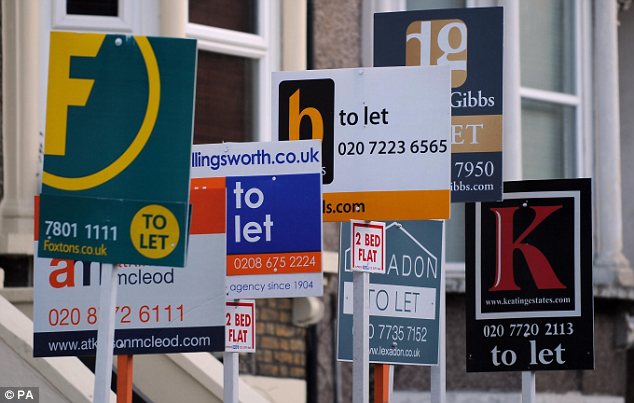
Image Credit: This Is Money http://bit.ly/1jryLrK
The Problem
Channel 4’s Dispatches programme this week covered “The British Property Boom”, charting the winners and losers of rising house prices in sought after areas with a primary focus on London.
A clear narrative emerged, which has been picked upon by commentators in the past. Changing attitudes have produced a property boom that benefits investors and speculators (at home and abroad), and those who are losing out are those seeking to buy their own house to live in (a sizeable group as demand for property increases alongside economic recovery).
Young people have often been advised by older generations that rent is akin to dead money. Getting on the property ladder has long been heralded the safest of investments, for so long as you are prepared to live in a property long enough to ride out any dips in the market, money that would otherwise go into the pocket of a landlord goes towards purchasing an asset for yourself, which might at a later date come to be sold for your benefit.
However in a fast moving market young home buyers, particularly those working in the London area, find themselves out-gunned by capital-rich speculators and investors that operate in desirable areas in and around the city.
If wealthy landlords and property investment groups buy up all available housing at a premium, they effectively force those seeking to live in a particular area (be that due to work, or the desire to be close to one’s family) to pay them rent in order to do so.
Though there is of course nothing legally wrong in doing so, the actions of those partaking in the buy-to-let boom fundamentally constrain the ability of others to live their lives as they wish, and hamper the aspirations of hard-working individuals who seek the rather understandable security and stability of owning their own home.
Some have begun to see the problem in the current market arrangements, shying away from this evidently lucrative business of investment. But the issue remains. The average cost of a home in London is now in excess of £500,000 and residential investment is a large part of the reason behind house price inflation comfortably outstripping wage inflation. As things are, there are many who are losing from the current trend with whom we might have a great deal of sympathy.
Are the Incentives Wrong?
People respond to incentives. This is a basic principle familiar to sixth form Economics students across the country. And it is this basic principle that makes the current strain on the housing market all the more frustrating.
Current market conditions seemingly fail to do enough so as to even a playing field which if left alone privileges wealthy investors who, for example, usually are more than capable of placing a sizeable cash deposit very quickly in contrast to the average buyer.
At present there is easier access to affordable capital available for potential buy-to-let landlords. In many ways this is perhaps understandable as the risk to the lender is decreased by the rental income taken by buyers of property for investment purposes. This state of affairs is emphasised by recent stories of potential home owners who are denied mortgages desperately posing as buy-to-let investors to try and realise their property purchasing aspirations.
Less understandable perhaps is that at present, new developments are capable of being sold to foreign investors before locals seeking a place to live even are offered a viewing. The Labour Party set out stall to try and prevent this back in February, but both their level of commitment to this policy and their ability to tame capital as they seemingly desire are yet to be seen.
In a modern world where the effects of globalisation on labour markets yield passionate debate about immigration and its impact on housing, the relentless globalisation of capital continues to have an often neglected effect.
Most paradoxically, if it is accepted at a governmental level that there is a continued strain on the UK housing market, buy-to-let landlords benefit from modest but not insignificant tax breaks.At present those engaging in this practice are able to claim back their interest on mortgages against their income on rent.
Whilst this might not seem the most heinous of tax loopholes, tax breaks are usually set in place to encourage certain forms of behaviour in an economy, yet the behaviour in question seems to hurt the market with multiple property ownership not uncommon for a minority of wealthy investors whilst eager first time buyers continue to struggle to find a place of their own.

Image Credit: Locate Plus http://bit.ly/1GhSYuH
Getting Priorities Right
If we genuinely believe that the purpose of an economy is to make decisions about the distribution of resources that optimise welfare for all then something is clearly wrong with the housing market as it is.
Though the buy-to-let boom might yield figures that seem positive for the economy as it recovers from post-2008 turmoil, these figures tell only half the story. Behind the aggregate impact of the buy-to-let market are individual stories, distributional consequences, winners and losers. The winners in this scenario are those seeking to utilise the housing market as a means to profit and the losers are the many who just want somewhere to call their home.
Let us also be clear, this is not a UK specific problem. Cities all over the world are experiencing similar symptoms with the relentless power of capital leading to the pricing out of locals from residential areas.
Perhaps it is time to reclaim housing as something more than a commodity to be played with by the super-wealthy, but instead a fundamental human need and one which should be capable of being enjoyed by all.
Barring widespread investment in new houses (which appears unlikely given constraints of both public finance and space) there is genuine need for some kind of creative intervention from the government. Rolling back the benefits available for buy-to-let purchasers could be a such a move and a potential step in the right direction.
The status quo might be justified by some eventually, but ought to be argued for, rather than passively accepted without questioning. The clashing of “buy-to-let” and “buy-to-live” seems an arena of debate that will only become more noticeable with time and this means that governments need to be clear about what they perceive to be the priority of the housing market. At present, it does not seem obvious that they have got this right.
About the Author





