
“There can be no prosperity without infrastructure, but infrastructure projects don’t necessarily benefit the poor.” Those are the opening remarks of a report recently released by International Rivers entitled, Infrastructure for Whom?, which essentially critiques the infrastructure strategies of the Group of 20 (G20) and the World Bank, in Africa.
The World Bank (with the generous help of the the Group of 20), have for the longest time had the reputation of funding large and centralized infrastructure development projects in the Global South, specifically in Africa. The rationale behind this has always been and still is that; ‘centralized infrastructure projects with private participation will lower the costs of services such as electricity and water.’
The Inga Dam hydropower project on the Congo River in the Democratic Republic of Congo (DRC), is one good example of a large and centralized infrastructure project funded by a multi-lateral, in this case the World Bank. Work on Inga Dam 1 and 2 commenced during the era of President Mobutu Sese Seko who was better known for his excesses and oppression of the people of the DRC than for exemplifying leadership.
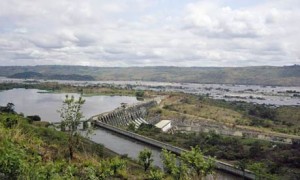
After much delay and huge cost overruns that eventually saw the initial budget quadruple, the 2 dams currently operate at a mere 40% of their capacity. To add insult to injury and after close to 50 years of funding by the World Bank; high-voltage customers (mines and other industries) consume 85% of the total voltage, while shockingly only 6% of the households in the DRC have access to electricity, despite the fact that the primary function of the Dams was to provide electricity to the people as a matter of priority.
Sadly the same people without electricity are and will be repaying the loans accorded to them by the World Bank and other multi-lateral banks despite the fact that this all precious commodity known as electricity exists to them only in myths and legends.
The World Commission of Dams (WCD) was tasked with the work of evaluating the developmental impacts of dams and specifically multi-purpose dams a la Inga between 1998-2000, by the World Bank and the International Union for Conservation of Nature (IUCN). The commission’s findings, rather than applauding the big infrastructure projects carried out by the World Bank, hang between issuing caution and outright condemnation of the trajectory that the Bank and other Multi-laterals have been and are still on with regards to the financing of such projects.
While the report notes that dams have played a role in development, but interestingly stays silent on the specifics, perhaps the most poignant conclusions of the report are that, “in too many cases, an unacceptable and often unnecessary price has been paid to secure those benefits, especially in social and environmental terms, by people displaced, by communities downstream, by taxpayers and by the natural environment.” The report also goes on further to state that, “Lack of equity in the distribution of benefits has called into question the value of many dams in meeting water and energy development needs when compared with the alternatives.”
Akosombo on the Volta, Inga 1 and 2 on the Congo, Kariba on the Zambezi and Manantali on the Bafing River are some of the large infrastructure projects that were used as case studies by the WCD. Instead of jumpstarting the economies of the respective countries/regions and boosting development, these projects, as noted by both the International Rivers and WCD reports, ‘did not deliver the expected benefits, suffered from massive cost overruns, and turned into an albatross on their countries.’
Often, nobody talks about the environmental and human impacts of building large dams on the people, but one such project on the Kenya/Ethiopia border known as Gibe 3 has brought to the fore the amount of suffering that communities in the path of such infrastructure projects go through. Most importantly, Gibe 3 highlights the level of corruption, high-handedness and collusion between governments and financial institutions.
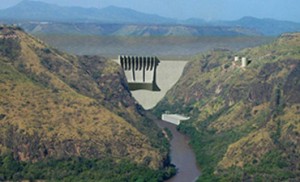
The Ethiopian government began the Construction of the Gibe 3 dam in 2006 on the Omo River, which is a lifeline to half a million, mostly indigenous, often neglected and extremely poor communities in Eastern Africa. Gibe 3 is essentially supposed to serve as a multi-purpose dam; providing electricity to Ethiopia and Kenya, and irrigation of crops along the Omo Valley. Interestingly the earlier mentioned report of the WCD states clearly that multi-purpose dams performed the worst among all types of dams.
It is estimated that approximately 300,000 people rely on Lake Turkana, in Kenya for their survival. This just so happens to be the world’s largest desert Lake. The waters of the Omo River which will provide the water for Gibe 3 provide 90% of all the water that feeds L. Turkana.
In addition to this, the International Rivers report on Gibe 3 states that, “At least 100,000 people depend on food cultivated in the river’s flooded banks, a practice known as flood-retreat cultivation. The river’s harvest helps support an additional 100,000 people through local trading practices between farmers and herders. This traditional food system is crucial for these communities because they live in one of the poorest, most remote parts of Ethiopia and have long been politically marginalized.”
In man’s usual fashion of trying to play ‘god’, the outcry from the affected communities and civil society organizations prompted the developers of Gibe 3 to come up with a ‘solution’ with regards to the disruption that damming of the Omo River would cause to the natural flood cycle and ultimately the livelihood of the people. A controversial artificial flooding method lasting 10 days was heralded as the answer, but in a hydrology study commissioned by the African Development Bank (AFDB), it was noted that in the first place there is absolutely no assurance that this method of flooding would be maintained and even if it was, it is a poor alternative to the river’s natural flood cycle and would ultimately, “fail to maintain the local economy, livelihood and most importantly the ecology.”
In addition to this, the same report by the AFDB continues to paint a grim picture for L. Turkana and the communities that live around the area, as it emerged that not only will the level of water in the lake dwindle during the years (several) that the reservoir of the dam will be filling up, but that eventually the dam will deny the lake up to 85% of its normal annual inflow in a year, not forgetting that this will automatically lead to drying up completely of the most productive fishing area of the Lake.
As if things couldn’t get worse for the local communities who are mostly fishermen and livestock keepers, the report also notes the reservoir will, “forever capture” sediment transported by the river, leading to downstream erosion, changes in water quality, and reduced water tables”, while the African Resources Working Group suggests that 50-70% of impounded water could be lost through evaporation.
This project, like the Inga dams and other large infrastructure projects, are funded mostly by multi-lateral development banks as mentioned earlier. The Ethiopian Electric Power Corporation (EEPCo), an entity run by the government of Ethiopia is the overall authority with regards to the development of this project. The money however, for financing and construction of the dam can be traced to multi-nationals like Salini Costruttori, an Italian company that ‘won’ the tender to construct Giber 2 and now 3. Salini was ‘surprisingly’ awarded both contracts without any competitive bidding process taking place.
It is instructive to note at this juncture that in 2010, the G20 at their annual meeting that was held in Seoul created a High Level Panel (HLP), through its Development Working Group whose main task was to prepare a report recommending ways to scale up financing and identify regional initiatives for large infrastructure projects. The Development group which interestingly refers to infrastructure as its ‘crown jewel’ received the report a few days to G20’s annual meeting that was held in Cannes in 2011. In one of the recommendations that reads like a nightmare, the HLP specifically calls for, ‘insisting less on competitive bidding requirements in order to accommodate Public private Partnerships (PPPs) more easily’.
Most of the countries where these projects are being carried out, specifically in Africa, not only have repressive regimes but corruption thrives unabated and it is absolutely shocking that members of the G20, the World’s choir masters of the transparency and accountability genre of music, would even suggest such a thing. It is little wonder that companies like Salini can get a contract without participating in a competitive bidding process in a country that is famous for not tolerating transparency and accountability because the government is the first and final authority.
As it stands, Industrial and Commercial Bank of China (ICBC), China’s largest bank, has to date underwritten a $500 Million loan for the electro- and hydro-mechanical works that have been awarded to Chinese state-owned company Dongfang Electric Corporation,with the blessings of all if not most regional and international multi-lateral banks.
Despite heavy protests from international civil society groups and Kenya’s own Friends of Lake Turkana, it seems that nothing will stop the construction of Gibe 3, not even the fact that Gibe 1 and 2 can be labeled as failed projects, that the dam will exacerbate pre-existing tensions between the local communities when already scarce resources run out, or even the fact that all evidence available points to the fact that such large infrastructure projects are simply not worth the effort. What is known for sure is that there is a looming battle and it will be fierce.
**In the next blog post, we will seeks to address the efforts of various groups fighting to stop the construction of such dams and also showcase alternatives to these large infrastructure projects that will not only benefit the people, the economies of these countries and regions, help conserve the environment but most importantly give the power of decision making back to the people.**
About the Author






[…] the course of the Blue Nile as part of a project aimed at building the biggest hydroelectric dam in Africa, Egypt’s reaction was […]
Grand Renaissance Dam of Ethiopia must stop immediately .. The River Nile is not a local river .. It is an ((( International River ))) .. Egypt has not agreed on this catastrophic dam .. It is a disaster .. The people in Egypt are so angry as Ethiopia is continuing to construct a catastrophic dam without Egypt’s approval .. The Nile is an International River .. And Egyptans are not like other people who keep silent on their rights .. Egyptians will eat those who try to prevent the water from reaching to its normal destination with their teeth while they are alive ..
[…] proposed solution is to put popular pressure on the World Bank, which provides the finance for many big land deals and has global influence over how land is bought and sold. According to Oxfam, the bank has […]