
The tribunal that was supposed to deliver justice for those killed under the Khmer Rouge has been dealt – quite literally – a deadly blow. The death last week of one of the few remaining on trial for crimes committed under the communist regime, Ieng Sary, has all but extinguished any remaining embers of hope for a meaningful conclusion to what has been a shambolic affair.
Under the brutal dictatorship of Pol Pot, who’s Khmer Rouge controlled Cambodia between 1975 and 1979, up to 1.7 million people are thought to have died. In a fit of paranoia, innocent civilians were rounded up, arrested, and detained in nightmarish prisons such as the notorious Security Prison-21 (S-21), many of whom were subsequently taken to nearby “killing fields” to meet their deaths. Around 17,000 are thought to have been incarcerated in S-21, but we may never know the true scale of what happened there.
Frustratingly, the tribunal once described as “the most important case since the Nuremberg trials” has had to face persistent setbacks. Political wrangling, corruption, and bribery are just a few of the things in recent years to lead the court case a merry dance. Moreover, the mechanisms of the Extraordinary Chambers in the Courts of Cambodia (ECCC), the body created in 2003 to prosecute those guilty of war crimes, have failed to run smoothly. Originally an all-Cambodian affair, the ECCC was at least quick to notice the “weakness of the Cambodian legal system and the international nature of the crimes”, and so it took the necessary step of seeking out international assistance. Yet things have scarcely improved since then.
Though backed by the United Nations as part of a hybrid system, the ECCC still relies heavily on overseas donations. Beset by the global recession and the Euro crisis, however, monetary aid from outside of Cambodia has been hard to come by. Indeed, only last year the tribunal was worried that it would run out of funding altogether. The earthquake in Japan, a country that stumps up around 50% of ECCC funding, has added a further fiscal hurdle. But the shortfall in cash for the trial has had visible results, too. Only this month the court’s native-speaking interpreters and translators went on strike after failing to receive over twelve week’s worth of pay.
To compound matters, the interference of Cambodian officials in Phnom Penh, the country’s impoverished capital, has done little to alleviate the situation. The Prime Minister, Hun Sen, who himself is a former Khmer Rouge officer, has openly criticised and attempted to stall the ECCC; more worrying still is his alleged affiliation with some of those standing trial. However, the behaviour of Cambodia’s leader is not unique – it in fact epitomises the messy nature of a tribunal beset with corruption, favouritism, resignation, and money laundering.
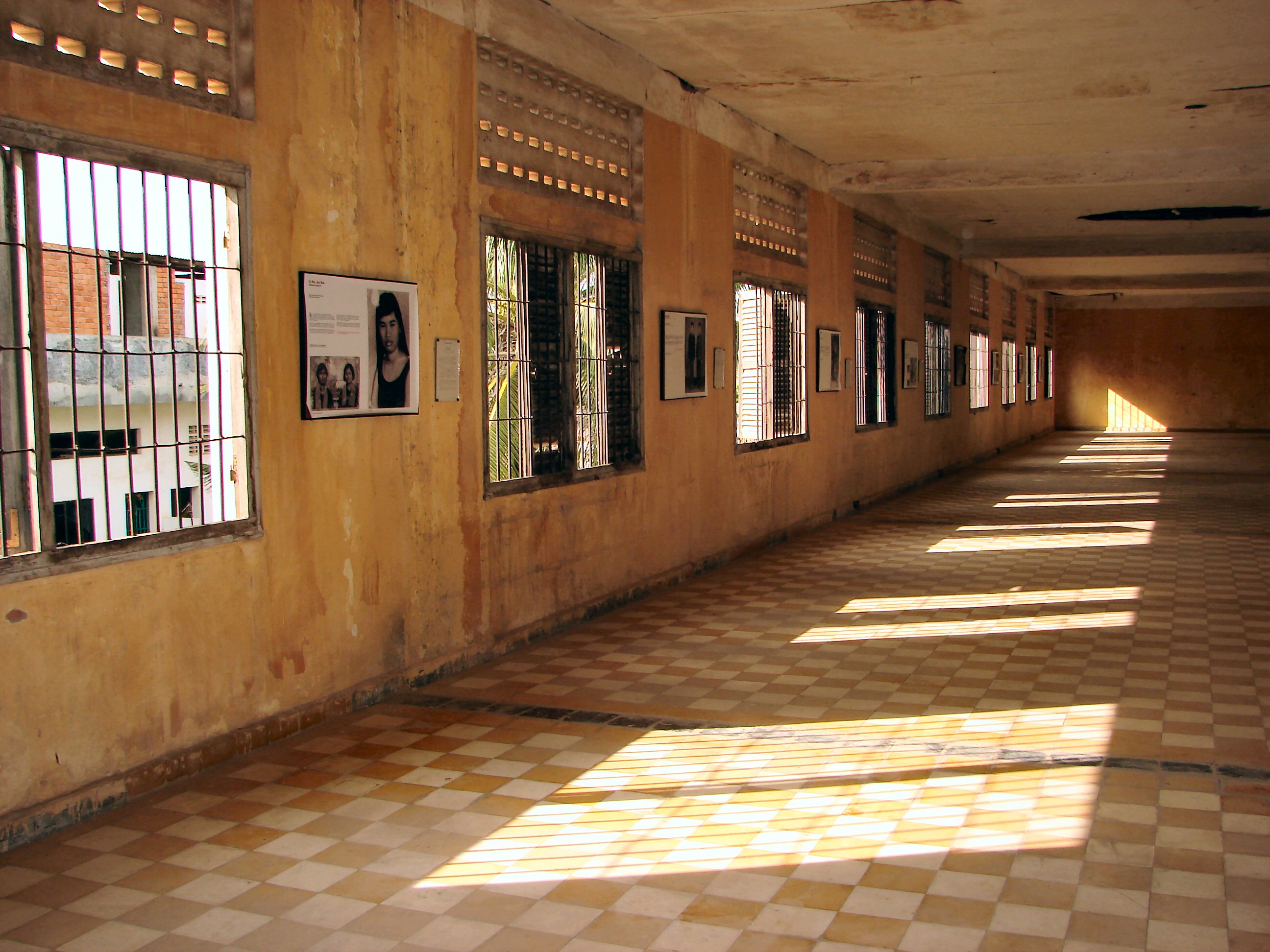
The ghostly remains of S-21. Image: Wikimedia Commons.
So what now for the Cambodian tribunal? It is difficult to see the positives. Since 2007, more than $173 million has been pumped into a trial which has so far failed to bear fruit. The conviction of Kaing Guek Eav, or “Duch”, a leading Khmer Rouge official, in 2009, has been the only reason for cheer. To add salt to the wounds, it is becoming increasingly likely that there will soon be nobody left to trial at all. Ieng Sary was 87 when he died this month. The others indicted by the ECCC are of a similar age and there is a very real prospect that they too will shuffle off the mortal coil, threatening to plunge the court into further disarray. Ieng Thirith, a leading female figure in the Khmer Rouge and wife of ‘Brother No. 3’ Ieng Sary, exemplifies the problem: last September she was declared medically unfit to stand trial, having been diagnosed with Alzheimer’s disease, and has since been set free.
It is hard to see how justice can now be achieved, given all that has gone on. The death of Ieng Sary is surely to be one of the final nails hammered into the tribunal’s coffin. So far this year a measly 15 to 20 days of court time has been allotted to the trial, which is rapidly ceasing to serve a purpose.
There are lessons to be learned from Cambodia, that is sure. The failure of the international community to respond to the events of the 1970s is one. Why did it take nearly thirty years for a UN-backed court to be established? Of course, the interference and persistent stalling from Phnom Penh did not help matters, but this should not excuse the absence of the West, nor the ease with which Cambodian officials have seemingly manipulated proceedings. Also, from a legal perspective, could the trial not have been conducted under the covenant of international law? Many other war criminals have been successfully tried and convicted at The Hague, so why not those guilty in Cambodia?
Today, the trial of the Khmer Rouge war criminals continues to trudge along. It is clear that many in Phnom Penh do not want the world to know what really happened inside S-21 and elsewhere, and are bent on denying Cambodians justice. Sadly, it looks as if it is they who have won out: not the thousands who so tragically lost their lives thirty or so years ago.
About the Author






[…] http://archive.the-ipf.com/cambodian-genocide-trial/ […]