
When the horrible images of the twin tower attacks invaded our TV sets in 2001, everyone, for the first time, became familiar with a few Arab names such as Al-Qaeda, Osama bin-Laden, and a word not that often used before. That word was terrorism.
Since then the idea of what a terrorist looked like became very clear in everyone’s mind: the bin-Laden-type-of-guy lives in the middle of nowhere, probably a cavern somewhere in the Middle East, Africa or Asia and is able to produce low quality videos where he shows off his weapons and victims.
Misleading stereotypes apart, on the international ground, the issue is much more complex than in our media-influenced minds. The failure in adopting the Comprehensive Convention on International Terrorism means that there is no agreed definition of terrorism on an international level. The main reason for that is the League of Arab States does not classify terrorism as any “armed struggle for liberation and self-determination”.
This international impasse allowed all members of the international community to give the meaning they wish to this powerful word. As the activities organized by these terrorist groups are overwhelmingly condemned and no mercy is spared to the individuals that take part of these attacks, it seems that anything is acceptable in order to annihilate them. For that reason, many politicians have overused the word terrorist to justify the force used against those classified as such.
Examples are endless. The Al-Jazeera Journalists serving a seven-year sentence in Egypt are in prison under the under the country’s anti-terrorism laws, being accused of spreading false information and supporting the Muslim Brotherhood. In March 2014, when many radical protesters caused millions in damage in anti-government demonstrations that took over Venezuela, Nicolas Maduro called them terrorists. Failing to address the demand for a democratic Syria, Bashar al-Assad took all unaccepted measures to defeat those he understood to be “terrorists”. After more than three years in civil war, more than 170,000 deaths and many civilians made refugees, the country now finds itself in the hands of jihadists.
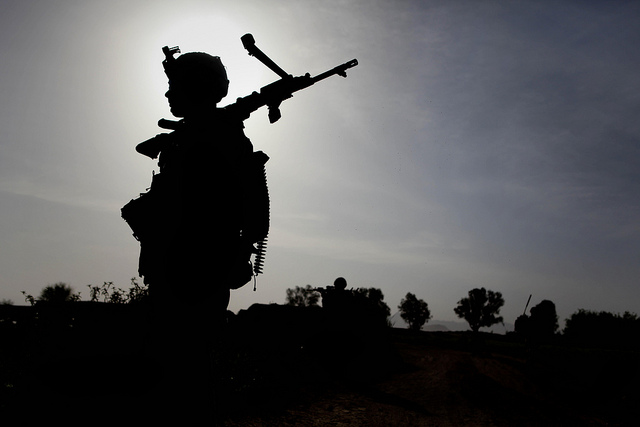
Marines on Patrol, Image courtesy of Marines © 2011, Some rights reserved.
The fact that there is no definition of terrorism not only benefits states to justify their acts but also to prevent them from “becoming terrorist” themselves. Israel considers Hamas a terrorist group. It is clear that Hamas’ main aim is to destroy Israel and that they have no regards for innocent people, being them Israelis or Palestinians. However, it is also true that Hamas has been elected democratically the same way Benjamin Netanyahu has. So why one can be considered terrorist and the other not, since both are responsible for the killing of innocent civilians?
Terrorism seems to be one of the most daunting challenges of the twenty-first century but it has been around long before 9/11. Decades ago before becoming terrorists, they were communists, separatist, Republicans and so on. Terrorism seemed somehow secondary at the time because what was unacceptable was to be from the Brigate Rosse, IRA or ETA. Despite his unsuccessful plan, we can definitely say that Guy Fawkes was a terrorist and yet he is celebrated and seen as a revolutionary around the world.
It is not often efficient and there is a chance of creating an even powerful and resistant being. Certainly the determination of an international definition of what terrorism really is won’t make the issue of radicalism any easier. The return of the US in Iraq just shows the incapability of the “War on Terror” to put an end on terrorist practices. It would, however, help preventing groups exercising their democratic rights from being targeted as ‘terrorist’ when they are really not. Taking into account the benefits states have in not ascertaining what terrorism means, an international definition of it is unlikely to become reality.
About the Author





