
The European Citizens Initiative (ECI), introduced by the Lisbon Treaty enables citizens to make proposals to the European Commission for initiation, modification or to stop the proposal and process of legislation. As the hopes and expectations of Europe’s citizens grows as must their voice within the EU. Is the initiative Europe’s first step to direct democracy or is it just the illusion of democracy promoted by EU?
The creation of ECI was preceded by several years of hard-work from several initiatives and organisations and was finally introduced last year in April 2012. Since then several transnational initiatives have been started. Among them just one, the Right to Water Initiative, has been successful in reaching the 1 million signatures needed and been successfully accepted, so far in 12 countries. The initiative is still collecting signatures to this date and hopes to reach 2 million by September. But there are many initiatives that have not shared the same success. After a year of practice, it is clear that there are many shortcomings. For the ECI to succeed there is much development work to be done, it lacks accessibility and promotion as well as technical properties, usage and EC responsibilities.
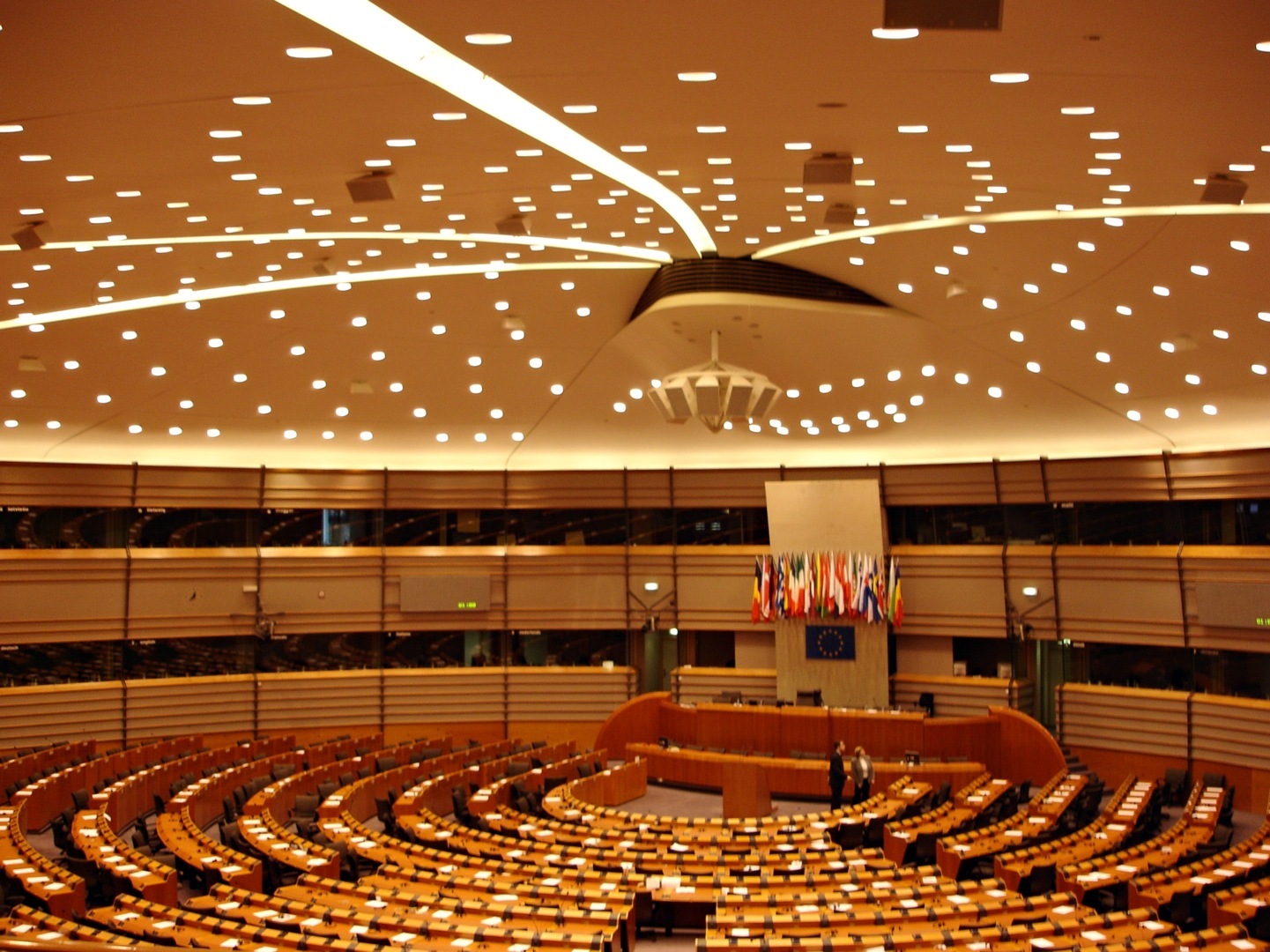
Brussels European Union Parliament. Image credit: Xavier Larrosa.
The democratic process is visible in the Lisbon Treaty, the fact that the ECI was introduced is testament to this , as is the strengthening power and competences of the European parliament. The only body directly elected by citizens, that in should in theory represent and advocate the needs of its citizens in front of the other EU bodies. However, the representation is not exactly a reflection of all voices and is often about pursuing individual visions rather than the representation of shared ones. There is much evidence that suggests a growing scepticism towards the European parliament, and with elections taking place next year the future of the EU could be faced with several different options that will determine its own future.
Related: The EU is Creating a Lost Generation
Despite some initiatives to bring the EU closer to the citizens, their effect has not yet been sufficient. I would dare to say that the majority of the EU’s population is either indifferent to the EU issues or ascribe the worsening economic situation to this power apparatus. The reason for this is not just the EU failure but as well the failure of national politics. In several states the interest in politics is really declining since the people do not feel any support, seeing only corrupt affairs, misconduct, depletion of public finances, rising unemployment and recession. The representative parliament has been failing. The voters many times do not have an honest choice of the candidates; they do not have anyone who could really represent them.
If politics do not correctly function inside the member states, it is more complicated to raise interest in transnational politics. There needs to be a new approach to policy, or better said, to give the policy to the people. The Policy-making process should not represent the competition between individuals and their strife for leadership and rule. It should stand for the local dialogue and participating decision-making process that would reflect the real needs and desires of the community. On these bases, the representative approach, jointly decided, could follow up and communicate policy on the broader, national and transnational scene.
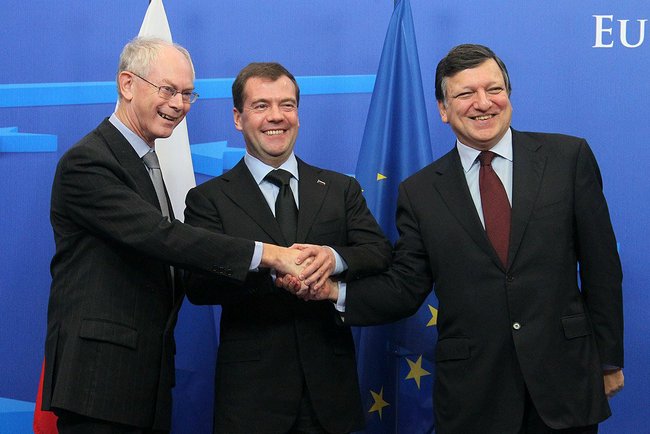
Dmitry Medvedevwith President of the European Council Herman Van Rompuy (left) and President of the European Commission Jose Manuel Barroso. image credit: Presidential Press and Information Office http://kremlin.ru/visits/9732
If we would like to search for a more democratic tool on the European level, we cannot overlook the already mentioned inner incongruities. And so the EU should look for a way to guarantee democracy in it’s member states, ways to protect the rights of the citizens and help to create an internal communication and information network among all levels of society. It is not possible to reach the welfare state in EU countries if there is a one-way dictate from above. Vice versa, from the bottom, from the roots, the ideas and capacities are rising to strengthen the common project, and this kind of cooperative dialogue is the strongest democratic tool.
Democracy, for many, symbolises the society of values like equality and freedom. For others, it is more about participation in the decision-making process. The inner character of the EU apparatus should reflect these understandings and should advocate such values in it’s member states. Building-up inner trust and co-operation would act as an indication of democratisation where each voice would not just be heard but it would also have a weight in the course of events.
About the Author





