
In 2013, US President Barack Obama and the Cuban leader, Raul Castro, shook hands at Nelson Mandela’s memorial service in Johannesburg, and it took the world by surprise. After five decades of separation, it appeared something new was emerging. Almost a year and a half later Cuba was to attend the Summit of the Americas. This was the first time it had done so, and was also the first full meeting of the Cuban and US’ heads of state since the change of direction by Obama’s administration.
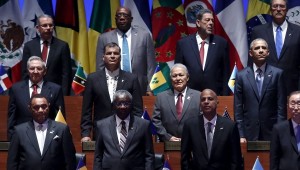
Image Source: http://bit.ly/1PSzce0
The Summit’s overriding theme for this year was “Prosperity with Equity; the Challenge of Cooperation in the Americas,” which encompassed topics such as education, health, security, democracy, citizen participation, and others. In essence, the central objective was that working together was vitally important for the betterment of the near billion people who live in the region.
The significance of this meeting is profound, as for the first time in decades, the leaders of two nations who had been enemies for over half a century sat down at a table together face to face. It is doubly significant when one considers the history of these two nations. When John F Kennedy signed an embargo on Cuba, he oversaw the indefinite severing and poisoning of relations between the newly formed communist nation and the United States. For instance, American business were banned from trading in Cuba, and citizens were prohibited from visiting. In addition, numerous Cuban goods were likewise forbidden from being imported.
Since these restrictions were enacted, relations between the two have been almost non-existent. Irreconcilable ideological differences between the two nations kept them at loggerheads for the rest of the Cold War. Cuba for its part, saw its ally in the Soviet Union, receiving generous funding from Moscow. This changed when the USSR and the Warsaw pact collapsed in the 1980’s and 1990’s. Cuba was now a fish out of water, its main ally was effectively non-existent, from being one of over a dozen communist countries, to one of six, and its economy suffered. It does of course survive today, but with a monthly wage of about $20, and food ration cards, it is by no means a wealthy country. These events did little to change American attitudes, and the administrations of Bush, Clinton, and Bush again reflected this, and until 2013, the same could be said for Obama.
It is therefore understandable why this meeting is regarded as historic, and why the two countries coming together perhaps attracted more attention than the other issues at the Summit. Nonetheless, it certainly does not discount them. On the contrary, the meeting complements them. A case in point is the objective of security. Having been listed as a sponsor of terrorism by the United States Government since 1982, Obama made it known that he plans to remove Cuba from the list of state sponsors. As a result of this, Cuba may well feel more inclined to cooperate when it comes to safeguarding against threats that affect the region. With the removal of an institutionalised suspicion, the discomfort that Cuba has likely been feeling for decades will hopefully begin to ebb away. No longer regarded with open hostility by the United States, Cuba could possibly feel more comfortable to committing itself to addressing security concerns in the region, instead of having to contend with being portrayed as an enemy by its superpower neighbour.
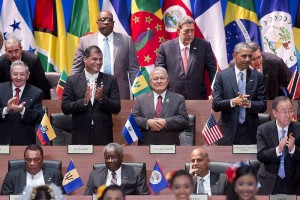
Image Source: http://bit.ly/1doCs2M
In addition to cooperation on the basis of security, another aim of the summit was to foster economic growth. And likewise, it is again understandable why Cuba’s presence was so prominent. As noted, the Cuban economy is not in the best of shape, with low wages and rationing of food, the situation is not ideal. If their relations with the US continue to improve, however, these days of impoverishment might be numbered. If the US does eventually lift the embargo, Cuba will be open for US firms to do business. In turn, this could well set precedence for the other countries who attended the summit to likewise seek to do business with Cuba. Whilst their businesses and populaces are not under the same restrictions that US citizens are, Cuba has remained defiant in keeping out foreign investment. An influx of American capital would arguably generate an interest from other states in the region.
In conjunction with the aim of economic growth, a third, and equally important aim of the summit was the encouragement of democracy and citizen participation. In contrast with these apparent values, Cuba continues to pursue one-party communist rule. The same family has led the country since the fall of the Batista regime, and the government policy towards dissenters regularly involves incarceration. Moreover, there are numerous committees where one can inform on their neighbours, a sinister Caribbean style doppelgänger of East Germany’s Stasi informers. It should also be noted that the influx of Cuban emigres to Florida escaping Castro’s government is a good indication that disagreement from the populace does not sit well with Havana. In light of this, it seems doubtful that Cuba will adopt a democratic system of elections any time soon. As Karl Vick in a recent Time Article points out; “Economic reform does not automatically mean political freedom” a statement that most certainly rings true.
To reiterate, this attitude clashes sharply with the purported ethos of the summit, which in turn demonstrates why Cuba’s presence is something of note, and indeed why this is important for the region. Cuba is going against the grain of all of what has gone before. Having been seen as anathema by the United States, it is now facing its old foe on more cordial terms. It is considering adopting economic reforms that only a few decades ago would have not even crossed their minds. It is also coming to the table to discuss security, without the stigma of being regarded a terror sponsor, that has followed it for decades. It is opening itself up, willing to fully join in as a notable player in the region. Yet it is doing this without the political reform that normally accompanies a state being welcomed fully into the international community, such as East Germany, Czechoslovakia, Poland, the rest of the Eastern Bloc. In essence, Cuba’s presence represents an interesting paradox. Willing to change, but cautious at the same time. This is not particularly surprising given events of the last 50 plus years, but it does illustrate that the winds of change are perhaps picking up, and that by appearing at the summit, it has shown the world that it is willing to compromise and make itself known, and that even the most bitter of relations can soften.
About the Author





