
It’s a startling statistic: One in five Brazilian women are likely to suffer from domestic violence. That includes physical, psychological, and emotional abuse as well as marital rape. The aggressor is usually a boyfriend, husband, ex-partner, or male family member.
In light of the problem, an online campaign launched earlier this year is challenging “real men” to show their solidarity against domestic violence.
The World Bank with the participation of the Maria da Penha Fernandes Institute [pt] among other Brazilian women’s right movements and societies launched a campaign [pt] in March 2013 called “Real men don’t beat women” (Homem De Verdade Não Bate Em Mulher).
Brazilian athletes, actors, and society members joined the action on the World Bank Brasil’s Facebook page to inspire Brazilians to speak out against domestic violence in Brazil. They joined on Facebook, Twitter and Instagram posting self-pics holding a sign featuring the campaign slogan under the hashtag #souhomemdeverdade, which in Portuguese means “I‘m a real man”.
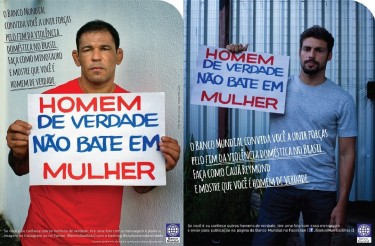
“Real men don’t beat women”. Image Credit: Banco Mundial Brasil on Facebook
“Every four minutes a woman is killed by domestic violence in Brazil”, according to the figure presentedin a state meeting of the public prosecutor’s office in Rio Grande do Sul in March 2013:
The Map of Violence 2012 (Mapa da Violência de 2012) [pt, PDF] reports that 91,930 women were murdered in Brazil between 1980 and 2010. On average, there were 4.5 women killed for every 100,000 women, with Espírito Santo, Alagoas, and Paraná states having the highest rates.
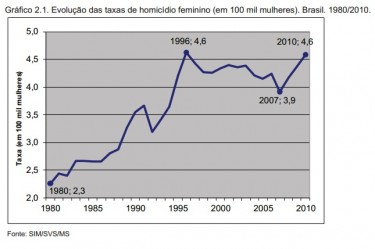
Rates of women murdered per every 100,000 women in Brazil from 1980-2010. Source: Map of Violence of 2012.
A special edition of the report dedicated to feminicide in Brazil [pt, PDF], concludes that “68.8 percent of the murders of women take place in the domestic sphere” and in the 20 to 49 age group, “65 percent of the assaults are committed by the partner or ex”. The report also adds:
According to Wikigender:
Sadly, these statistics are not on the decline. Calls for help to the Brazilian Women’s Assistance Center have in recent years increased by 16 times.
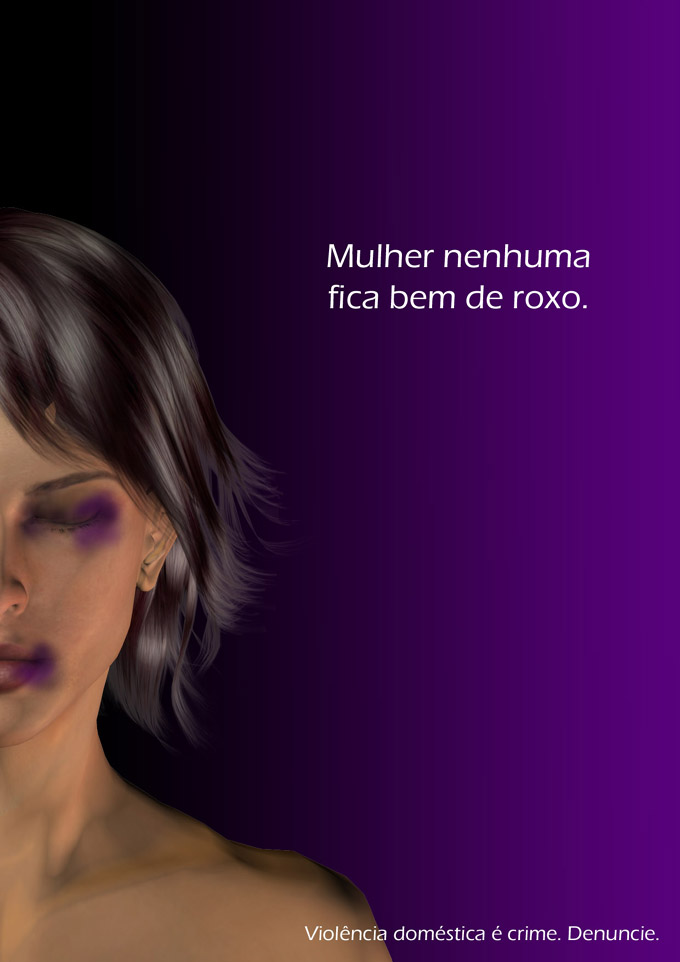
“No woman looks good in purple”. Domestic violence by pablobasile on Deviantart (CC BY-NC-ND 3.0)
“Men who beat women aren’t right in the head”
The World Bank, together with Brazil’s National Congress and Camara TV, also promoted a Short Documentary Contest on the Maria da Penha Law, which awarded five short stories illustrating the lives of:
1st place: A group of women working against gender violence in Sao Paulo [video: Maria Maria]
2nd place: In a group of craftswomen Carmen found the strength to leave her abusive partner. [video: Divas – Female Voices]
3rd place: Lucilia, an indigenous woman, who repeatedly tried to file a report against her ex-partner, but the police never investigated [video: One Law for All]
4th place: Silvia, an activist for women’s rights, murdered by her son in law, who used to beat her daughter [video: Sílvia]
5th place: Veronica, Carmen, and Sara, who managed to free themselves from abusive husbands [video Life Stories Marked by Domestic Violence]
As human rights activist Natasha Baker wrote on her blog after finding out about the work and life of Maria da Penha, “One of the greatest benefits of networking is discovering other organizations, companies and movements that are bringing hope into this world”. For those who want to denounce a domestic violence or any gender-based violence in Brazil, dial 180:
Homem que bate em mulher não bate bem da cabeça. Denuncie ligando pra 180: http://t.co/PbHRpl4913#souhomemdeverdade#sevalorize
— Dicas Nova (@DicasNova) May 18, 2013
This article originally appeared on Global Voices.
About the Author





