
When my professors were my age they heard that Brazil was the up and coming country; it was the one to invest in and they would watch it grow to unprecedented levels, when I began college it was still the country of the future. Brazils involvement in the BRICS countries (Brazil, Russia, India, China and South Africa) shows promise based on the fact that just over of quarter of global output in 2012 was from these countries according to the IMF.
But let us look at Brazil by itself, not the past but its future. The country is hosting the 2014 World Cup and the 2016 Olympics. This should have given a substantial boost to the overall economy and the social attitude of Brazilians. But this is not what is happening.
Rising transportation costs have angered citizens. When the government imposed a sharp increase in the cost for public transportation the country witnessed some of its worst protests to date, with a single bus fare increasing from 3 reals ($1.40, £0.90) to 3.20.
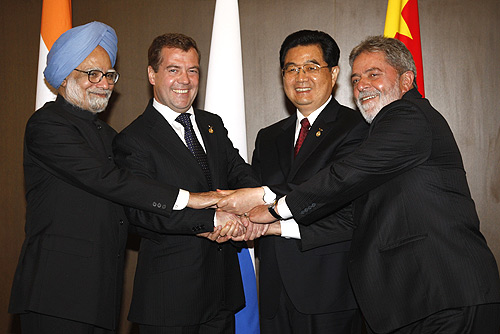
BRIC leaders 2008. Image credit: Presidential Press and Information Office www.kremlin.ru
Whilst the World Cup and the Olympics may generate new manufacturing jobs over the coming years, we must think of what happens after these events. The country will have stadiums, once filled with the cheering crowds and incredible athletes, which will be reduced to ghost towns that serve as reminders of a once hopeful economy. There will be thousands more unemployed once the jobs that were required to build the stadiums are eliminated.
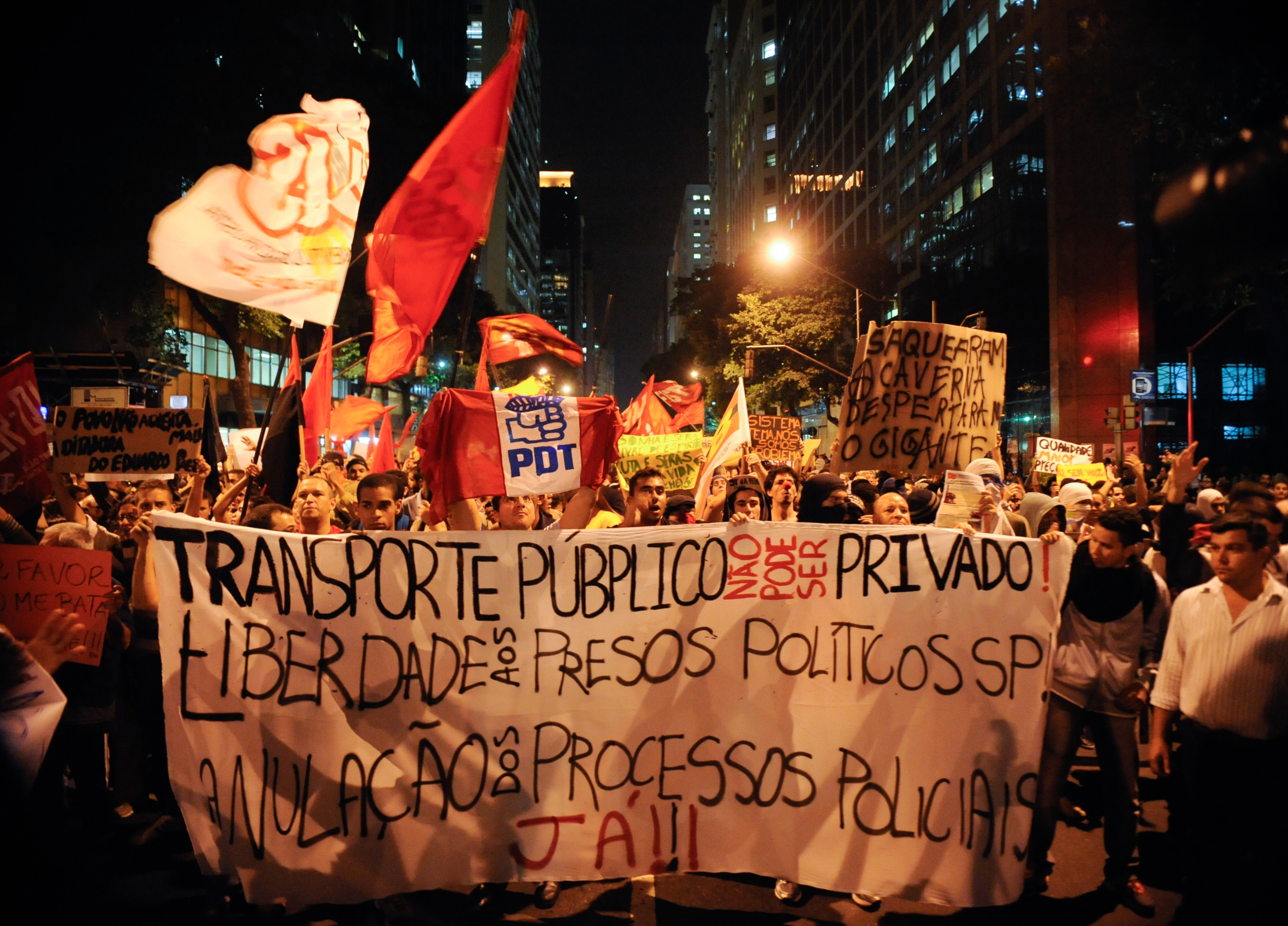
2013 Brazilian protests. Image credit: Tânia Rêgo/ABr
We can hope that the other BRICS countries may contribute to rebuilding the country and perhaps the Western world can offer aid, but there are too many uncertainties in the situation. While Brazil may be able to cling to hope after these events, the impending economic crisis, constant drug problems, and debilitating social unease does not look promising for this once hopeful country.
About the Author





