
The dust has finally began to settle on Caitlyn Jenner’s transition to womanhood. Through the snippets of carefully choreographed dialogue, we have finally started to see Jenner’s role in shining light on transgender issues that have, thus far, remained mostly invisible to the public.
It is largely accepted that visibility is essential in order to reduce stigma and, as a member of America’s most watched family, Caitlyn Jenner has been presented with a unique opportunity to be one of the leading voices and figureheads within the transgender community. Jenner’s public transition has sparked an even more public conversation about the state of local perception of the trans community due to the fact that nothing like this has ever happened before. Jenner has transitioned from the personification of public American masculinity – fulfilling the role of father, provider and athlete – to appearing on the cover of magazines as an out and proud woman, thus thrusting a traditionally monolithic social standing into chaos. Caitlyn’s notoriety was established well before the manifestation of her public gender identity change – appearing as a member in the hit show Keeping Up with the Kardashians – but her fame has been catalysed by the infatuation with her story seen through mainstream media outlets.
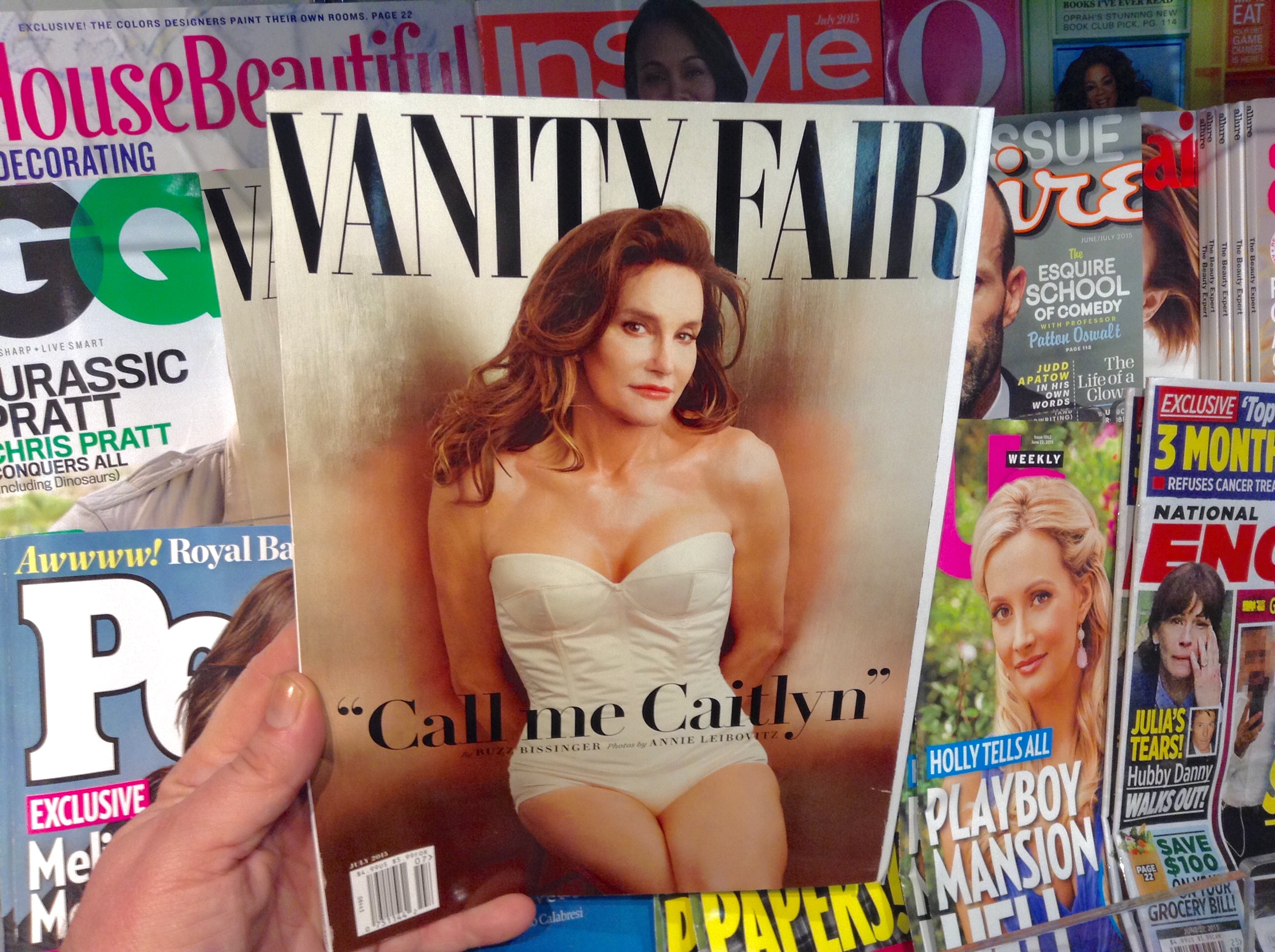
In light of this, there has been a varying degree of scrutiny regarding how Caitlyn has portrayed herself during this post-transition experience. Many have highlighted a supposed ‘showing off’ of a new wardrobe consisting of designer dresses in her new TV series I Am Cait, which premiered on 26th July on the E! Network. Caitlyn’s Vanity Fair cover has also been criticised for being the embodiment of attraction – something which arguably panders to heteronormative and cis-gendered narratives of female sexuality.
These particular examples have the danger of creating an unrealistic expectation that most trans women cannot conform to simply because of the cost. At this moment in time there is no comprehensive insurance schemes for transgender citizens of America and companies can opt out of transition specific cover, meaning that the vast majority of trans Americans would need to pay for operations out of their own pocket.
This, in conjunction with bullying and harassment, undoubtedly contributes to the astoundingly large suicide rates of trans youth – statistics which are reported as being three times higher than with heterosexual, cis-gendered teens. In a National Transgender Discrimination Survey, 41% of the trans respondents reported having attempted suicide at some point in their lives as a result of the plethora of social dangers and economic barriers that stand in the way of trans citizens being able to live a normal and happy life.
However, we must also recognise that Caitlyn was able to easily obtain the necessary producers to transition with no fear of financial burden, meaning that her transition mirrors an experience that very few will share. Admittedly, Caitlyn has had the full weight of vacuous media scrutiny questioning her every move and making a global tabloid on what is undoubtedly an extremely private period in her life. Despite this, there will always be the question of how successful Caitlyn can be as a role model when, arguably, she has had it easy compared to the vast majority of trans people across the United States.
The ‘Hate Violence in 2013’ report from the National Coalition of Anti-Violence Program conducted that trans people are much more likely to experience threats, sexual violence and harassment than any other groups, with such figures becoming increasingly worse when examining trans people of colour.
Caitlyn Jenner has already been seen to be using her social platform to shine a light on the significant problems faced by the transgender population of America, such as throughout her acceptance speech for the Arthur Ashe Courage Award. Here, Jenner used this opportunity to speak about Mercedes Williamson, a young, transgender woman of colour who was found in a field having been stabbed to death. As recent as last week, Jenner also mourned the deaths of two trans women on her website. She cited that, following the deaths of India Clarke and K.C. Haggard, ’11 trans women have been killed in the United States in the past six months – most of them trans women of colour’.
Other members of the Jenner family however have fallen under scrutiny for their actions surrounding minority culture. For example, Kylie Jenner was recently heavily criticised by Hunger Games star Amandla Stenberg after posting a photo of her herself with cornrows to her Instagram page. Stenberg commented on the picture stating that Kylie should use her position of influence to expose racism and police brutality experienced by many black Americans rather than directing attention towards her wigs. In doing this, Kylie has indirectly appropriated minority culture rather than using her platform and privilege to educate wider audiences of the many injustices currently facing oppressed groups.
It is through instances such as this that Caitlyn Jenner has succeeded where her daughter has failed. She has highlighted herself to be the paragon of an educator who uses her media platform and social privilege to amplify the voices within her newly found community – even on issues that do not involve herself directly.
If this is going to be the archetype of Caitlyn’s involvement in transgender issues then this could mark a monumental step towards increased positive attitudes towards trans people worldwide. There is no doubt that good intentions lie behind Caitlyn’s actions and consistent exposure to this will serve to do nothing other than remove the sense of taboo surrounding trans issues that has prevailed for far too long.





