
A Young Nation
South Sudan became an independent nation in 2011. The new-found independence brought with it the hope of a fresh beginning. At least hope in the sense that things would get better and not worse. Yet hope, for all its worth, does not materialise out of nothingness. It requires will and strategy, not to mention a good dose of political fait divers to ensure people that things will get better. The point of these being to assuage the national mood. Yet, we hear very little in the Western press about what is really going on in South Sudan.
While I cannot possibly cover the whole history of the conflict and the ensuing independence years, I hope these words fuel some desire, for those who may just share my concern, to go and engage with it further.
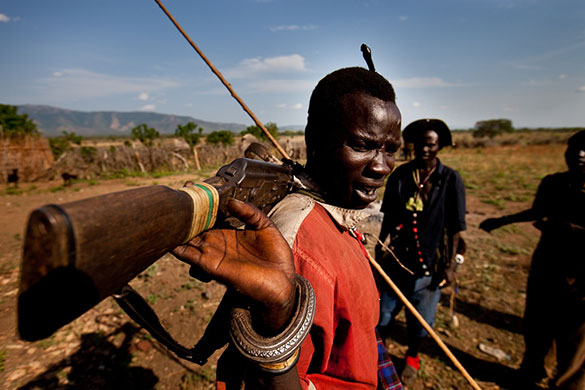
South Sudan is not a major news story in the Western press.
Divide and Rule
South Sudan’s problems, though not entirely caused by colonialism, undoubtedly cannot be understood outside of a post-colonial critique. The situation in South Sudan is not an exception to post-colonial rule. Britain left in 1953 and a deadly civil war ensued shortly after. The tactic of divide and rule, so perfected by the Belgians in neighbouring Congo and Rwanda, was used to great effect.
The British sought to keep the North and South divided with the North regarded as part of the Arab world and the South as part of Africa. The South was kept under-developed for a long period because the British had little interest in it. Had they found oil, perhaps the situation would have been different. Alas, such was not the case and South Sudan continued to suffer. Given the differences, partly manufactured though they were, the South was keen to liberate itself from the authoritarian North. When the civil war ended and the drums for independence began beating, the hope was manifestly evident throughout.
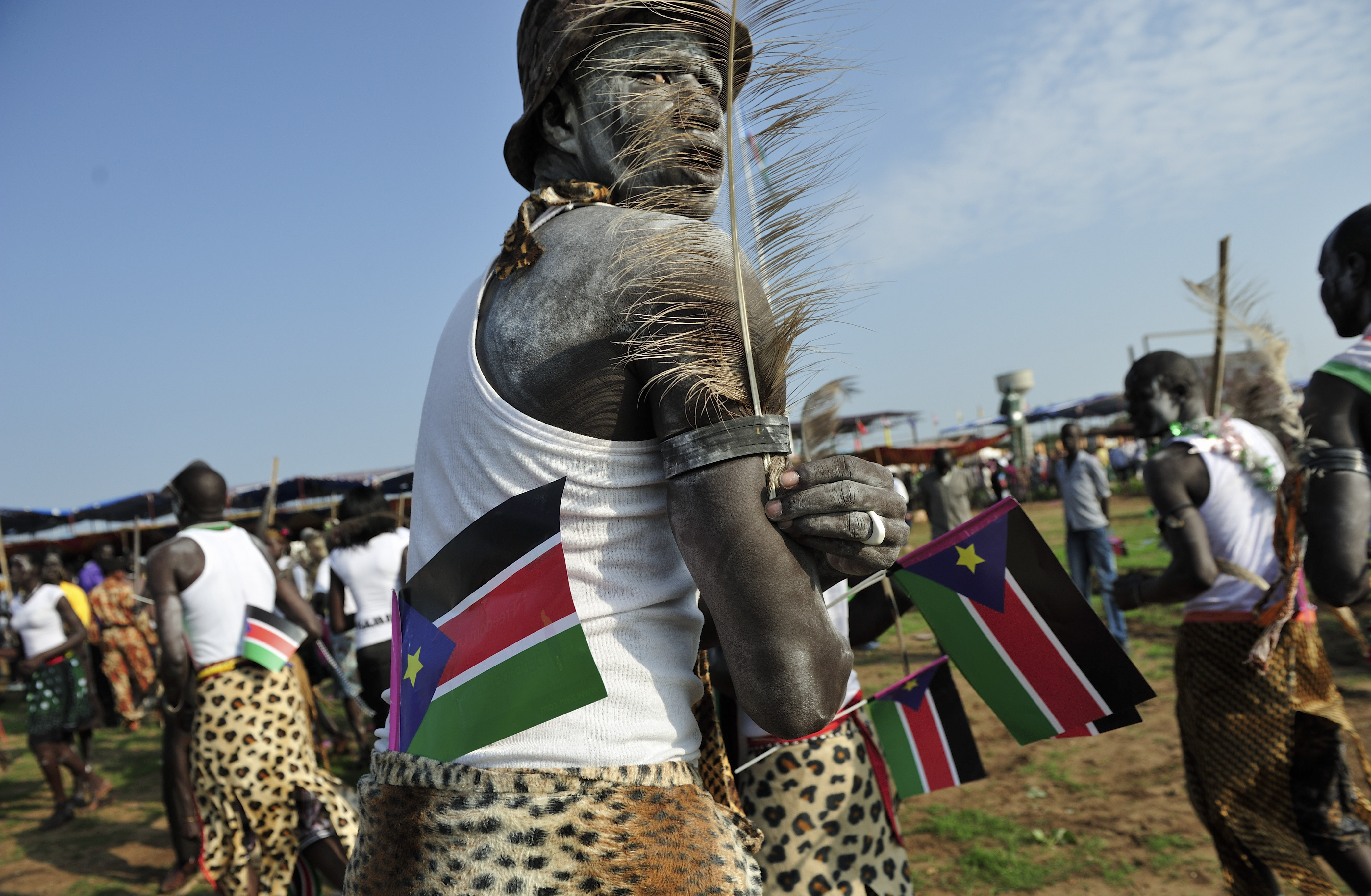
At present, the difficulty lies in the fact that the South Sudanese economy lacks diversity and the State is wholly reliant on revenue from oil in order to fund its expenditure. Such revenue is insufficient to address developmental challenges in education, healthcare and infrastructure. The question then is, how does a country like South Sudan, barely two years old and under-developed, begin ascending? Its only export is oil, a natural resource that most countries can only wish to have direct access to, but in spite of this South Sudan does not seem to be benefiting very much.
This is partly because trade routes are practically non-existent with only one national paved road, crossing over to Uganda. China and US relations with South Sudan have also complicated matters in some cases. Their only interest in the region is oil so they have had to walk a tight rope between Sudan and South Sudan over their border disputes inflamed by access to the oil fields situated in the area. It amounts to nothing less than divide and rule, in other words they create animosity, pretend to be friendly with each party and reap the benefits of social decay.
Thucydides’s Maxim and Other Challenges
The new state faces numerous challenges. Some of these are related to state consolidation, improving security and delivering services to the population. Although South Sudan has great agricultural potential little incentive has been given to the population to produce in order to export. In any case, the lack of road infrastructure impedes market access to producers rendering their activities fruitless. Despite the work of aid agencies, private organisations and government-led initiatives, the country remains impoverished.
The conflict with the North needs to be addressed and the international community has a duty to assist as evidenced by the number of international charters signed. What troubles me is the non-invocation of R2P in cases like this. Without straying into a deeply realist perception of international relations, it appears that Thucydides’s maxim makes perfect sense, whereby ‘the strong do as they wish while the weak suffer as they must’. This should serve as a warning to governments throughout the world who are often rather keen to evoke R2P but rarely do it in order to relieve poverty, or altogether eradicate it.
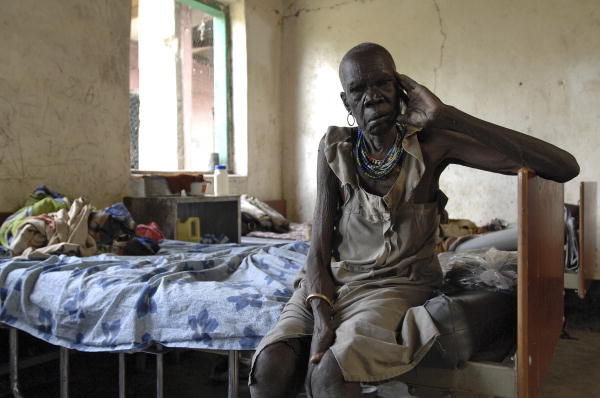
The international community rarely takes steps to eradicate poverty.
Due to the conglomeration of issues for which there seems to be no end, as illustrated by the endless statistics and graphs, South Sudan has been termed a ‘failed-state’. What is surprising is not so much the fact that it was regarded so by an American piece of software, though this is quite amusing, what is most worrisome is that the country essentially had a failed ‘birth’ so to speak. How a country gains independence and is automatically considered a failed-state, I do not know nor presume to find out, and how useful is it to categorise States in such a way anyway? Perhaps it would be a lot better off if it had not be subjugated to such harsh treatment by its neighbours and the world at large. Silly software.
Ignoring History
As noted, South Sudan’s problems trace back to the colonial epoch, when divide and rule tactics were employed in order to maintain the South dependent on the North. The period of colonial rule, manufactured by Western powers during the Age of Discovery, submitted large numbers of people to a rule of obedience. To the youth today, colonialism is a far-away reality from a non-existent past. Not only does it appear to be non-existent but its nature is seen as incongruent, difficult to understand. History must not be ignored if we are to ensure the same horrors are not repeated. While slavery existed and quite brutally so, it has not left us entirely. We are slaves to the structures of power that do little to address international concerns, though mainstream media would have us believe otherwise.
If Western countries are so dedicated, as their rhetoric seems to suggest, in eradicating poverty in all its forms, they must propound a system of equals that does not contribute toward the tragedy of the commons. Unfortunately it is this very system that calcifies the status quo and, with it, any hope of a meaningful transformation.
Absurdities come alight when one stops for a moment to see the world through the eyes of others, instead of our own. The affliction of blindness suddenly disappears when we are faced with the reality that most people in the world experience on a daily basis. Our dissociation from that reality makes it surreal and gives it an air of the ‘exotic’. Yet absurdities also come alight when instead of talking on behalf of others we listen to others speak. The ‘absurdity’ here is the very act of listening because we never usually do, it is absurdly necessary. This symbolic act, revolutionary as it is in the greater scheme of things, is fundamental. The voices of the voiceless must be heard and it is the job of the privileged to ensure that they are.
South Sudan’s future is grim. One may hope and one may contribute toward it being otherwise, but if conditions remain and R2P is not evoked to tackle inter-ethnic conflict and deal with the root cause of problems in South Sudan, then optimism will be futile. It is time for the UN to act, not by providing soldiers to protect the civilian populations, but by ensuring such protection becomes unnecessary in the future. Only by developing the country will the International Community be helping the world’s youngest country to build a path to a sustainable future.
This article was originally published on the Urban Times.
About the Author





