
For over half a century Cuba has been ruled by the Castro regime and has remained largely cut off from the rest of the world. The island’s economy is in a state of collapse and still inhabits the crippling stranglehold of the US embargo. However, 2008 saw the aged Fidel step aside for his brother Raul and a set of reforms introduced, designed to expose certain areas of business to the open market, offering new prospects for the nation.
Since 1959 when Castro and his army of Brezhnev-era Apparatchik’s gave Batista and his cronies the boot out of Cuba, the country has remained under strict communist rule. The popular revolt was widely celebrated among the Cuban people and gave the prospect of a more egalitarian future, away from the previous regime of corruption and greed. Education, transport, hospitals were all nationalised and every citizen was entitled to a free state pension. Life expectancy in Cuba soared and child malnutrition was virtually eliminated. This however, is only a fraction of the story, as the regime has been fraught with problems from the start.
The fall of the Soviet Union and the Eastern Bloc spelled disaster for the Cuban economy. The Soviets would buy entire harvests of sugar cane at inflated prices, removing the need for competition and leaving the Cuban economy wholly dependent. Workers had jobs for life and became lazy, with the common mantra at the time being – the government pretends to pay us, and we pretend to work. This legacy can be felt within the Cuban workforce even today and the blow to manufacturing and agriculture has meant that Cuba now imports twice as much as it exports; which has proved highly unsustainable for such a large state.
Cuba’s story does not simply rest with economic woes. The regime has fallen into the generic category of a revolutionary overthrow, which saw a regime virtually more oppressive than its antecedent. History has shown that a revolution is seldom successful without strong military leadership, which assumes the role of governance after victory. Dissidents of the Cuban regime are regularly made prisoners of conscience and Amnesty International’s Human Rights Watch describes Cuba as being the only country in Latin America that suppresses virtually all forms of political dissent. As was once said of Prussia, Cuba is not a country that has an army but an army that has a country.
The regime though appears to have loosened its grip and made reforms allowing small-scale private enterprise, reforms of agriculture, and the permitted private sale of automobiles and homes. Since the reforms were announced over 400,000 Cubans have signed up to become self-employed. Make-shift shops are popping up all over the street selling house-hold goods, start-up hotels and street market style property auctions. These reforms could seem small in the eye of a Westerner, but one must take into account that a Cuban previously had to go through the government for such trivialities as a gutter repair. The buying and selling of property also represents a core tradition within a capitalist system.
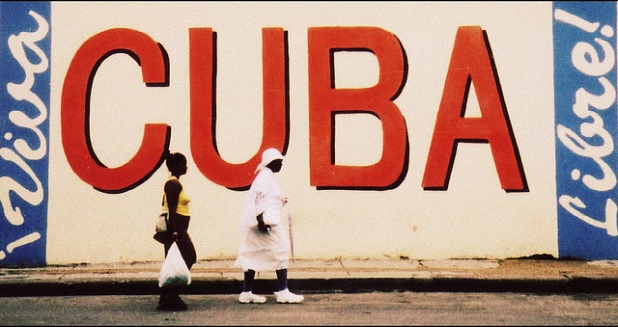
A new word has entered the Cuban vocabulary – entrepreneur!
An end is now in sight for the Castro regime as 81 year old Raul – after recently being elected for a new term – has announced that he will be stepping down from the presidency by 2018. In a 30 minute speech upon re-election, he outlined his possible successor – one Miguel Diaz-Canel. At 52, Diaz-Canel is a spring-chicken in comparison with the old guard that constitute the current government and he is the first to have been born after the revolution. Diaz, the newly promoted first vice president is now a mere skip of the heart away from the presidency and not much is known of him.
Many have reportedly classed Diaz as driven more towards problem solving rather than ideology. One must however not make the mistake of thinking he is not of staunch socialist standing. The Castro brothers would not be so keen for him to succeed if he was not.
The government still insists that the country remains on the road towards socialism and the reforms are simply necessary at present.
All this begs the question of what will happen when the growing middle-class created by these reforms demand greater rights. It is quite possible to imagine that with the end of the Castro regime in sight, Cuban people will be thirsty for change.
Are we about to see a slow movement towards the middle ground from one of the last real bastions of the left?
This article was written by George Foster and originally appeared on World Outline.
About the Author





