VIDEO LINK: http://www.theguardian.com/world/2015/apr/19/700-migrants-feared-dead-mediterranean-shipwreck-worst-yet
As the voyage for seeking a better life for many migrants led them to their untimely death in the Mediterranean Sea, the question begging an answer is has Europe really done enough to address the issue of African migration to Europe?
The choice of leaving one’s homeland is intrinsically difficult to make and coupled with the risk of apprehension or in worst cases death, implies when a person is making the choice of leaving behind the familiar, it is because home is no longer a safe haven. To the Libyans fleeing their motherland in addition to the other migrants, the fateful decision of leaving behind their country torn apart by a well-armed militia, proved to be the catalyst for a surge of key Human Rights and political debates concerning African Migration in the EU.
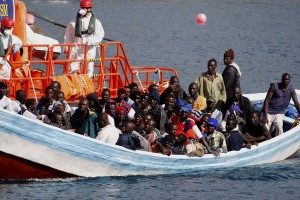
Image Source: http://bit.ly/1J5ewxs
The major rescue operations undertaken by Europe constitute the Frontex Joint Operation Triton, which at best is a reactionary operation designed to only limit the scope of rescue under the former Italian Operation Mare Nostrum, to search and rescue migrants once they have entered the Mediterranean Sea based on the Law of the Sea. Beyond this, there haven’t been major efforts under the paradigm of EU Refugee law to expand the scope of rescue operations due to the narrative that the increase in the rescue operations or other policies thereto, will directly translate to increased migration owing to prospective immigrants being more inclined to making the journey from Africa to Europe.
This is profoundly misguided as those whose lives in Africa disable them from living in humane conditions, without access to basic physiological needs will continue to migrate, with or without rescue effective operations being in place. Furthermore, the EU turning a blind eye to such incidents or deliberately not engaging with effective solutions to the problem of African migration is only contributing to misguided policy making on the crisis of African Migration. For instance, the politics of migration policy making has taken the ‘African Invasion’ rhetoric in the EU where the Mediterranean border has been transformed to a political theatre for the EU’s engagement with Africa and its regional issues.
Their sheer calls for action following this tragic incident has at least pulled up the EU’s veil of ignorance and the international civil society amongst others, is hungry for effective migrant policy reforms. In France for instance, a rally was recently organized by the Collective for Another Migration Policy that witnessed reiteration of the EU’s unwillingness to introduce reform and how it was due time for the EU to take responsibility for all those who have died while trying to approach the Union’s borders. The EU leadership is yet to introduce a concrete set of migration policy reforms but to state that, it has failed to adequately address the issue of African Migration, is indeed to underscore the death that has been engulfed by the Mediterranean Sea, at the hands of the uncompromising EU.
About the Author