
Commemorated by none, forgotten by most, and unknown to many in the West, the story of the United Arab Republic is nowadays relegated to the footnotes of Cold War histories.
Way back in 1958 the governments of Egypt and Syria were forged into a single state under the presidency of Egypt’s indefatigable Gamal Abdel Nasser. Billed as a triumph of pan-Arabism and a show of defiance to those of Nasser’s regional rivals who had aligned themselves with the West, the Republic disappeared from the map and from history when Syria seceded just a few years later in 1961.
Though ultimately responsible for little other than the trampling of Nasser’s pan-Arab dream, the days of the Republic did produce one of history’s thought-provoking coincidences. As the militaries of Egypt and Syria integrated, many of Syria’s best and brightest young officers were sent for instruction at prestigious Egyptian military institutions. One such student was an ambitious Syrian airforce captain by the name of Hafez al-Assad. Enrolling in Cairo’s Air Force Academy, the future Syrian dictator – and father to Bashar – studied alongside one Hosni Mubarak.
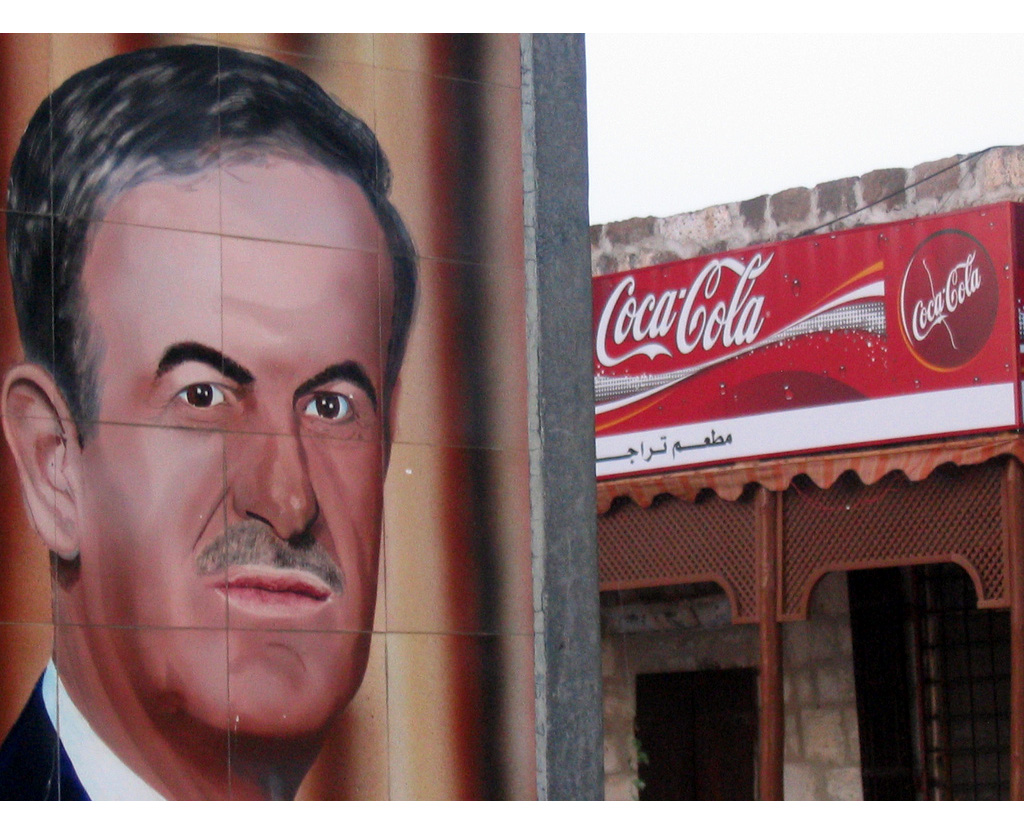
Hafez al-Assad, 6 October 1930 – 10 June 2000) was the President of Syria for three decades. Born to a poor family of minority Alawite background, he served in the Syrian air force, before rising through the ranks of the Syrian-led branch of the Arab Socialist Ba’ath Party, and seizing power in the 1970 Corrective Revolution. Image credit: James Gordon
More than fifty years later, the legacies that these two classmates from Cold War Cairo left behind continues to fuel violence, hatred and despair in the two countries that once stood united. The mosques of Damascus, images of which adorn the monument to the pan-Arab movement Nasser erected in Cairo, have been shelled to ruins, whilst the stories coming from the Egyptian capital in recent weeks range from the tragic to the farcical.
The relationship between the two states has always been a turbulent one. Brief periods of unity, epitomised in the joint Republic, have been marred by dispute after dispute. Under Hafez al-Assad, Damascus severed diplomatic relations with Cairo altogether when then-President Anwar el-Sadat dared to defy the other Arab states and sign a bilateral peace agreement with Israel. Hafez’s son Bashar and Sadat’s successor Mubarak enjoyed warm relations eventually shattered by the 2011 Egyptian Revolution. From 2012, it was Damascus’ turn to be ostracised by Cairo following the Muslim Brotherhood’s rise to power after Mohammed Morsi’s election victory. Embassies were closed and diplomats expelled, an understandable hostility considering the Syrian branch of the Brotherhood has been brutally repressed under Assad rule, the most infamous example being the 1982 Hama massacre which left thousands dead.
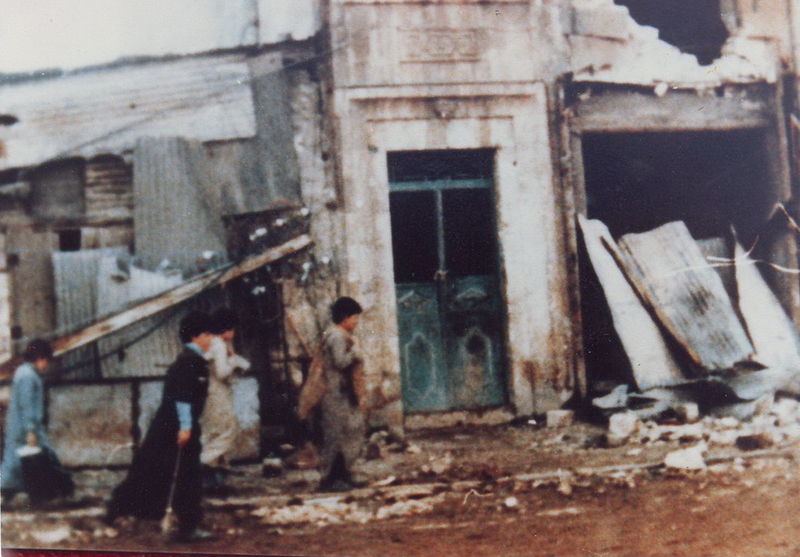
Photo of destruction in Hama following the Hama Massacre in 1982. Image credit: Unknown
Yet given the dramatic fall of Morsi and the Brotherhood earlier this summer, it is clear that a new chapter in Egypt and Syria’s joint history is being quietly written whilst the eyes of the world remain firmly fixed on Damascus and the aftermath of the horrific events in Ghouta on August 21st.
Morsi’s unambiguous mid-June call for military action against Syria was a step too far for Egypt’s generals, who toppled the Brotherhood amid mass popular protests weeks later, and Cairo’s new government quickly signalled a clear shift in direction, re-establishing relations with Damascus and adopting rhetoric similar in style to Assad’s in its own struggle against internal opposition. Anyone following the events in Egypt over the past few months will be familiar with the ‘Egypt Fighting Terrorism’ watermark emblasoned on all state footage of the crackdown on remaining pro-Morsi factions. Whilst Morsi urged action against Assad, Egypt’s new regime evidently feels it can relate to the embattled dictator.
Intriguingly, Egypt is not the only state in the region showing signs of rethinking its policy.
Compared to outspoken neighbours like Turkey, Israel has been remarkably reticent when it comes to discussing Syria. Though it stressed the need to punish the Assad regime for the Ghouta sarin gas attack that horrified the world. Israel has consistently refrained from following its chief ally’s example and directly aiding the anti-Assad opposition. The hawkish stance adopted by Washington in the wake of the chemical weapons outrage led to Israelis queuing up in their thousands to buy gas masks and saw them demonstrate against punitive strikes out of fear of regional escalation.
Israel will often portray itself as the Middle East’s only functioning democracy, but there is a clear current of thought amongst many Israeli commentators that, when it comes to national security, it must be pragmatism and not ideology that dictates policy. In early September, senior diplomat Alon Pinkas argued Israel’s best course of action was isolationism rather than intervention – ‘let them both bleed, haemorrhage to death’, and the sentiment is not new. Pre-dating the Ghouta attacks, The Times ran a story back in May in which a senior figure revealed an apparent pro-Assad ‘better the devil you know’ mindset within the Israeli intelligence apparatus.
What this means, then, is that the recently announced Russian plan to place Syrian chemical weapons under international control will certainly have captured Israel’s attention.
Syria’s enormous stockpile of chemical weapons is by far the most significant threat to Israel, which also acts as Syria’s chief deterrent against any future Israeli intervention. Jerusalem may well interpret Assad’s agreement to surrender his stockpile as an admission from the Syrian leader that his regime will never again present a military threat to Israel, a major concession considering Israel and Syria remain technically in a state of war.
The thought of a crippled Assad clinging onto power, thoroughly chastised and stripped of his most dangerous asset may be all too appealing to many in a state that cannot afford antagonistic neighbours.
A long time ago, one Assad disowned Egypt for co-operating with Israel. Today, another Assad will be grateful for it.
About the Author





