
Knowing about the flora and fauna of the natural world has always been a part of the scientific curriculum in schools; however, a more nuanced field of environmental education that includes climate issues is growing for a few reasons with great pushes from state and federal positions.
The history of the Environmental Education (EE) movement originated during the Dust Bowl and progressed over the years in a straightforward manner: after the loss of agricultural land, the importance of natural resources was realised, generating the push to educate the youth in conservation. From the 1930s through the passing of the National Environmental Education Act of 1990, various conservation and environmental education funds and councils, along with and nonprofit associations, were established. McCrea, E.j. 2006 offers a more extensive timeline.
This has led to a division of responsibility between the federal government, the state governments, and nonprofit organizations. The divisions are not quite this simple, but as an introduction to environmental education, it will suffice. The National Environmental Education Act of 1990 is the main governing body that has been established to promote EE at the federal level through funding large-scale EE programs, often conducted through nonprofit organizations or universities. Grants are also awarded for shorter, small-scale projects. The federal government often reaches out to nonprofits and universities because of their expertise in the subjects and often more genial rapport with the public. These have included the North American Association for Environmental Education and the University of Wisconsin-Stevens Point.
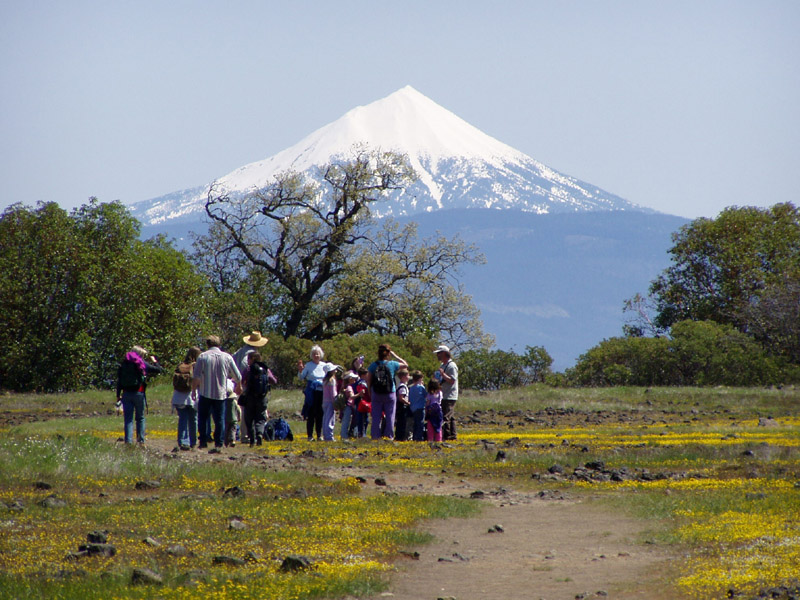
Image Source: http://on.doi.gov/1t1juGa
The major program that is currently being conducted is EECapacity, a program that offers resources, training, and a like-minded, supportive community to environmental educators and interested parties of the United States, Canada, and Mexico. An extensive look at the program can be found here. Previous programs can be found on the EPA’s website (EPA, 2014).
Described above are the most common and prolific strategies to promote EE in the United States, all of which are commendable and fill a niche; however, there is another approach that is growing and shows promise.
Some of the more substantial and progressive pushes have come from the states themselves. At least 25 states (Schwartz, J., 2014) have joined in the movement to create statewide environmental education curriculum and one of the greatest examples hails from the Maryland State Department of Education. Though it is highly likely that each state has a different approach to how the environmental curriculum based on their environmental literacy goals and geographic location (which would dictate what aspect of nature would be focused on), the basic structure presents a great starting point for states that have not jumped on the bandwagon. The Maryland State Department of Education has passed a bylaw that requires all school systems in Maryland to include a EE program that is aligned with the state’s Environmental Literacy Curriculum and has included that an environmental credit requirement be reached during the school year. Students can attain these credits through various activities during the school year, many of which may be offered through local nonprofit or non-government organizations (MSDE, 2000).
The efforts of the federal and state governments, often soliciting the expertise of non-governmental groups, are not to be belittled, but the government could play a more active role in the push for environmental education at the national level. With support, environmental education will undoubtedly catch fire and settle into school curriculum nationwide. For those of us who no longer attend school, plenty of educational organisations are welcoming new participants every day and resources exist in all regions of the United States to help citizens reconnect with their roots, pun intended.
About the Author





