
Football Beyond Borders’ latest recruit, TransConflict contributor and SOAS Global Diplomacy student Heidi Green, gives her first impressions as we arrive into Sarajevo knowing that the tour effectively begins again here as we embark upon a city hurriedly formed by a period of reverse ethnic cleansing.
In the early evening in Sarajevo, the Muslim call to prayer rang through the air as we walked past countless gravestones – each a solemn reminder of the tragedies that happened in this city nearly twenty years ago. We were on our way to the Srebrenica exhibition in one of the city’s new art galleries. As we entered, the walls were covered in black and white photographs that displayed moments and memories of the conflicts and war from 1992 – 1995.
There was a picture of 600 coffins of the Srebrenica massacre victims lined up, an image of an anthropologists’ hand exhuming the frail arm of a corpse from a mass grave, and the sharp look in the eyes of a refugee. Each picture stirred emotions and contemplative shock. Videos of survivors told us how they tragically lost their family members through the awful genocide.
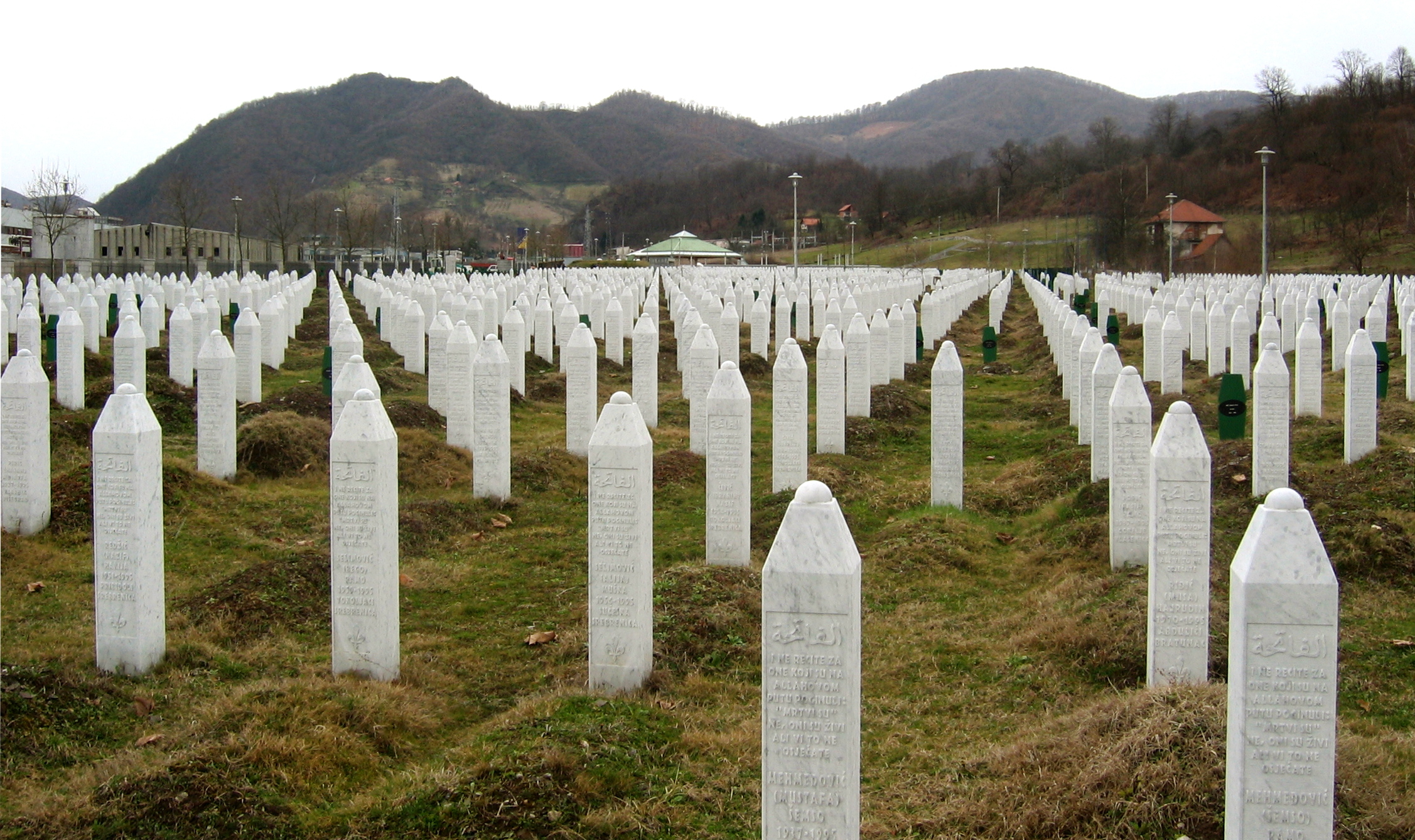
Gravestones at the Potočari genocide memorial near Srebrenica. Image credit: Michael Büker
While it can be emotionally draining to discover the horrible atrocities that occurred in this country, it is important to learn and remember everything that happened. Though heartbreaking to witness, it can also ignite a powerful motivation to build peace and empathy. Indeed, after spending time reflecting on the history of the region where we are working, it seems that our team members feel more serious and determined about our work and presence in Bosnia, and in truly making a difference.
Recently I had the privilege to meet with the Imam of one of the mosques in Mostar. He gave me a tour of every room, and of his office where numerous pictures of mosques from around the world were displayed. “Which one is your favourite?” I asked. “This one,” he said with a smile, referring to the building we were standing in. His eyes became watery as he went on to relay how every mosque in the city, including his own had been bombed or destroyed during the war. However, each of the mosques had also been rebuilt in the subsequent years. I looked around the large prayer room. There was no evidence of ruin, only a feeling of serenity. It reminded me that there is always hope for growth, for healing, and for the rebuilding of peace, even after the disruption of unjust devastation.
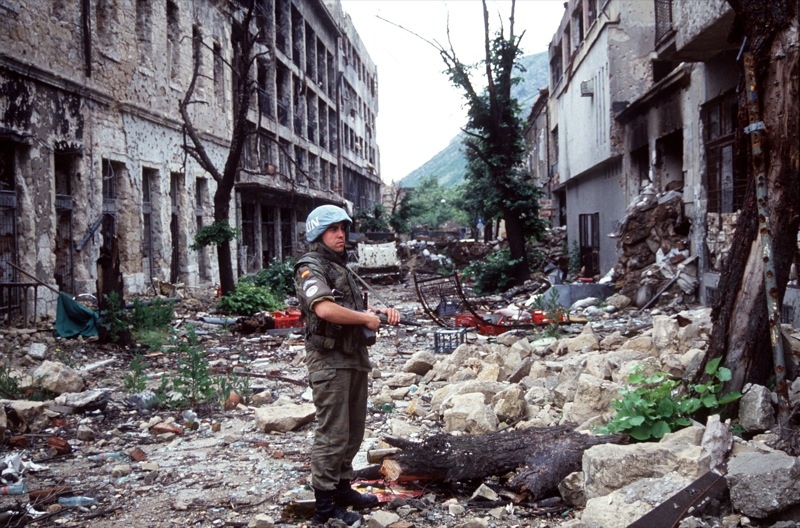
A member of the Spanish contingent of peacekeepers in a devastated street in Mostar (Federation of Bosnia and Herzegovina), during the Bosnian-Croat war of 1992-1994. Image credit: legio09
Integration, cultural understanding, and equality are essential elements in a healthy, peaceful society. As supporters of Football Beyond Borders we continue to spread our message in every way that we can to dissolve prejudice and cultivate peace. So far we have assisted in bringing together otherwise segregated Croatian and Muslim youth to play football and interact with one another. Although the war still lingers in the minds of Bosnian citizens, beginning to create opportunities for these types of positive interactions is a vital step in the process of peace-building. We look forward with hope and enthusiasm to continuing our work during the remainder of our tour. We firmly believe that, as Nelson Mandela said, “Sport has power to change the world.”
Read the whole of our Football Beyond Borders coverage here.
About the Author






[…] International Political Forum: Football Beyond Borders Balkans Tour Day 6 – Sarajevo […]
[…] article on the International Political Forum and Football Beyond Borders […]