
Following the end of the Second World War, the objectives of North American and EU foreign policy changed international politics forever. Rather than questions of the military power of the expansionist Soviet Union, objectives of the global powers converged with those of the free, trade-dependent United States and instead, sought advancement of trade, nuclear non-proliferation, and arms trade treaties. It was at this time too, that human rights discourse emerged, as did steps to address climate change.
Just as it was for Kissinger, these continue to be the objectives of a global governance model, aiming for international peace as well as order favorable to the global power, the United States. If anyone believed we were nearing the end of geopolitics, 2014 would be the year to prove such an interpretation would be wrong. From Russian annexation of Crimea to Iranian alliances with Syria, geopolitics are center stage. This might be good news for my social circles – where friends of mine joke about how often I use the word – but what does this mean for international relations?
Fast forward to today: Russia’s geopolitical goals are enforced by military means instead of a strategy of political and economic support as Putin so plainly and provocatively continues its aggressive attack on Ukraine. This is only one example that fuels the problem that is geo-strategy in politics today. What is clear however, is that contemporary counterforces exist today which pose challenges to long-standing objectives of international relations and peace-building.
Putin
Just last month, Canadian leadership stated the Ukrainian crisis was “not to be tolerated”. Obama took a similar stance (best explained in his most recent speech on the subject). The entire issue we are faced with has geopolitical implications though, with Russia’s ‘do what I want, when I want it’ attitude, although spoken against, just not reprimanded, making it a geopolitical counterforce using increasingly forceful attempts to change the dynamics of international politics.
What I refer to as ‘counter-forces’, are similar to what are known as ‘revisionist powers’ to scholars like Walter Russell Mead who studies the complex relationships between them:
In the long run, Russia fears the rise of China. Tehran’s worldview has little in common with that of either Beijing or Moscow. Iran and Russia are oil-exporting countries and like the price of oil to be high; China is a net consumer and wants prices low. Political instability in the Middle East can work to Iran’s and Russia’s advantage but poses large risks for China.
But there is a common element that binds these powers together, Mead argues in a recent publication in Foreign Affairs. An element which is dangerous to the geopolitical powers in the West; that is, “that the status quo must be revised”.
Revisionist powers and contemporary counter-forces vary in power and capacity. Unlike Putin, other leaders, like Maduro, are not counter-forces, but definitely, ‘revisionist’, whose ideology can be seen whose foreign and domestic policy is rooted in this ‘revisionist’ ideology.
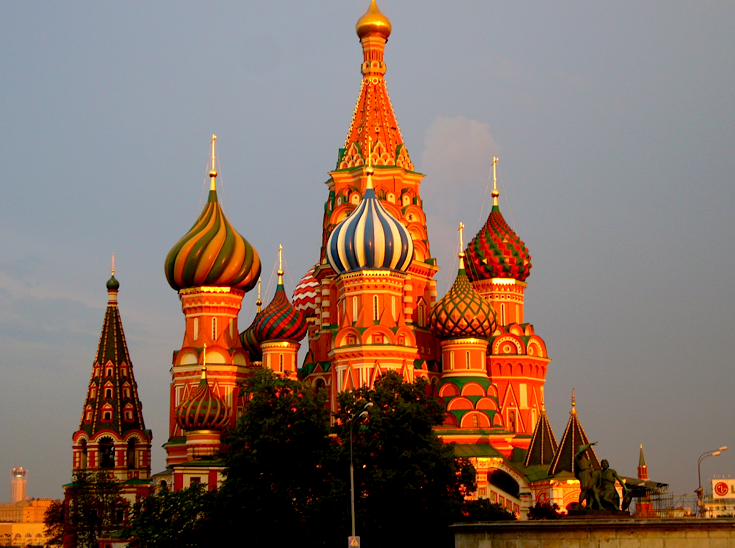
Image credit: Meghas
Maduro
The Venezuelan crisis also illustrates this argument (perhaps too clearly). Venezuela has no intention of contenting itself with a secondary role in hemispheric affairs. In recent OAS debacle that took place at OAS permanent council meetings throughout February and March, the country will not accept the current degree of U.S. influence in the hemisphere, and utilizes Latin American nationalist imaginaries to support its position and to garner the support of ALBA countries, while leveraging its own power over Caribbean states fuelled by Venezuelan oil.
The hostility among Maduro’s government against Washington is shown particularly in worried discourse that a coup d’état is underway, or would be, should discord within the countries increase.
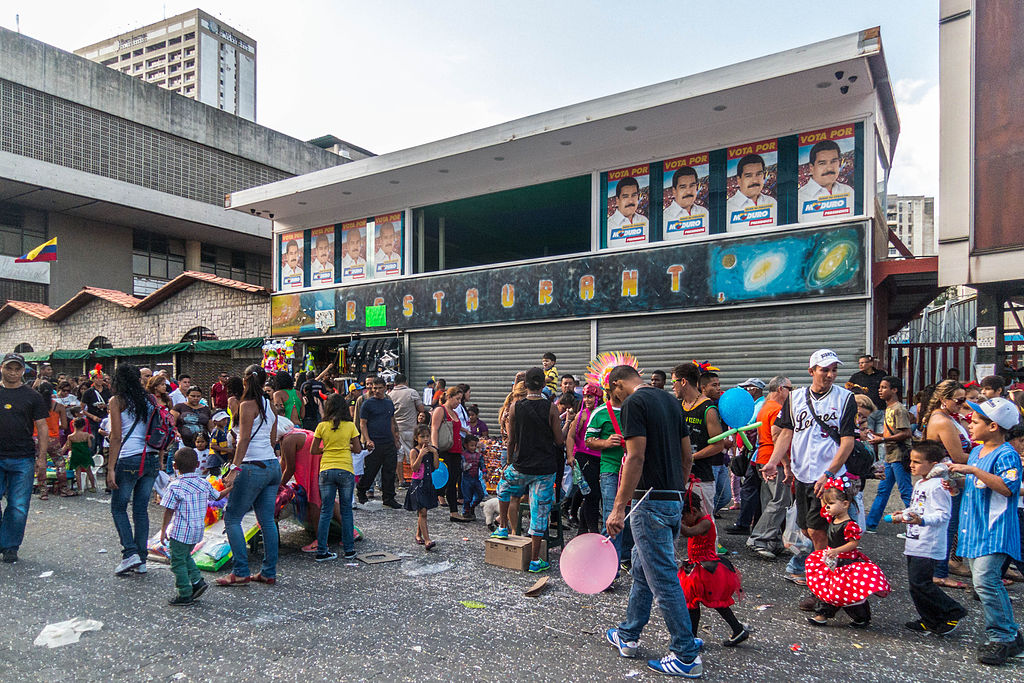
Multiple signs of Nicolas Maduro remaining from 2013 Venezuelan presidential election. Image credit: Zfigueroa
Iran
Russia’s stance on Iran’s nuclear program is also leverage for the counter-force, making it a power of concern in U.S. strategic thinking.
Powers and transitioning powers in the Middle East
In the Middle East and North Africa, this reality is evermore important. The idea that the regions would all at once grasp democracy is now gone, and the current chaos have both North American and European policy makers worried that what comes will be a region dotted with less openness, liberty and more poverty. Not only is a lack of leadership in post-Spring countries jeopardizing the future of the region, but current chaos makes them more attractive hotbeds to terrorism and extremist leadership who are dedicated to mobilizing a dangerous alternative to the current status quo. The current leverage Russia has on the Middle East too, is a huge asset to its position as a counter-force to the United States.
**
Military power, territory and sovereignty should not be the end-all goal. Global governance should be; Trade liberalization, nuclear non-proliferation, human rights, the rule of law, and climate change are the by-products of achieving this goal.
About the Author





