
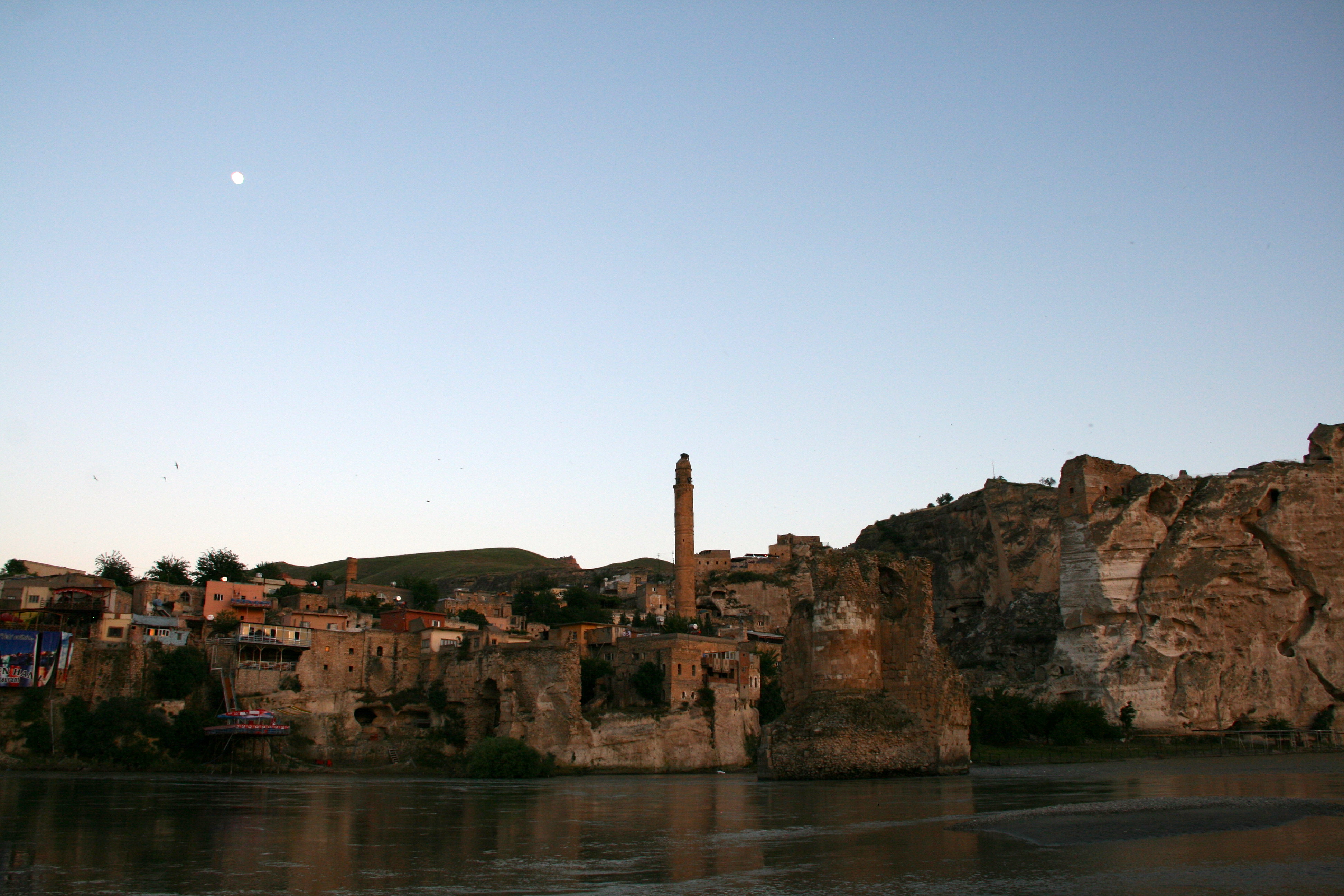
Located 73 miles to the south west of Lake Van in Eastern Turkey, Hasankeyf is a photogenic village consisting of farmers and traders catering to a predominantly tourist crowd on the southern banks of the Tigris River. Turning your eyes up to the hundreds of once-inhabited rock caves, mosques and tombs that cling onto the surrounding cliffs, the significance of Hasankeyf becomes glaringly apparent, and you can begin to comprehend the magnitude of this ancient village and its importance to the Kurdish population that inhabit this corner of Turkey.
With a 10,000-year history, Hasankeyf can rightfully call itself one of the oldest continuously inhabited settlements in the world. It has witnessed the rise and fall of no less than nine civilisations, offering a rare insight into empires of a bygone era. The Kurdish people are immensely proud of Hasankeyf, its unrivalled history and its timeless beauty. For Kurds, this village is the jewel in their crown, a site that all Kurds should visit at least once in their life.
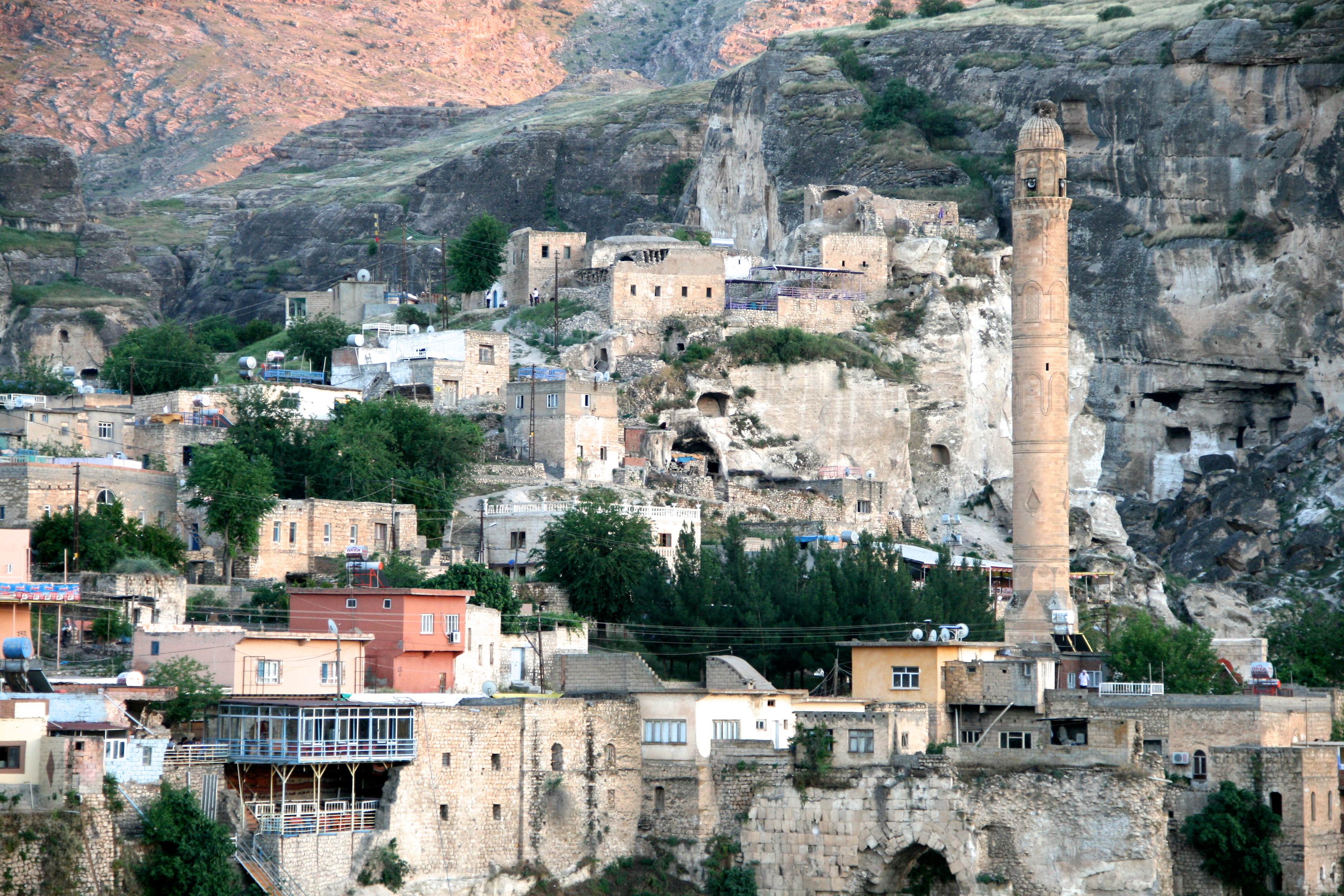
Perhaps the intense connection that the Kurds of southeast Turkey feel towards Hasankeyf is in some way related to the fact that it may not be around for much longer. In an ongoing battle that has endured for two decades, the people of Hasankeyf have been tirelessly resisting the construction of the Ilısu Dam, a 453-foot high, multi purpose structure built to restrain the waters of the Tigris River before it continues on its course towards Syria and Iraq. With a reservoir depth of over 200ft, almost all of Hasankeyf will be submerged when flooding begins in 2014, leaving only the top of the village minaret visible above the water line.
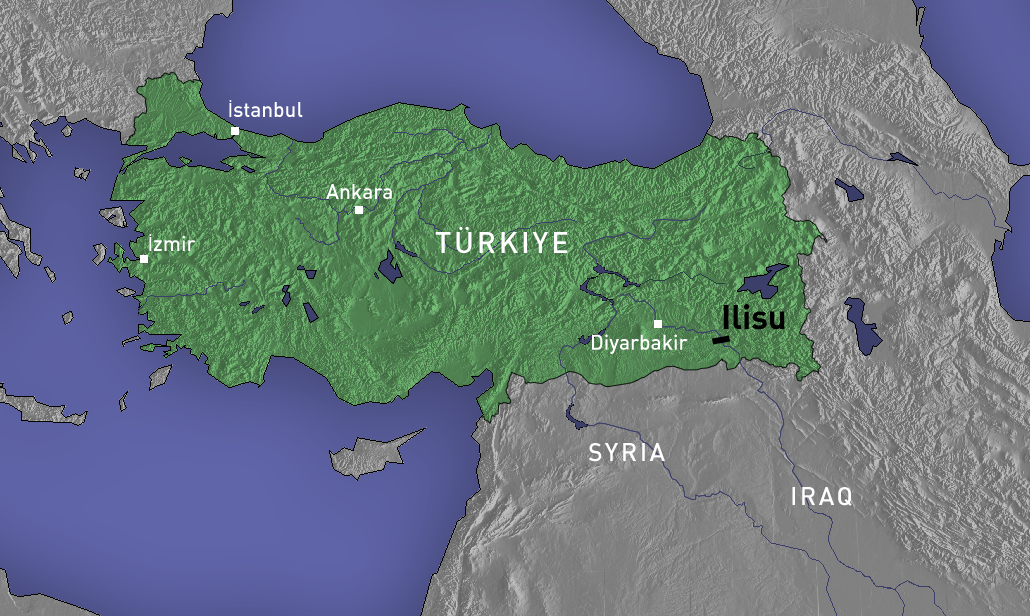
Map of Turkey with Ilısu dam. Image credit Numerus Klausus
Kurdish people living not only in Turkey but also in affected downstream areas of northern Iraq have held demonstrations demanding an end to the dam’s construction. The Turkish government, the AK Party, have adopted what appears to be an uncompromising stance in their management of the Ilısu Dam project, a stance that has resurfaced in Istanbul following the Gezi Park redevelopment protests. By acting in the interest of economic development at the expense of all other factors, many believe that the government has abandoned its duty to consult and address the issues of those people directly affected by change.
Whilst the Gezi Park protests in Istanbul evolved into a much broader social movement, Prime Minister Erdoğan and his AK Party have been able to stifle the ‘Hasankeyf Matters’ campaign and prevent it from spreading beyond Kurdistan and into the wider consciousness. One method used to achieve this in Hasankeyf has been to prevent access to the site containing the citadel and many of the other ruins. Overlooking the Tigris River, Osman, a young Turk from Hasankeyf with aspirations of living in the UK informed me that the site had been closed following the discovery of loose rocks on the steep sided slopes of some of the ancient ruins. The site hasn’t reopened and Osman, believing this to be part of an orchestrated government strategy to minimize tourist numbers, has become resigned to the fact that Hasankeyf won’t be here this time next year. Closing the site has been a shrewd move by the government authorities, as fewer tourist numbers relate directly to a reduction in revenue and acts as a preventative measure against awareness campaigns and international recognition.
From where we sat, Osman was able to point out across the valley to a hub of bright lights that radiated out into the evening sky. There, he explained, was the new town of Hasankeyf, a purpose-built community that will house the residents of Hasankeyf once the water levels begin to rise. Though the residents have no desire to abandon their ancestral homes, the government has been unwaveringly resolute on the issue. Osman, like other Kurds, believes that the destruction of Hasankeyf is part of a much broader, calculated government strategy to eradicate Kurdish culture and identity from Turkey altogether.
But Turkey needs additional power to continue with the successful economic reforms of recent years. The dam will provide 3,800 GWh of power every year to a region that is severely disconnected from the financial centres of Istanbul and Ankara. The dam has the potential to stimulate investment in one of Turkey’s poorest regions, paving the way for a host of new economic opportunities. The government, in its defence, has stated that for all of Turkey’s 65 million people to prosper in a modern society, sometimes the “interests of archaeology have to be subordinated to those of economic development”.
With the local population only concerned with their immediate future, many are asking: “What are we supposed to do for jobs now?” Some are refusing to resettle in New Hasankeyf, choosing instead to start afresh in neighbouring towns or cities. For those that stay, there will be little choice but to endure the pain of watching their 10,000-year old village disappear below the rising waters.
About the Author





