
Protesters gather outside a Governors Climate and Forest Task Force (GCF) meeting in Chiapas lamenting against the UN programme to reduce emissions from deforestation and forest degradation in developing counties (REDD). Chanting slogans to the effect that they do not want anything to do with the REDD mechanism. This was in September 2012. This year in May, calls against REDD are made once again with the California Forest Offset, being touted as a scam, and REDD being labeled as a false solution to climate change. These protests are characterized across the globe, across the African and Asian forest communities. They all have one major outcry, disregard for the indigenous people’s rights in regards to culture and land rights. The indigenous people that live in the forests depend on it for survival, food, shelter and medicine,among others. The forests have been their ancestral homes for generations, years and even centuries.
During the COP18 climate negotiations, it was not unusual to see ladies and gentlemen walking along the corridors of the Doha Convention Center (QNCC) clad in traditional regalia all bearing one goal, to try and bring their plight to the world stage. While the mechanism did form part of the core discussions during the 18th COP, it is worth noting that the progress made was less than anticipated. At the COP16 negotiations in Cancun safeguards were adopted, designed to take into account the issue of the rights of indigenous peoples through prevention of social and environmental harm as well as enhancing social and environmental benefits. These safeguards were to inform the indigenous peoples of all activities and issues pertaining to REDD. However, in Doha, the specific issue of the safeguards was not delved into at length even though other issues were discussed such as REDD finance.
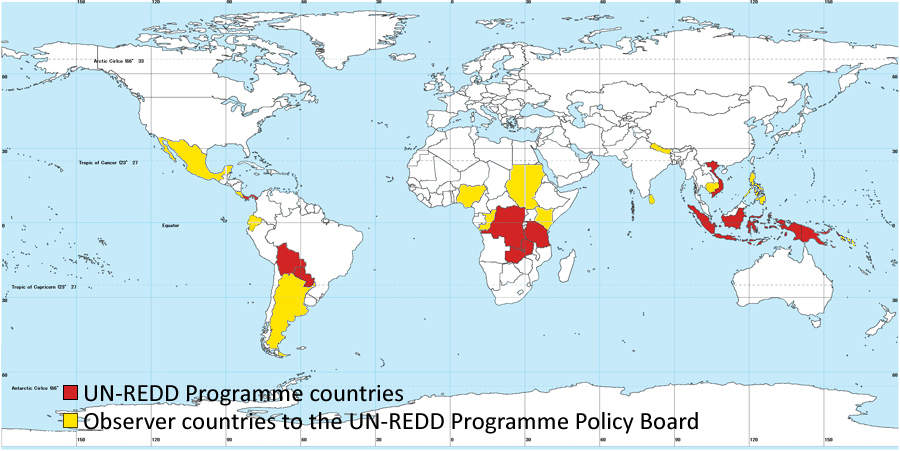
The UN-REDD Programme initially works with nine member countries across Africa, Asia and Latin America: Bolivia, Democratic Republic of the Congo, Indonesia, Panama, Papua New Guinea, Paraguay, United Republic of Tanzania, Viet Nam and Zambia. Argentina, Ecuador, Cambodia, Costa Rica, Kenya, Mexico, Nepal, Nigeria, the Philippines, Republic of Congo, Solomon Islands, Sri Lanka and Sudan have observer status to the UN-REDD Programme Policy Board. Image credit: Cherylrosebush
In many developing countries, Kenya being one of them, national development plans are being formulated with the aim of transforming the countries economy at the same time . It follows that carbon markets mechanisms are one of the key avenues identified to spearhead such growth especially in the environmental sector. While the economic potential of the mechanisms are immense, there have been concerns regarding the dangers posed particularly to the vulnerable indigenous communities and the safeguards therein. While the technical challenges can be overcome, the moral and ethical challenges require more care. The problems are wide ranging from corruption and lack of proper accountability mechanisms which threaten effective implementation of the REDD mechanism, to leakages where there is displacement of deforestation from one area to another and inadequacy of accounting and monitoring mechanisms especially in relation to carbon measurement among others.
Related: San Juan Copala, Oaxaca: Rich in Natural Resources but Poor in Indigenous Rights
Negative Impacts
All these have a direct negative impact on the local indigenous communities and threaten the very gains made by the mechanism. Some of these impacts include forceful evictions of these forest communities and the introduction of archaic, repressive laws and policy programs which have little or no regard to the rights issues affecting such indigenous groups. The reverse effect is that the indigenous communities will never be able to fully participate in the mechanism, they are not be empowered to fight against the encroachment and disregard of the rights of the their communities. This was a classically evident in the Mau Forest evictions of the forest community called the Ogiek due to issues of land use, illegal logging and encroachment, sparking a protracted legal battle between the state and the forest communities. The result was that the effective management of the forest resource was gravely hampered even as reports of illegal excisions of forest land emerged. Ultimately this approach failed to protect and conserve the forest. The same applies to REDD. Ultimately with the increased zoning on forests by the authorities and interested parties such as companies and investors, the rights of the forest communities continue to be in jeopardy.
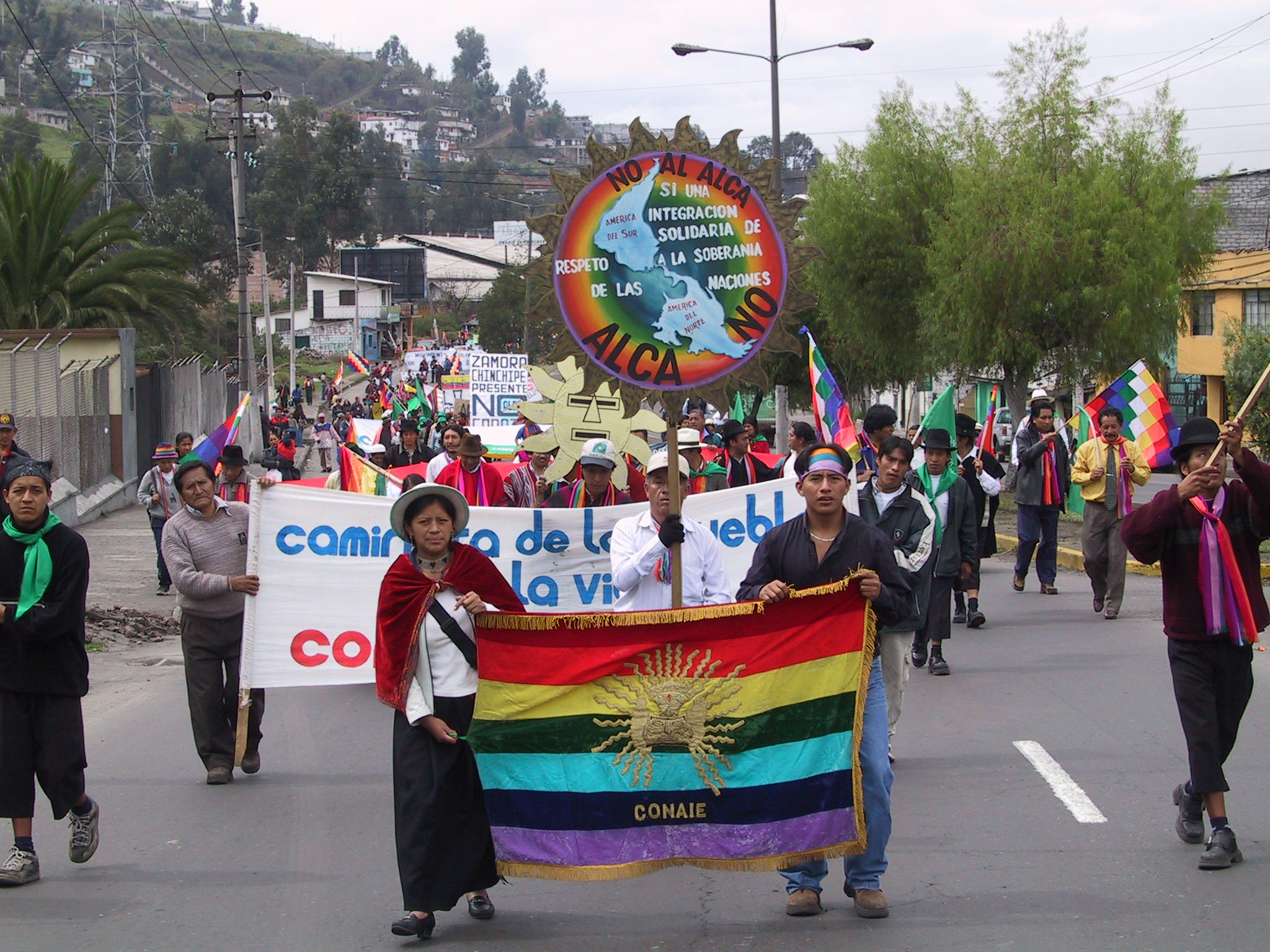
Members of the Confederation of Indigenous Nationalities of Ecuador (CONAIE) march in Quito, Ecuador against the 2002 summit of the Free Trade Area of the Americas (FTAA/ALCA). Image credit: Donovan & Scott
Indeed some REDD policies have ignored community rights or have not given them the prominence they deserve and instead placed more emphasis on the economic aspects of REDD more so with the increased value of forests brought about by the mechanism. Further an offshoot of the increased pressure on local forest communities is a recipe for increased competition for the meager of limited resources with regard to neighboring communities and more so with the introduction of compensation mechanisms and benefit sharing programs.
Way of life
Most critical is the interference with the forest communities’ way of life. These communities know no other system of living other than what they have been exposed to for generations. Indeed these communities have played a critical role in the conservation of these forests. The examples of these are not just unique to Kenya but spread out across the globe. From the Aborigines to the Native American Indians, they have enriched the ecosystem and improved the biodiversity among many others using deployed centuries old techniques. Indeed with the advent of the climate change debate and REDD, the practices of these communities have been vilified, discouraged and even criminalised in some instances. Forest communities have continued to bear the brunt of the loss of forest cover, even though it is well known that the causes of this has nothing to do with them.
About the Author





