
If you are spending time to read my attempt at textual sanity after reading the headline, it is quite likely that India interests you. You must either be an Indian or someone who keenly follows what India is up to. Well, in that case let me assure you that you are reading just the right piece of text.
The last few years, especially the last few months have been excruciatingly tough for India as a nation and as a country. The air, in India, hangs heavy with discussions pertaining to the falling value of the rupee or the soaring price of onions or the spiralling cost of petrol. Sounds bizarre, but that’s the reality on the ground in India right now.
Let us take this thought on a macro level and not get into the minute details of the situation, for that would only depress. At the same time, let us face the reality that’s staring us in the our face. The Indian economy is at its lowest point, at least in the last 20 years. The much-hyped ‘Breakout Nation’ seems to be transforming into a Breakdown Nation with Standards and Poor already threatening to lower India’s credit rating to Junk Status.
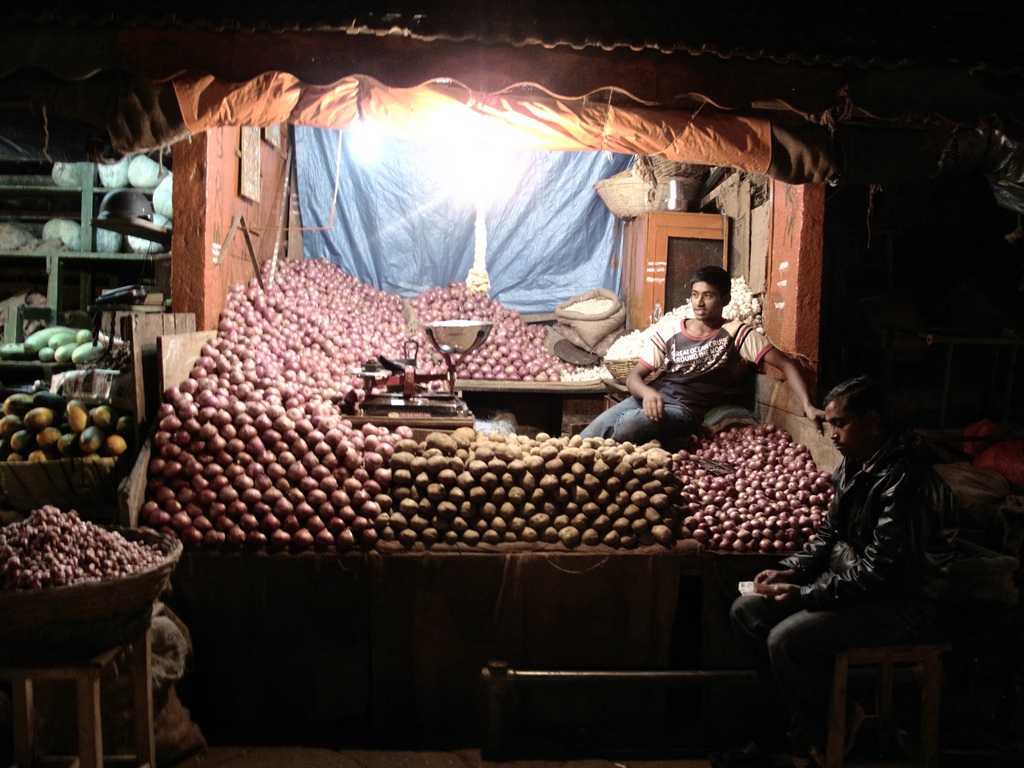
Onions and potatoes, Mysore, India. Image credit: Michele Boccamazzo
Ruchir Sharma, head of Emerging Markets and Global Macro at Morgan & Stanley, was heard as saying, “The condition is worst since 1991.” A look at the statistics compiled by him, along with his team horrifies the weak-hearted economist. The number crunching by Morgan & Stanley throws up disturbing information. Here is a quick look at few of the facts that should worry us or at least make us take things seriously.
A. India is reeling under a short-term debt of $170 billion. In 2008, it was merely $80 billion.
B. FII in Equity went up by $14 billion till May 2013 and by August, 2013, it has come down by $2 billion
FIIs pulling out of India precisely because they lack confidence in India
C. FII in Debt went up by $6 billion till May 2013 and today it is $10 billion
Yes, an overall erosion of $12 billion in flat three months. Should this not ring alarm bells?
D. In 2008 India witnessed FDI of $48 billion and today in 2013, it is $ 27 billion
A clear-cut hint at lack of confidence in the India story
E. In the year 2007, the Current Account Deficit (CAD) stood at merely $8 billion as compared to the $90 billion of 2013
F. The situation of Forex Reserves is equally dismal. In 2007, the country had a reserve of $300 billion to handle a CAD of $8 billion. In 2013, the reserve has eroded to $275 billion for a CAD of $ 90 billion
In 1991, the CAD was roughly around 2 pc of India’s GDP. In 2013, it has almost doubled to around 4 pc of GDP
So, having said that, is the escape route from poverty anywhere in sight and will this just a temporary crisis or is it going to take a long while to ease up? Is it a global phenomenon or an effect of local idiocy?
I am no economist hence it would not be prudent for me to answer these questions. So, seeking answers, I engaged with PK Agarwal, a qualified Chartered Accountant and a Senior Government Servant by profession. Agarwal, who works in the capacity of financial advisor to the largest State of India, is quite hopeful of the situation. He says, “The situation, definitely, is grim but is not as bad as it was in 1991. It too can be managed.”
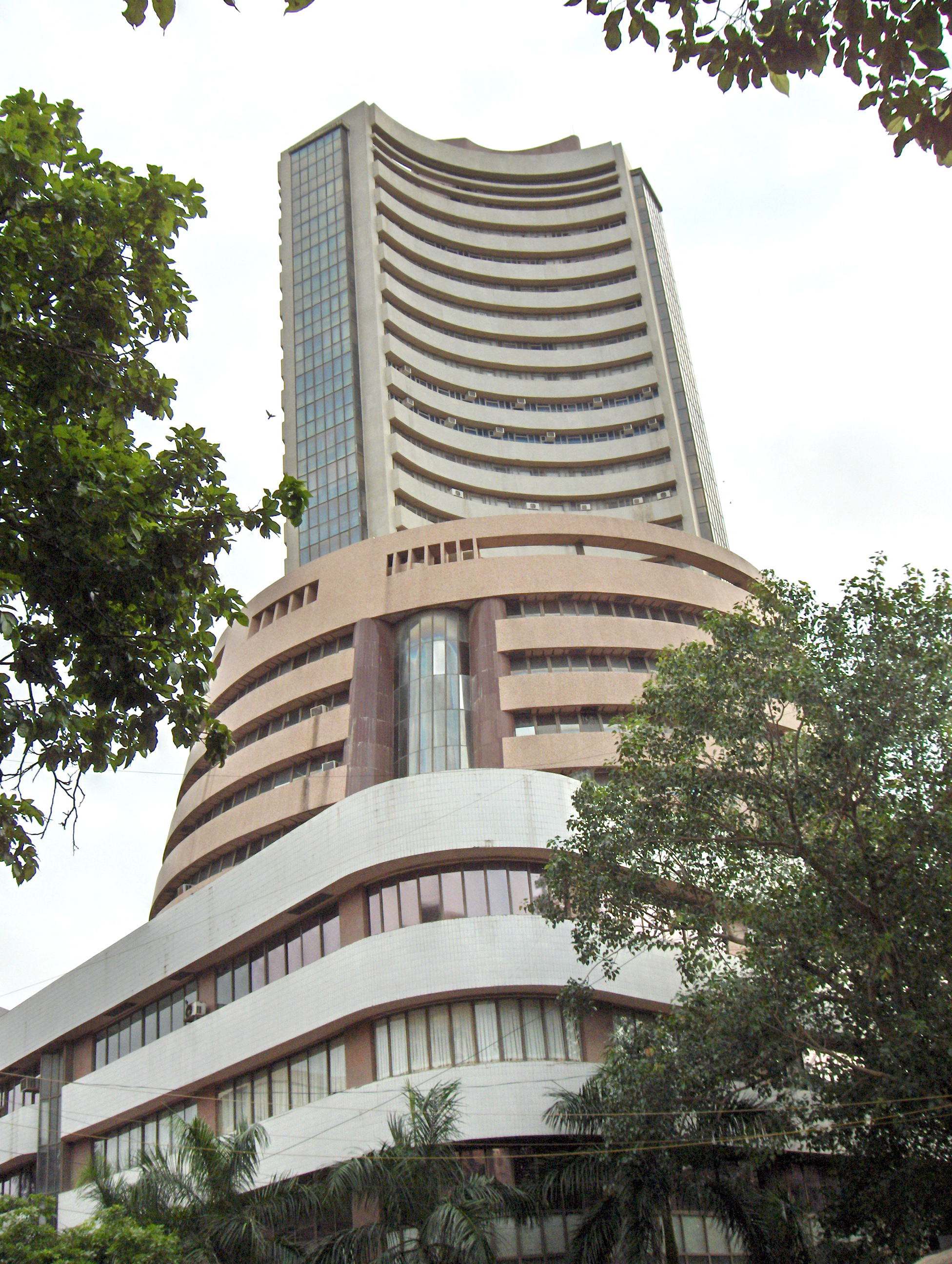
The Bombay Bombay Stock Exchange in Mumbai. Image credit: Nichalp
When asked for the solution Agarwal comes up with a holistic viewpoint saying, “The day policies of political and economic institutions turn inclusive, [the] situation would be much better. Also, the basic flaw with the India Story is complacency. It hit India in the late 80’s and took us to the crisis of 1991 and it again hit us in around 2007 and today in 2013 we are yet again staring at a crisis.”
On a more specific note, but in simple terms, he says, “Fuel subsidies should either be done away with or minimised drastically as that would check demand of petrol and subsequently the prices would come down.” He however adds, “This is not the complete solution. No single policy can address the situation entirely, but steps like these may help.”
When asked to recommend measures a common man can take to do his bit in addressing the situation, Agarwal suggests, “Avoid want-driven purchases and first address needs. Purchase of non-essential items is best avoided in such a scenario. Also, buy products from wholly Indian manufacturers.”
Well, the theory of Agarwal impresses on the face of it but it may not impress so many. Some may feel that the train has already left the station and India shall simply have to wait, but eternal hopefuls like me would find opportunity in such a situation as well. The economy may be grim, but from here, all it can do is grow.
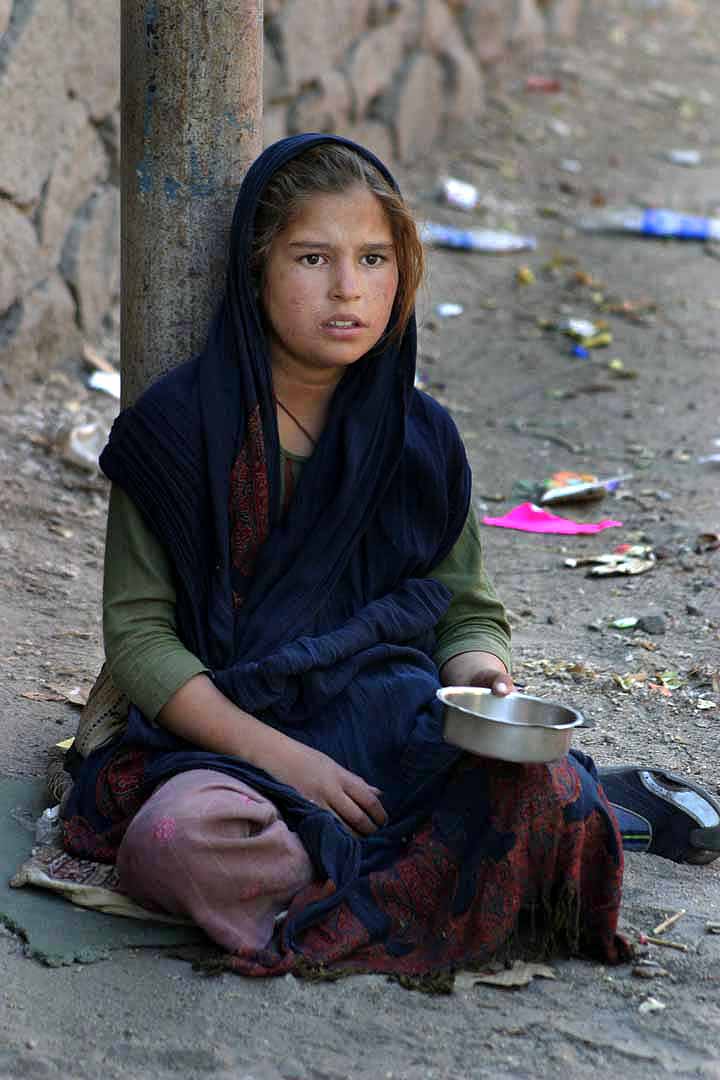
Indian girl begging. Image credit: Steve Evans
However, practicality must not get overshadowed by emotions and we must realise that India as a nation needs to get rid of its complacency and policy paralysis that hits it every now and then. We also need to realise that the falling value of rupee is only a symptom and not the disease that ails India. We must also not forget that currency panics are hard to handle so the best approach is to respond to the situation and not react to it. It never pays to react in the midst of a crisis.
It is time for the national leadership to evaluate the situation and not extrapolate it. At this, some may suggest economic reforms, but economic reforms alone will not help India. We need reforms in the health sector, in the education sector, in the judiciary and in all sectors that affect us as individuals.It will take time to undo the damage done to the country. So, let us start thinking of ways to make India a better country and help the nation get out of this economic crisis.
About the Author





