
Another national identity crisis surfaced last month, stoking the recent global wave of national struggles to carve out “true” values and recognise “true” citizens. Israeli Prime Minister Benjamin Netanyahu proposed a new nation state bill in November that, if legislated, would reinforce Israel’s “Jewishness”, and according to some, simultaneously undermining the country’s democratic foundations.
The new law would seemingly prioritise all things Jewish, essentially rendering non-Jews, such as Israeli Arabs, second-class citizens.
What’s new, some would ask. Israeli Arabs are already accustomed to discrimination and exclusion from certain social privileges, like those that accompany national military service, from which Israeli Arabs are generally exempt. The issue with the new bill then, is that it proposes to constitutionalise such discrimination. According to the draft, Israeli minority groups would enjoy civil rights but not communal rights, such as communal expression; only Jewish citizens would have the right to immigrate freely and to receive citizenship; Arabic would be relegated from an official language to one of “special class”; the state would only cultivate Jewish heritage traditions; and all schools would “teach the history, culture, and customs of the Jewish people.”
Over a fifth of population Israeli Arabs
Some of these propositions might be more understanding, albeit not necessarily justified, if the disadvantaged group was a small minority of immigrants. But given the fact that Israeli Arabs make up more than a fifth of Israel’s population and are indigenous citizens, Netanyahu’s law is somewhat misguided and highly provocative.
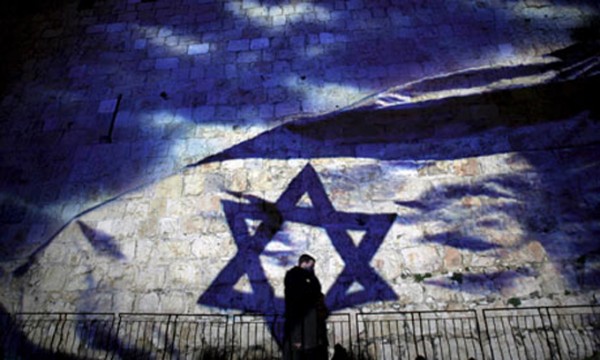
Image Source: http://bit.ly/1AdoLLS.
It’s possible of course that the legislation is a defensive measure aimed at securing Jewish nationalism in the face of a potential Arab majority by 2035. The possibility of such a scenario is reflected in the highly unbalanced population growth rates among Israeli Arabs (2.6) compared with Jews (1.7). To amplify this, the Israeli Arab population is much younger than the Jewish population, with an average age of 21 compared with 32, which suggests further divergence in growth rates. So, if Israel becomes a single state, and the new national bill is passed, we could potentially be looking at a future Jewish state espousing Jewish values and privileging Jewish citizens, but within an Arab-majority country.
Democracy vs religious identity
There are some academics, such as Dr Ahron Bregman of Kings College London, who warn of the possibility that future conflict in the region won’t be about Palestinian statehood, but about Israeli-Arab/Jewish civil conflicts within a single state . This isn’t implausible, and would surely be aggravated if unequal rights prevail, especially if favouring a minority group, which Jewish Israelis might be before the mid-century.
The bill has aroused strong opposition, including from Israeli President Reuven Rivlin, of Netanyahu’s own Likud party. He argues that the bill undermines Israel’s initial declaration of independence, and the 1992 Basic Law that gave precedence to human dignity and liberty. The proposed national bill, says Rivlin, puts religious identity before democracy.
Rivlin’s concerns trigger gloomy comparisons with some of the ventures being undertaken in the Middle East and North Africa, where religious fundamentalism is undermining cultural diversity and individual freedoms. Should there not be a corresponding surge of international response to the proposed Israeli bill – a counterweight to exclusory pursuits that demean our universal rights as citizens of the world?
About the Author





