
“It is forbidden to kill; therefore all the murderers are punished unless they kill in large number and to the sound of trumpets.” – Voltaire
On January 19, 1990, the biggest ever exodus of people since the partition of India occurred. The minority Hindus of Kashmir, the Kashmiri Pandits, in a number as large as five lakh (500,000), were displaced due to militancy in Kashmir valley. The genocide and exodus of Kashmiri Pandits started in 1989-90 and spread the terrorism that still persisted over the region of Kashmir even 20 years after the incident. The actions of brutally against the Kashmiri Pandits which led to their genocide and mass displacement was and is a result of an attempted ethnic cleansing.
Article 2 of the 1948 United Nations Convention on the Prevention and Punishment of the Crime of Genocide defines genocide as any of the following acts committed with intent to destroy, in whole or in part a national, ethnic, racial or religious group, as such:
Killing members of the group;
Causing serious bodily or mental harm to members of the group;
Deliberately inflicting on the group conditions of life, calculated to bring about its physical destruction in whole or in part;
Imposing measures intended to prevent births within the group;
Forcibly transferring children of the group to another group.
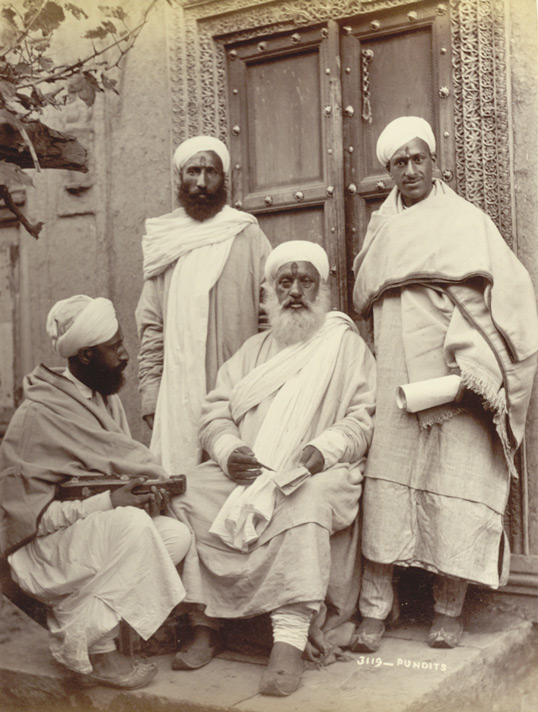
Kashmiri Pandits. Image Source: http://bit.ly/1Al3Rvz
The displaced Kashmiri Pandits have since been living in pitiable conditions in various parts of India. The ‘paradise on Earth’ is now dotted with sandbags and security check posts. The displaced Kashmiri Pandits fear they might have been forgotten by the nation, and the Kashmiri youth who have suffered two decades of strife and violence and state repression need to be reached out to, as much as they need to reach out to wider Indian suffering. But the majority of the Pandits believe that until Kashmir is no longer engulfed by mortal threats, return is impossible.
As India and Pakistan continue to fight over the territory of Kashmir, Pandits feel they have been neglected, and have slipped from memory. They are afraid that they may lose their identity due to their rootlessness. This might cause a rupture in the history and culture of Kashmiri Pandits.
In a book by Rahul Pandita Our Moon Has Blood Clots, he recounts in compelling detail how the majority community conspired to get rid of an erudite, enlightened minority, so that an independent Islamic state could be established. In the backdrop of the mass (Muslim) uprising against the Indian state, the Pundits were subjected to all sorts of mental and physical torture, which resulted in their fleeing their homes in the stealth of the night, and seeking protection under the Indian flag.
The Kashmiri Pandit Viewpoint
The displaced Pandits claim that they were pushed out of the region against their will. The term ‘immigration’ that the government used for years is a misnomer as they did not leave out of their own will but were instead forcibly made to leave their homes. After the exit, houses of Pandits, who were otherwise rich landowners, were looted and/or burnt down.
The Kashmiri Muslim Viewpoint
The Kashmiri Muslims claim that it was their then-governor of the state Jagmohan and the administration that encouraged the exodus of Kashmiri Pandits. While they admit there was a problem in the state, it did not have to mean that the Pandits were to be moved 400 km away. They believe Hindu supremacist groups have raised a major issue against the Kashmiri Muslims and have found an easy prey with certain levels of sympathy among the Pandits who live in shabby camps and continue to suffer till this day to spread the canard that most Muslims in the state are Islamists and the cause of the exodus.
What Now?
The government should focus on the prioritization of religious identity over regional identity in Kashmir and how it has devastated peace for the past two decades.The Government of India has failed Kashmiri Pandits as they are still living as refugees in their own country. The state as well as the central government have not taken substantial measures to set a date for the return of Kashmiri Pandits back to the valley.
This January 19, 2015, Kashmiri Hindus will enter in 26th year of their exile.Vir Sanghvi wrote the following in his 22nd anniversary of of the exile of Kashmiri Pandits, “…when this anniversary passes, when bloggers have moved on to other subjects and something else is trending on twitter […] the Kashmiri Pandits will be exactly where they have been for the last two decades: nowhere people with no homeland to call their own.”
Kashmir continues to be a ‘paradise on Earth’ and inspires many to pen stories of perils and struggles. The Pandits live in the hope that one day they will return.
About the Author





