
The 7th July attack on the Egyptian North Sinai gas pipeline constitutes just one of a dozen such attacks since the removal of Mubarak. Worryingly though, this was the boldest and most carefully planned to date, providing an ominous demonstration of what is yet to come in an increasingly turbulent region. Aside from the damage to the pipeline designed to interfere with Egypt’s energy industry, five security officers were killed at their checkpoint and four more attacked.
The ruthless killings suggest a level of strategic planning and aggression that had not before been seen in the region. This is a worrying trend as Cairo’s problems spill out ever more chaotically into previously unaffected parts of the country. The fact that the reported target was General Wasfy, commander of Egypt’s second field army, indicates amplified targets.
Egypt’s oil and gas production has, surprisingly, been largely unaffected by the social unrest. The July attacks on the Arab Gas Pipeline are a manifestation of discontent that targeted Egypt’s energy industry and contributed to a significant drop in the country’s gas exports. This has been exacerbated by the growing local demand for oil and gas amidst stagnant production, which has in turn led to energy shortages culminating in a deficit in gas consumption of 1.65 billion cubic feet per day.
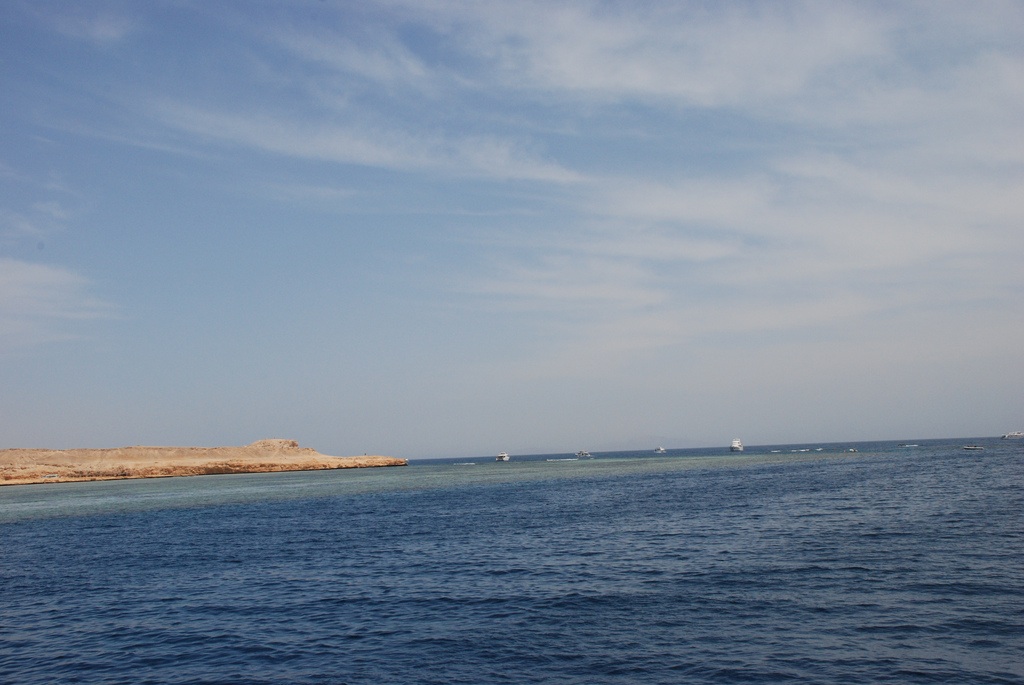
Tip of the Sinai Peninsula. Image credit: BBM Explorer
The army’s recent involvement in the departure of President Morsi and subsequent interim governance has allowed lapses in the security of the Sinai peninsula, resulting in greater opportunities for violent exploitation. In response to these attacks General Ashkenazi of Israel alluded to the greater, if indirect, risk to Israeli security in the wake of Morsi’s ejection from power. Nationwide military power has contracted to encompass an increasingly smaller area that has seen the extremities of the country, such as Sinai, provide a haven for frustrated Islamists to settle and plot.
The Israeli Defence Force have traditionally allowed the Egyptian military to control the border regions and thus assume responsibility for the security of the area. However, the feelings of insecurity amongst Israeli forces have seen increased IDF forces in the area and tougher training regimes imposed. The volatility of the Sinai region can only be addressed by a stable state. While Egyptian security forces are preoccupied with Cairene crises, the Sinai peninsula is at risk to becoming a breeding ground for distinct factions of dissatisfied Egyptian society. Israeli discomfort is understandable as there is a growing risk that violence in the Sinai will spill over into Israel. The success of the July Sinai attacks will boost the confidence of Jihadists who are expected to join forces with Gazan miitants due to their ideological commonalities.
A heightened military presence in the Sinai jeopardises Egypt’s historic 1979 peace treaty with Israel, which prohibits large-scale military mobilisations in the Sinai Peninsula. However, were Egypt’s military to conduct a large-scale assault on militants in the area, it is unlikely that Israel would oppose such an operation if the intention was to clear Sinai from the growing presence of extremist terror groups that pose a serious threat to Israel’s southern regions.
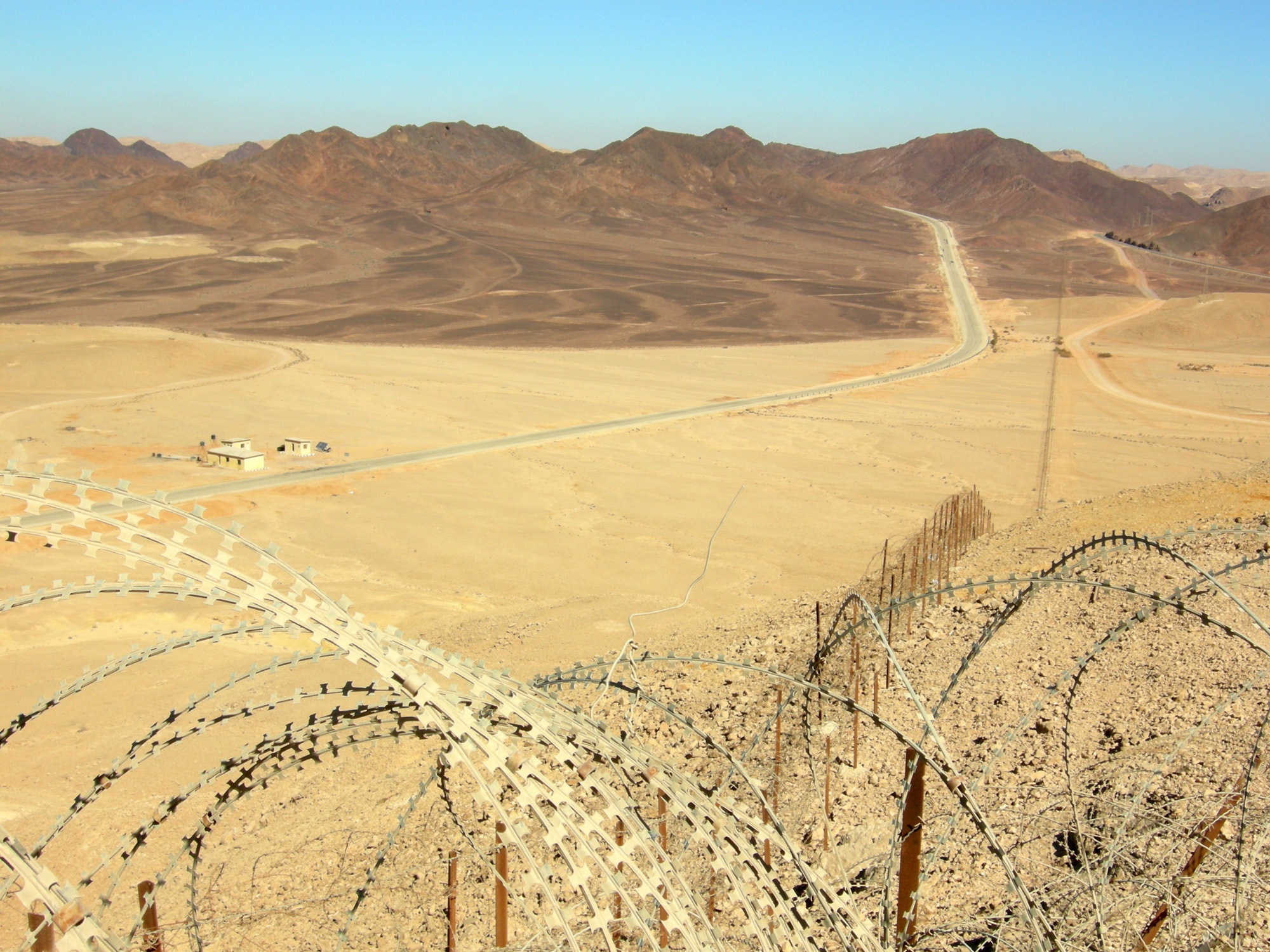
Looking north along Egypt-Israel border north of Eilat. Image credit: Wilson44691
Another sect to consider is the neglected 600,000-strong Bedouin tribesmen scattered across the peninsula. Long ignored by successive Egyptian regimes the Bedouin possess long-standing dissatisfaction with central government due to feelings of isolation and lack of opportunities in the military, police and tourism industry. These grievances have led to an unlikely though effective union with militant Islamists, the numbers of whom have reached around 2,000 in the Sinai peninsula armed with weapons smuggled from Libya.
The targeting of Egypt’s gas pipelines is highly significant and alludes to public dissatisfaction with government’s utilisation of natural resources. Though twice the size of Israel’s gas fields, the development of Egypt’s gas lags far behind the growth in its demand. Rising energy prices have been yet another reason behind social unrest, an untenable situation when, in fact, energy subsidies account for a third of government spending. This unites two deep-rooted problems; government’s fear of cutting its subsidies as well as the flight of the major conglomerates that specialise in developing gas fields and infrastructure.
As a consequence, Egypt barely exports gas and it could be years before it attains the level of stability that is needed to attract investment for further gas exploration. Therefore, we can expect energy prices to rise, government spending to accompany it, a hike in the cost of living and further impoverishment of the Egyptian people. As recent military offensives suggest, the army are treating the Sinai situation as critical, it remains to be seen how big an explosion this gas leak will trigger.
About the Author






Great background read to an ever worsening area. I found this very useful and informative because of the lack of other literature on this niche topic.
Particularly enjoyed the witty title and closing sentence. I presume you must have gone to a creative specialist of some sort?
A lot more interesting than reading about Miley Cyrus twerking or spot-fixing and very well written. I look forward to reading your future coverage on the issue. Nice title too, worthy of a broadsheet newspaper.
Shame because my follow-up was a piece about Miley twerking in the Dead Sea. Thanks, quite proud of the title
Will be interesting to see how Israel reacts to the escalating violence near their border
Interesting and informative piece, well written
Thought provoking stuff!
A great presentation of facts, well written and interesting. will be keeping an eye out for future publications