
As Iran’s long standing sworn “nemesis”, the Israeli reaction, voiced through Prime Minister Benjamin Netanyahu, denouncing the P5+1 Iran nuclear deal, claiming that the “agreement has made the world more dangerous” was far from a surprise for many. The deal has multifarious implications and consequences for the world’s only Jewish state, which once again now lies in the centre of the global political spotlight. Indirectly, the deal implies “the fact that US officials have reportedly been negotiating with Iran in secret for months before this deal, without even informing Israel” – causing widespread animosity among Zionist groups around the world and within Israel itself. The fact is that Israel must now decide whether to remain in defiant opposition, or to “accept it [the deal] as reality, and work to repair the diplomatic fissures that have erupted between Israel and its allies in order to retain influence going forward”. Israeli criticism of the Iranian nuclear program has long been a provocation for accusations of hypocrisy (see Max Fisher’s Washington Post article), however challengers would claims its concerns are legitimate considering past Iranian rhetoric.
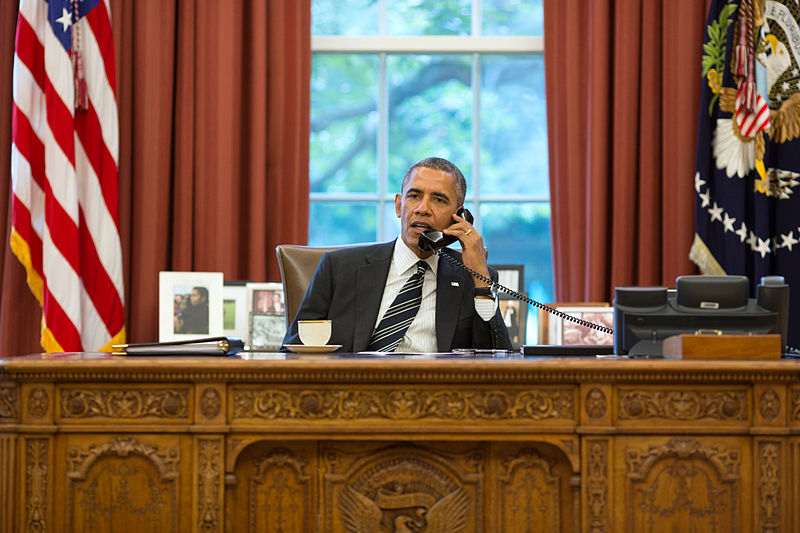
President of the United States, Barack Obama, talks with the President of Iran, Hassan Rouhani, during a telephone call in the Oval Office on 27 September 2013. Image credit:
Pete Souza
The majority Sunni Kingdom of Saudi Arabia is another state that has been forced into a dilemma by the deal: to side with its allies as members of the P5+1, or to continue it’s traditional policy of opposition to the Iranian regime and their nuclear program. Indeed as yet, which path Saudi Arabia has chosen to take remains unclear, with contrasting messages being issued from officials within the country. Initially, “the Saudi government gave a cautious welcome to the Geneva nuclear deal”, subsequently however, senior officials within the country have publicly voiced concerns that the ‘partial’ deal which they claim “would leave Iran capable of continuing to conceal elements of a nuclear program”. In fact such is the reported level of discontentment over the “deceiving” manner in which the negotiations were conducted, Saudi Arabia may now look to pursue an “independent foreign policy… determined to be pro-active in future” – Saudi royal advisor, Nawaf Obaid described the sentiments of the the nation’s ruling elite to the actions of their long standing ally; “We were lied to, things were hidden from us… The problem is not with the deal struck in Geneva, but how it was done“.
http://www.youtube.com/watch?v=g_AD5GCpdp4
In Syria the “Syrian-Iranian alliance” ensures that the Iran/US divide remains acute over the nation’s civil war; the deal may result in even further delays in planned US-backed negotiations to end the conflict, as since the deal in Geneva, “parties on the ground seem less amenable than ever to a diplomatic solution”. Despite a sceptical reaction from many of the Middle East’s key players, there are some who have openly welcomed the development and it’s potential significance for the region. Qatar, a state allied by a defence pact with Saudi Arabia, is the latest in a series of Gulf States to commend the agreement; “Qatar’s Foreign Ministry said the deal is an “important step toward safeguarding peace and stability in the region” – Bahrain, Kuwait and the UAE have also issued similar statements expressing initial support. The issue now is that those states who are expressing concerns are among the region’s most influential; the risk of creating opposing blocs in an already fractured neighbourhood over the specific terms of the arrangement is a concern that the international community now faces.
About the Author





