
It seems like Australia has a habit of ousting sitting Prime Ministers. Just 3 years and 3 days after Julia Gillard took over from Kevin Rudd, the tables have turned with Rudd resuming the Prime Ministership.
The extraordinary week in Australian politics culminated in a formal ballot for the leadership in the Labor party late on Wednesday night –resulting in the election of Rudd 57 to 45.
How did it come to this? A quick catch-up is required to keep up.
-3 December 2007 – Kevin Rudd leads the Australian Labor Party out of the wilderness and elected as the Prime Minister. Gillard serves as Rudd’s Deputy Prime Minister.
-24 June 2010 – Julia Gillard seized the leadership after Rudd loses the support of the Labor caucus.
-21 August 2010– The federal election results in a hung parliament with neither the Labor Party nor the Liberal Party having a majority in the House of Representatives. After 17 days of deliberations, Gillard gains the support of 4 Independents and becomes the 27th Prime Minister.
-27 February 2012 – First ballot for the Labor leadership, Gillard triumphs over Rudd 71-31. Rudd’s challenge comes after Rudd resigned as Foreign Minister five days prior saying he did not have confidence in the Prime Minister.
-21 March 2013 – After fevered speculation, leadership ballot is triggered after key Labor minister Simon Crean calls for PM to hold a vote on the leadership and for Rudd to run. Gillard announces the ballot, however, Rudd refuses to put his hand up for the top job – in part, because he did not have the numbers required to win.
And that takes us to 26 June 2013.
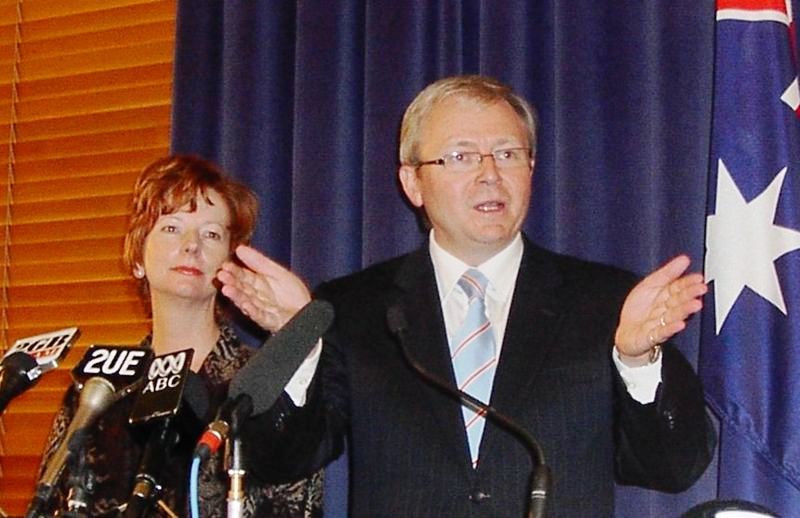
Kevin Rudd as leader of the Labor Party in 2006 and his deputy Julia Gillard.
After months of speculation about Rudd returning to the leadership, mid-morning on Wednesday rumours began circulating the Canberra Press Gallery of a petition for a leadership vote circulating amongst Rudd supporters. Lenore Taylor from The Guardian Australia broke the news and sparked the fevered speculation that a leadership was on. With hindsight, in all likelihood no petition was ever circulated. Journalists trying to confirm the story independently reached Labor members known for supporting Rudd who said they had heard of the petition but had not yet seen it.
This ‘phantom petition’ was used as a tool to smoke out PM Gillard – and it worked. After Question Time, which was uneventful considering the events to transpire later in the day, saw no mention of the petition. Out of nowhere just after 4pm, Sky News announced they were to broadcast a live interview from the office of the PM.
Just a quick aside, the Canberra Press Gallery is generally a frenzy of activity – journalists hovering in the corridors, walking in and out of different bureaus, and other stickybeaks walking up and down. But as Sky News went live to Political Editor David Speers a pin drop could almost be heard in the gallery – the only sound was the echo of the Sky coverage broadcast on almost every TV.
PM Gillard told Sky News she will be calling a leadership ballot for this evening at 7pm. She said: “Anyone who believes they should be leader of the Labor Party, they need to put their name forward.” Gillard laid down the gauntlet to Rudd declaring that whoever loses the ballot needs to exit politics at the next election. Asked if she had the numbers to win, Gillard replied “I wouldn’t be putting myself forward unless I had a degree of confidence about the support of my colleagues.”
Rudd announced his intentions a short time later at a 5.15pm press conference. Rudd confirmed he would contest the leadership. He said: “Many many MPs have requested me for a long long time to contest the leadership of the party because of the parlous state in which we find ourselves in… For the nation’s sake, I think it’s time this issue was resolved.”
When it comes down to it, Rudd’s challenge was primarily motivated by revenge. Close observation of Rudd’s actions since he was ‘knifed in the back’ would show he has been on a non-stop three year quest for revenge. The publically stated reason for his return, the ‘overwhelming’ public desire for his return (the evidence for this public polling and his rock-star reception in public forums.) In his address, Rudd said: “The Australian people deserve a competitive choice at this election,” and by implication he believes he is the only one who can provide this.
At this point, all assumed that there would be little action until the winner was announced. However, Bill Shorten – a key Labor factional and union leader – delivered a short statement to the media in which he declared his support for Rudd. This was a shocking move. It must be emphasised that Shorten had up until this point been a key Gillard backer, so much so that he had been instrumental in the elevation of her to the Prime Ministership in 2010. The next big event, a hastily called press conference by key Labor factional and union leader Bill Shorten. But more than that, he had spent the last few weeks emphatically declaring his support for the Prime Minister. His backflip will taint his political future. Shorten’s bold move was enough for many in the gallery to declare, at least informally, that Rudd would get over the line. But, given the vote had not actually taken place this was premature.
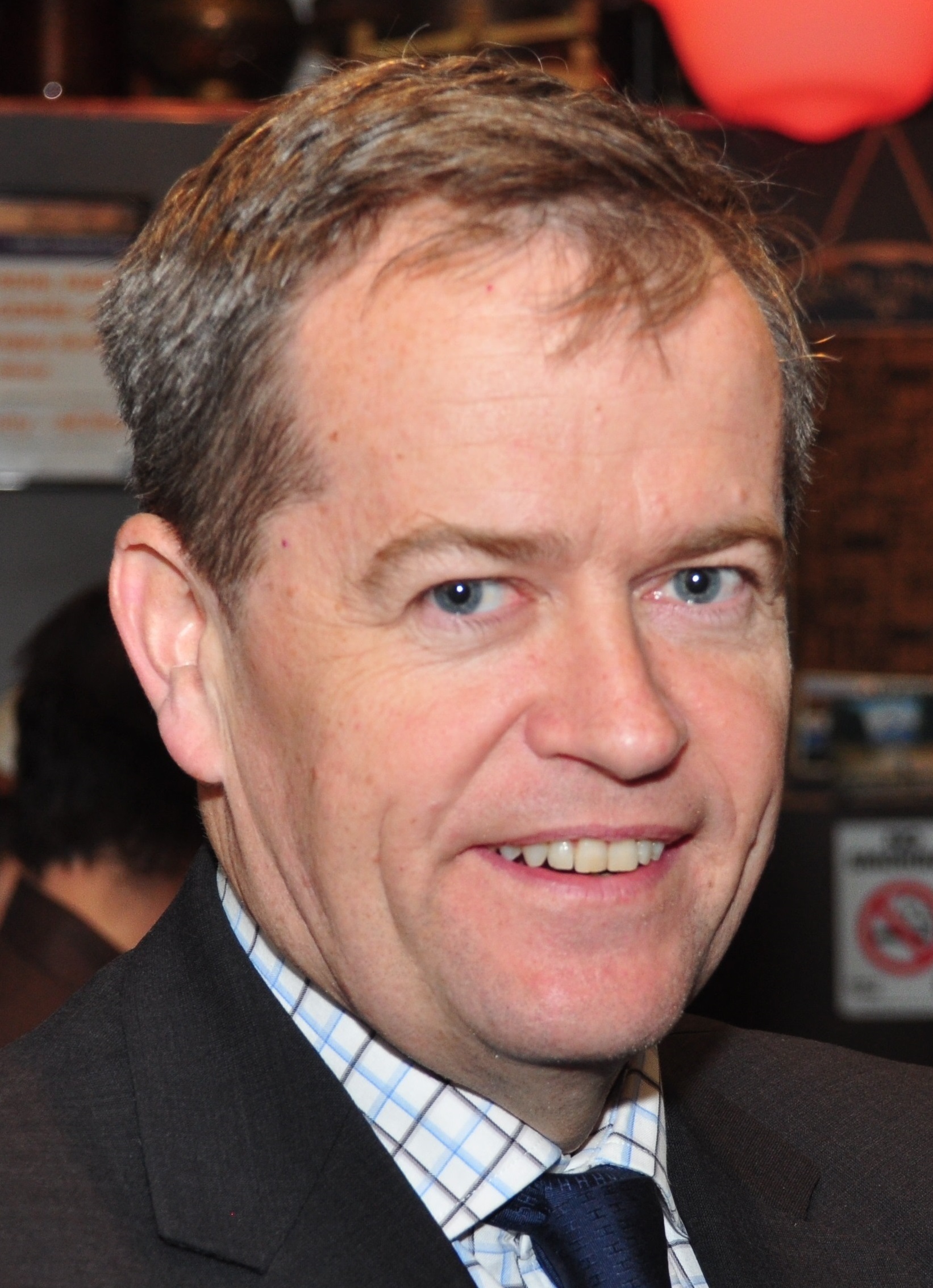
Labor factional powerbroker Bill Shorten.
The waiting game continued. Media eagerly camped out in designated holding pens to see the stream of Labor MPs walk into the caucus room. This is no trivial matter. In fact, much is made of who walks in with who and walking buddies are seen to indicate voting behaviour.
Team Gillard arrived first flanked by Treasurer and Deputy Prime Minister Wayne Swan, Kate Lundy, Joe Ludwig, Craig Emerson and many others. Rudd, by contrast, walked in alone.
During the caucus, leaks emerged that Rudd had the numbers. However, cautious reporters waited until the tally was confirmed by Chief Government Whip Chris Hayes at 7.50pm. Rudd declared the winner 57 to Gillard’s 45.
Anthony Albanese was elected Deputy Prime Minister an hour later, after having served as Leader of the House of Representatives during the Gillard government. Albanese has long been a Rudd supporter but has always maintained the support of Julia Gillard.
Then for the obligatory post-spill press conferences and Gillard is first to face the press pack. She listed the series of policy achievements that she was proud of – namely the carbon price, health reforms, the Royal Commission into sexual abuse. Gillard could not ignore the issue of gender, which has been the focus on much of her prime ministership. She said that it did not explain everything about her prime ministership but that it ‘does not explain nothing.’ Having remained stoic up until this point, Gillard emotionally said, “it will be easier for the next woman, and the next one and the one after that.”
And with that, the Prime Ministership of Julia Gillard was over. She took a quick trip to Government House to see Australia’s Governor-General and formally tendered her resignation.
Journalists were made to wait until 10.40 to see the new Prime Minister Kevin Rudd address the media. Taking no questions, Rudd said he would resume the task he began when the Australian people elected him in 2007 with honour and humility. He briefly payed tribute to Gillard – listing what he saw as her achievements (establishment of the Fair Work Act and Naplan testing) — it should be noted that these two things were achieved whilst she was Deputy Prime Minister and Rudd said little to nothing of her achievements as Prime Minister.
Rudd used the conference to position himself as a positive change for Australia. Of Opposition Leader Tony Abbott, Rudd said he is “a man steeped in the power of negative politics. I see no evidence of a positive plan for Australia’s future.”
And with that the long, historic day of politics came to an end.
There was a sense of carnage to the whole thing – seven Gillard ministers resigned their posts due to the circumstances and many of which chose to not contest the looming election.
In the wash up of the next few days – the speculation still abounds. One thing you can say with certainty, there is nothing boring about Australian politics.
About the Author






[…] http://archive.the-ipf.com/rudd-v-gillard-the-inside-account-of-the-knifing-of-the-austr… […]