
“Aquí nadie se rinde”
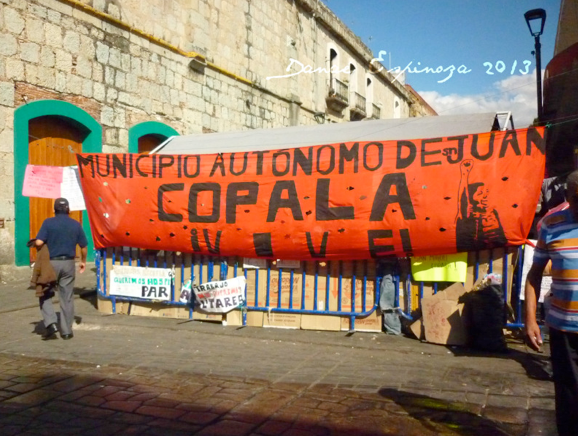
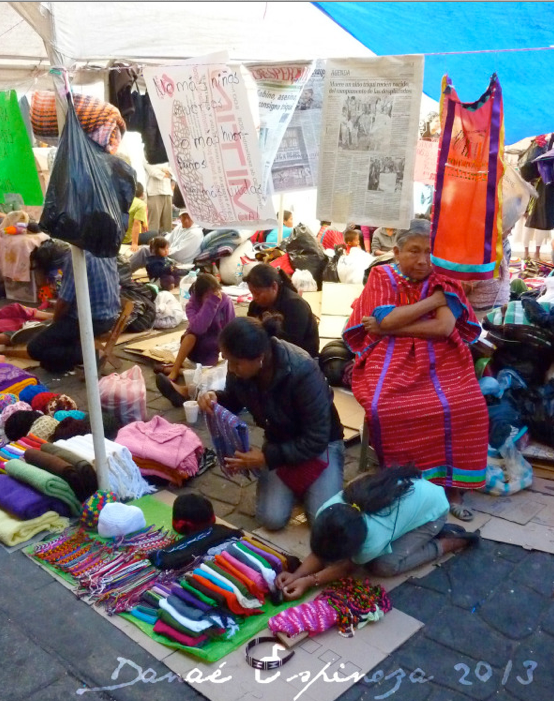
This was the phrase of many pamphlets of the Triqui indigenous group in the center of Oaxaca, Mexico, who are living in tents next to the Oaxaca’s City Hall in protest at being violently displaced by paramilitary groups throughout 2012.
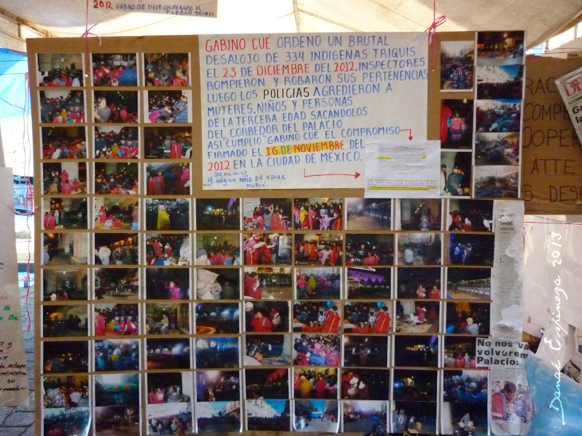
On 23 December 2012 the group was attacked by state troopers. Countless men and women were injured and a newborn baby sadly died in the fracas. This problem has been ongoing for many years with no solution in sight. The Triqui indigenous group’s demands throughout have been; to get their land back, that their rights and the autonomy of the Triqui people are respected and, above all, that the paramilitaries leave their land.
San Juan Copala was an independent municipality of Oaxaca from 1826 to 1948 until the State Legislature agreed to its dissolution and annexation of its territory to the municipality of Juxtlahuaca. Following a series of human rights violations by the caciques of Putla and Juxtlahuaca, they made the decision unilaterally without consulting with the various organizations that make up the region of San Juan Copala, to become an autonomous Municipality, that is according to the Movimiento de Unificación y Lucha Triqui (Movement of Triqui Unification and Struggle) known as MULT.
In 2010, Beatriz Alberta Cariño Trujillo (Mexico), a member of the Community Center Working Together (CACTUS), based in Huajuapan de Leon (Oaxaca), and Jyri Antero Jaakkola (Finland), both members of a humanitarian convoy were shot dead during an attack by unknown assailants while in San Juan Copala. This caravan was filled with human rights activists and teachers seeking to contribute to peace in the community, and were coming at a time when 300 children had missed classes for four months due to the climate of violence that still continues to this day.
Currently San Juan Copala is still in a state of tension; there is a major food shortage, and a significant lack of warm clothing for people who were displaced from cold areas of the Sierra de Oaxaca.
What is the origin of the problem?
The origin of the conflict can be traced to a dispute between two local chiefs over natural resources, such as springs and pine forests. Oaxaca is one of the poorest states in Mexico. In the town of San Juan Copala for example, MULT is continuously working to establish an independent government based on indigenous customs. The water and electricity supplies have already been sabotaged because of this.
Mexico as a country suffers greatly from issues of marginalization, specifically of minority groups like the Triqui, despite there being formal recognition of its multi-cultural status at the state level. This arises from lack of democratic accountability on that front.
Mexico, like most of the countries in Latin America, is abundantly rich in natural resources, some of which are found in Oaxaca. Mining concessions have been granted to several multi-national companies such as Cuzcatian, a subsidiary of of the multinational Fortuna Silver Mines of Canada, to mine for gold and silver. This concession amongst others has not pleased the Triqui, particularly because there was lack of proper consultation. The mines occupy indigenous, communal and Ejido land, which has resulted in them being forcefully kicked out of their land by paramilitaries and hired gangs.
For years, the mines have caused pollution in the area and to single out one in particular, the Santa Ines mine is known to have poisoned the sub-soil water, the people and the children, causing cancer with cyanide used to wash the minerals. This happened over 20 years ago, but the memories of cattle dying, people suffering skin sores, eye infections and respiratory problems still linger. All the miners working in the mine, with the exception of 3, died of cyanide poisoning. Now this mine has been re-opened and the people will hear none of it.
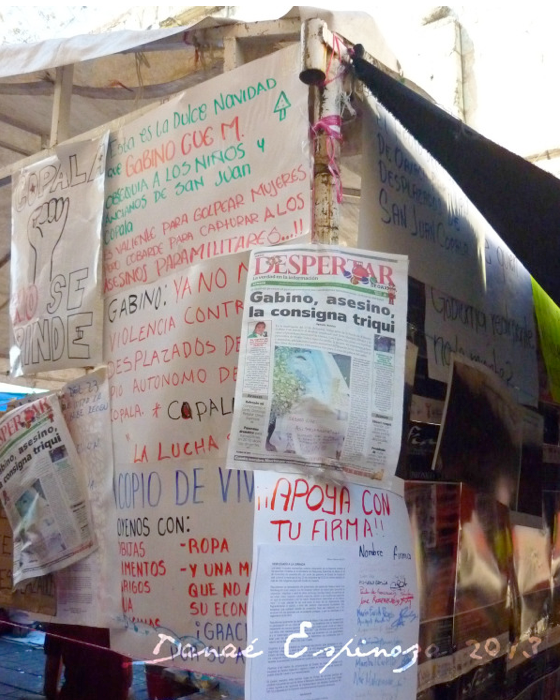
Since the most violent events against the Triqui community and the murder of activists Beatriz Alberta Cariño Trujillo and Jyri Antero Jaakkola occurred during the reign of the former governor of Oaxaca, Ulises Ruiz, Social and Peasant Organizations of Oaxaca have been seeking intervention from the government of Finland and the European Parliament to help get to the bottom of the killings of the two activists. Already, the organizations are preparing to lodge an international criminal complaint against the former Governor. Amnesty International in a statement issued in London, urged the Mexican government to speedily investigate the attack on the convoy that lead to the deaths.
Unfortunately until that date, there has been no progress with regards to investigating the murders of both Beatrizand Jiry. At the same time, there have been zero agreements or actions for the displaced Triqui people to return to their land.
How many deaths of indigenous people and activists will be witnessed in Oaxaca in order to quench the thirst for natural resources to sell to the highest bidder?
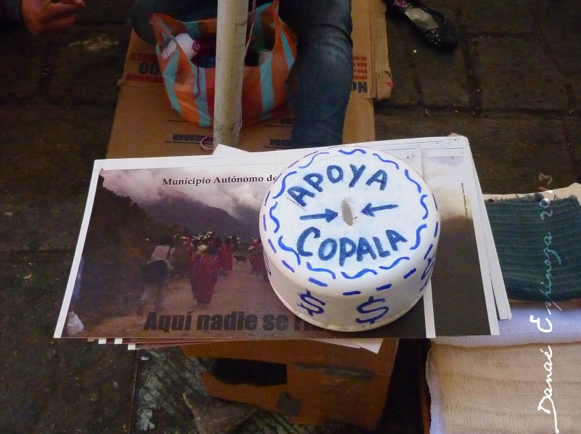
Photographs by Danaé Espinoza H.
About the Author






[…] Related: San Juan Copala, Oaxaca: Rich in Natural Resources but Poor in Indigenous Rights […]