
The Arab Spring clearly demonstrated a yearning for freedom in the Middle East. Whilst the Gulf was largely unaffected by bloody uprisings, the most bound and voiceless sector of Saudi society is still hungry for change. On the 26th of October, Saudi women are being urged to get behind the steering wheel on a national ‘day of defiance’.
The same elements which yielded rebellions from Libya to Syria have been instrumental in the women’s rights movement in Saudi Arabia. After political reforms allowed Saudi men to vote in municipal elections in 2005, Saudi women started campaigning for the same privilege in 2011. King Abdullah promptly announced that women’s participation in the polls would be permitted in 2015, a huge step forward for the Gulf state’s female contingency.
In addition, after a Twitter movement and poignant No More Abuse national ad campaign, domestic abuse was finally outlawed in August this year. Despite concerns that the custom of male guardianship could prevent the law from being adequately enforced, it seems as though the moderately reformist Saudi monarchy is trying hard to change the culture of ‘legitimate’ aggression in the home. As well as the potential 50,000 riyal ($13,000) fine and year of incarceration, the act is being accompanied by a national education and awareness programme warning against domestic violence.

The King Khalid Foundation started Saudi Arabia’s first anti-domestic abuse ad in the country’s newspapers this year. Photo: Memac Oglivy
Of course, the road to equality remains long and arduous for Saudi Arabia’s female population. Women in the gulf state still require their male guardian’s permission to open a bank account or to undergo surgery. They are restricted to separate areas in cafés and on buses and are prevented from taking courses such as engineering, pharmacy and journalism, all of which are perceived to be solely suitable for men. Until 2013 women were even prevented from riding bicycles in the Arab state. Some have compared the gender segregation, restrictions on travel and general status of women in the country to apartheid- South Africa’s discrimination against its ‘Black’ and ‘Coloured’ citizens.
However, now Saudi Arabia has its very own freedom fighters. Bloggers and social activists such as Manal al Sharif, have profited from platforms like Youtube and Facebook in their quest for freedom of mobility. Manal started the Women2Drive campaign on Facebook in June 2011 with 12,000 supporters and since then, swathes of women have protested by taking to the roads and posting the proof on the web.
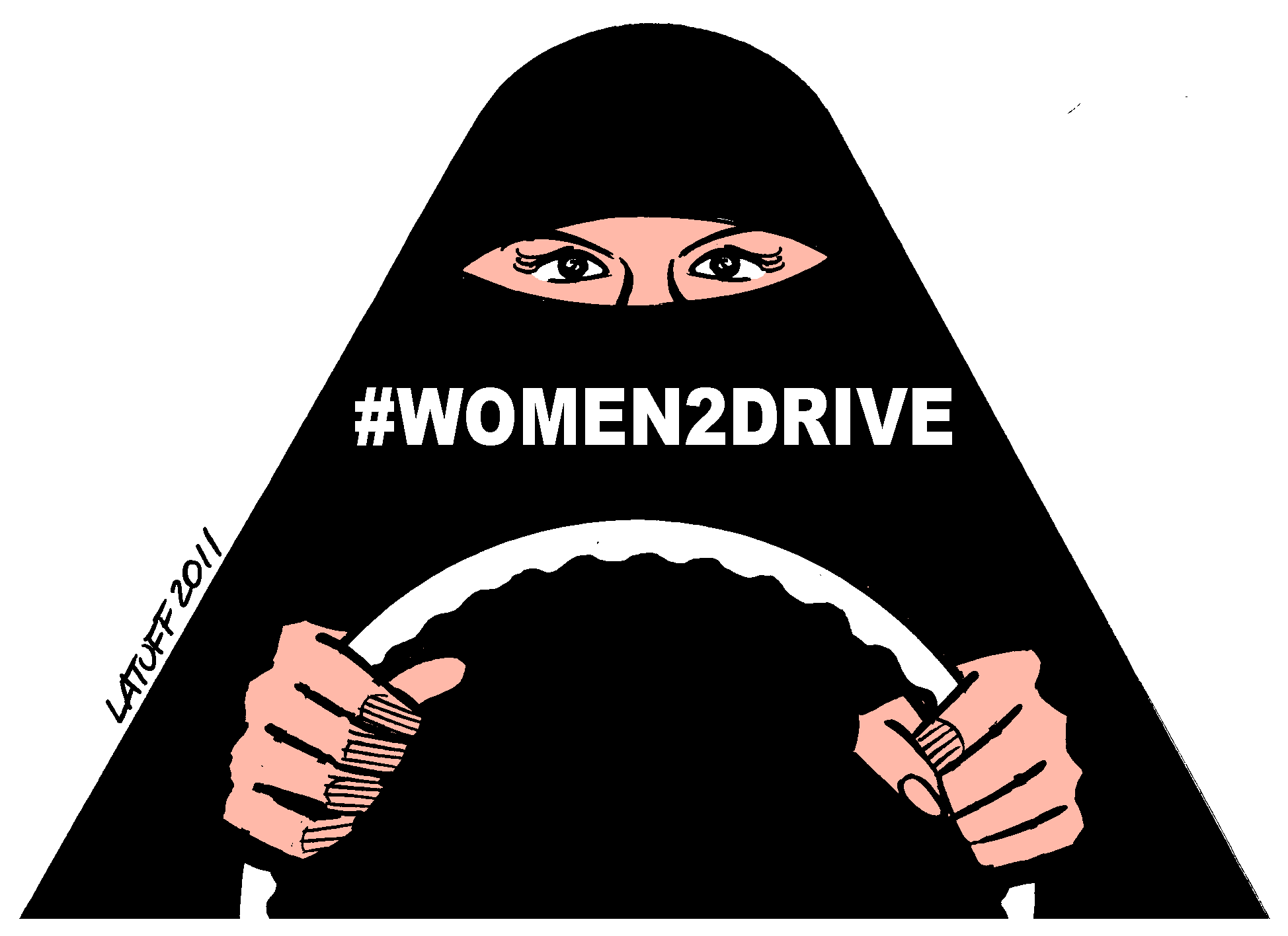
Cartoon for Saudi Arabia’s #women2drive Movement. Image credit: Carlos Latuff
One such video was posted by the female Saudi activist Eman Alnafjan showing a woman driving calmly through the Saudi capital. Its title can be roughly translated ‘Ms. Azwah goes out in a car with her mother, one afternoon in Riyadh, 10th of October’ and the two video’s captions explain that she is going to collect her children from school, and then that she is simply returning from this journey. The seemingly mundane nature of such an act reinforces the absurdity of the Saudi restriction on women being able to drive.
As conservative clerics declare that women getting behind the wheel may damage their ovaries and put their pelvises at peril, one is wholly reminded of the British politicians, who around a century ago claimed that menstruation could cloud half the country’s minds on polling day. If Saudi women’s courage and determination can eventually wield as marked successes as the Suffragette movement, we will have the witnessed the most fruitful Arab revolution yet.
About the Author





