
Plato regarded social democracy as an immense concern. Aristotle called it a ‘deviant’ – the opposition to majority rule’s nobler version, the polity. In fact, throughout political philosophy’s history, influential scholars have theorised about the pros and cons of democratic society, and have by no means come to a consensus on democracy’s moral worth.
Image Source: http://bit.ly/1Ca5Hyc
At the centre of the democratic problem is an unavoidable paradox, which makes democratic states difficult to govern. Dr Chris Rogers of Warwick University, suggests that the twin purposes of any democratic government are accumulation of capital and legitimization with a view to re-election. The difficulty is that the creation of favourable conditions for the accumulation of capital, Rogers says, will undoubtedly have adverse affects for vast swathes of the working population. Giving with one hand whilst taking away with the other, in other words.
This all seems very theoretical, disjointed from the reality of everyday politics. That is, until a General Election comes around, and the parties – in particular those who seek majorities, the Labour and Conservative parties – write manifestos brimming with pledges to ‘help’ the demographics that are key to their electoral hopes.
Two examples are most prominent this time around: the Conservatives’ pledges to pensioners, and Labour’s pledge to future University students. Both win votes; both cost money; both are unnecessary.
The Tories are known for offering pensioners freebies. Giving to the older demographic is an easy political decision to make: pensioners tend to come out and vote more than any other group, and they tend to do so in favour of David Cameron’s party. To encourage this group to consolidate these stereotypes in May, then, is a no-brainer.
Osborne hopes to woo older voters by introducing a number of reforms that will put more money directly in the pocket of the pensioner, as well as by promising to cut inheritance tax, a big issue for well-off older voters. Having already outlined the Conservative plans to radically reform pensions, Osborne has suggested that around five million current pensioners will be offered the chance to trade their retirement incomes in return for cash lump-sums. This essentially amounts to a tax-cut for pensioners, who under the current rules are taxed 55% on any sale of annuities. With these reforms, the average pensioner would see this number radically reduced, and more money immediately available to spend.
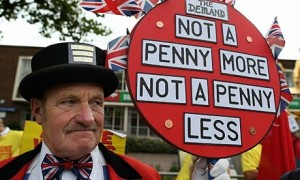
Image Source: http://bit.ly/1IunPEZ
However, the policy has been widely criticised by those on the left, who claim that this is an unnecessary expense on the public purse – not only will it reduce tax receipts, but it will also see increased spending when, inevitably in their view, vast numbers of pensioners begin to run out of money. When two million over-65s with over one million pounds worth of assets are offered winter fuel allowances and free bus-passes, the Labour Party argues the money is put where the politics suggested it should go, rather than where the figures signal it is needed.
If George Osborne is busy wooing the older generation, Labour is trying its best to gee-up the young-ones. This group is conversely left-leaning, but, and this is a real issue for Labour, less than half of them voted in 2015 (in comparison with over 75% of eligible older voters). So along come the Eds with a plan to save the day for young people struggling with debt, unable to afford housing or find jobs. Their tuition fees plan – to cut them from £9’000 a year to £6’000 – is symbolic, too: an attempt to really stick the boot into the Lib Dems and steal their voters at the same time. A double whammy!
UKIP, by the way, would abolish tuition fees entirely (but only for Brits who do science, because God forbid Britain ended up with very well-educated foreigners in its midst).
But this is a policy made for little other than those political purposes. The policy sounds good – it sounds like it will encourage poorer students to go to university, whilst alleviating some of the debt that all students graduate with. But demand for University places has shown itself to be inelastic – that is, the price of going to University having tripled since this government was elected has had no negative effect on applications or admissions, from any class. Further, those who come out of University and do not earn a lot of money are not overburdened by having to pay their debts back – money is only repaid once the graduate is earning a high enough salary, and after a certain period of time the debt is wiped entirely if the individual is unable to repay it. The policy leaves Universities with a £3’000 per person per year shortfall that Mr Balls says the state with cover – increasing public spending at a time when cuts will be necessary.
Seemingly the only benefit of this policy, therefore, is that it is politically savvy. Labour will gain votes from this, so much so that if they get really luck with the students in Sheffield, Nick Clegg may be ousted from parliament – though this does seem unlikely. But as with Osborne’s pension plans, many query the necessity of this move at a time when austerity cuts are crippling many parts of the country. Whilst the Tories are levelled with the claim that they will revert to type and raise VAT (a regressive tax that disproportionately affects the poor), the Labour Party does itself few favours by announcing unnecessary policies that only add value to the Tory claims that Miliband wants to borrow, tax and spend more than ever.

Image Source: http://bit.ly/1Cppw5Y
And this is the crux of the problem facing political leaders in modern-day Britain. These pre-election bribes seem essential to winning enough votes to govern, but in doing so, parties make their time in office all the more painful. Nick Clegg alienated voters. It is yet to be seen whether the two major parties will follow suit, or simply waste Britain’s money. An even more important question must be asked of politicians: if you were to stop making pledges to spend in those areas that are not necessary, would the cuts in other areas be less deep? This pandering to demographics, based solely policies that poll, well not only hinders the ability of the winning party to allocate money efficiently, but adversely affects people in the long-term, who may otherwise be saved the anguish of deep austerity cuts.
About the Author





