
During the past few weeks of financial turmoil, the small Mediterranean island of Cyprus has been in the spotlight of the international media. But what few reporters seem to remember is that this is an island divided in two. The Euro-crisis is affecting the south side of the island, but the north side is hardly mentioned at all. It is the forgotten half of Cyprus.
The island has been split since 1974, but the conflict goes further back in history. In 1914, after 300 years under the Ottoman Empire, Cyprus was annexed by Britain and became a Crown Colony in 1925. At this time, the majority of the population was Greek and had been so for 3000 years, but there was also a minority group of Turkish Cypriots estimated at about 19 percent of the total population. The two groups were scattered across the island, living in separate communities within the same colonised society.
According to an independent report from Minority Rights Group, Britain played the two communities against each other in order to maintain power during the colonial rule. As the Greek side formed a closer alliance with mainland Greece, the Turkish population was used for supporting the colonial power. The independence movement on the Greek side was dominated by an attempt to create a nation in union with Greece, and Greek Cypriots tend to believe that the Turkish community was doped by the British into opposing this idea.
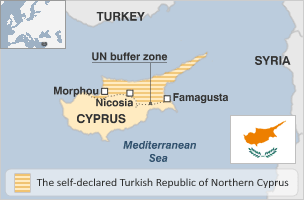
Map courtesy of the BBC.
During the 1950s there was a growing frustration with the British inability to find a solution for independence. The Greek Cypriot Archbishop Makarios urged the Greek population to use violence against the colonial rule, aiming for Enosis – unification with Greece. It was when Colonel Giorgios Grivas was appointed as head of the military operation that the plan to pursue violent operations grew into action. It was mainly aimed at the British, but created hostility between the Greek and Turkish communities as the Turkish were used for the police force and often killed in operations. For this reason, violence mounted between them as well.
In 1960 Cyprus was declared independent under the new constitution, which was based on power-sharing between the two communities. But there were lots of issues and unhappiness on both sides. Archbishop Makarios was elected president by the Greek side, and his views of Cyprus as an entirely Greek island remained controversial. The Turkish Vice President had veto power on all decisions which made it difficult to rule without unity.. In 1963 Makarios proposed constitutional changes which would solve disputes, but only working in favour of the Greek population while taking administrative and governing rights from the Turkish Cypriots.
Turkish protests were cracked down by the Greek, after which widespread violence broke out. The Turkish side did organise attacks against the Greek as well, but the Greek side being larger in number lead to more casualties on the Turkish side. A UN peacekeeping force was sent in 1964, and it remains in Cyprus until this day. The force did undoubtedly prevent killing, but it was far from able to stop the widespread violence. During this time, Greece and Turkey were both threatening to go to war over Cyprus, but were stopped by the American president Lyndon Johnson. Meanwhile, Makarios was dealing with the Greek government, shipping weapons and troops to the Greek Cypriots in secret.
In 1967 after the military coup in Greece, the new leadership made another attempt of Enosis. The Turkish Cypriots refused their offer, and the violence led by Makarios and Grivas increased. Fractions of Greek Cypriots were also disapproving of collaborating with the Greek dictatorship, which created further tensions, and eventually ended the relations between Makarios and the Greek junta. During the same period, inter-communal talks between other Greek and Turkish Cypriot leaders were supported by the UN. While opposition grew against Makarios, the Greek junta decided to settle the question once and for all, get rid of the Archbishop and unify Cyprus with Greece while buying off the Turks.
In 1974, the newly elected leadership in Turkey believed that Cyprus needed support. They approached the UN and expressed concern over the drifting talks, and expressed doubt about a united Cypriot state. Following a second military coup in Greece in 1973, the Greek government overthrew Makarios in 1974. Turkey responded with an ultimatum, demanding the Greek government to pull out of Cyprus, which Greece declined in the belief that America would intervene again. But President Nixon was otherwise occupied with the Watergate scandal, and Turkey invaded in July 1974.
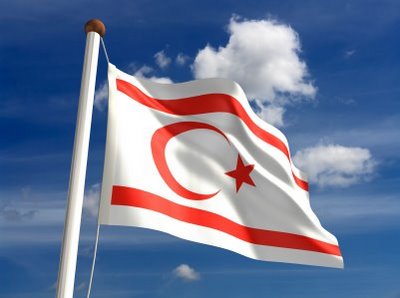 The Turkish occupation was brutal in every way, with widespread looting and killing of Greek Cypriot civilians. After Turkey entered, negotiations were no longer aimed at unifying Cyprus but rather at how to manage two separate societies on the one small island. Turkey occupied the north part, creating safety for Turkish Cypriots while driving out the Greek Cypriots who lived there. A formal agreement of “Population Exchange” was created in 1975 to allow passage for any Greeks still in the north and vice versa. Despite an agreement allowing Greeks to stay in the north and Turks to stay in the south, almost nobody did so as the borders were closed. With the Turkish military present, the Greek Cypriots now felt like the minority group, fearing the Turkish would one day take over the whole island. The UN urged Turkey to withdraw, but they remain in Cyprus to this day. In 1983 they declared the north independent as Turkish Republic of North Cyprus (TRNC) but this has not been recognised by anyone except Turkey.
This unrecognised republic in the north, along with the Greek side entering the European Union on their own in 2006, has led to isolation of the north from the rest of the world: the south became connected with Europe, and the north became forgotten. In 2003 the first crossing of the “green line” dividing the island was opened in 30 years. A reunification plan was presented for referendum in 2004, embraced by the Turkish Cypriots but turned down by the majority of the Greek Cypriots. And so the island is still largely segregated today, with Turks in the north and Greeks in the south, and a UN buffer zone in the middle.
About the Author





