
Politicians are paying more attention to the issues of mental health but there is a long way to go before it is taken as seriously as physical health.
One in four people will experience a mental health problem at some point in their lives. It accounts for 40% of the ‘disease burden’ on the NHS, yet only 13% of its budget is allocated towards treating mental illness. Moreover, according to research by the UK Council for Psychotherapy,physical health receives ten times the amount of attention given to mental health.
Labour Party leader Ed Miliband in his speech to the Royal College of Psychiatrists this November called mental illness ‘the biggest unaddressed health challenge of our age.’ And indeed until now, the mental health sector has been largely neglected by the government, overlooking problems such as lack of training in mental health of many NHS staff members. Miliband reported that eight out of ten primary care professionals say that they need more training in mental health than they have.
There are vast inequalities in funding for research and the first and deepest cuts are made in mental health services, including a reduction of £150 million in crisis services and outreach programmes. If such cuts were made in the physical health sector, there would be a major public outcry. And all this despite legislation passed last year that aimed to achieve a ‘parity of esteem’ between mental and physical health.
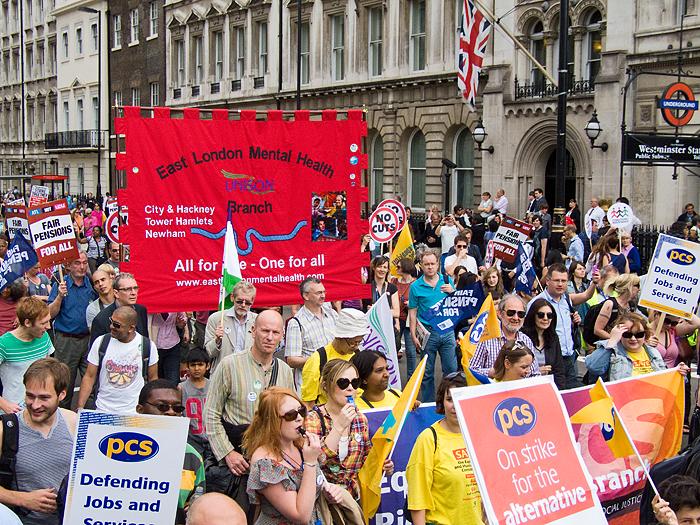
East Londoners protest against disability cuts.
So why does such a disparity exist? Perhaps because of a lack of awareness about mental health; the idea of threats against the mind as well as the body is a relatively modern concept. The foundations of modern medicines can be traced vaguely as far as Ancient Egypt, but up until the Victorian Age female mental illnesses like postpartum depression were being dismissed as ‘hysteria’ or ‘nerves’.
Although this attitude has evolved, society still carries echoes of a kind of subconscious dismissal of ailments whose symptoms are not glaringly obvious, often chalking down depression or bipolar disorder to ‘moodiness’ or ‘overreactions’. Despite breakthroughs in psychiatry, mental illnesses are still often slippery to define and tricky to diagnose, especially in relation to many physical illnesses, making it an ambiguous fields for politicians to impose legislations in.
There may also be an innate societal belief that mental health is a significantly private affair, personal to the individual, and thus in some way distanced from politics. But if we held the same stigma for physical health, wouldn’t it be considered ludicrous, even dangerous?
Health of any type is never truly private. It is defined in economic terms as a commodity, intended to be a public good – a resource that offers benefits to the community as a whole as well as the individual – which is considered a citizen’s basic right. It has externalities, meaning it benefits third parties beyond those who consume it; for instance, a child who gets a polio vaccine avoids the risk of passing it on to his classmates, and thus they also reap the benefits of the vaccine. This definition suggests that health is inherently a communal benefit rather than simply an individual one, and this means it is inherently politicised.
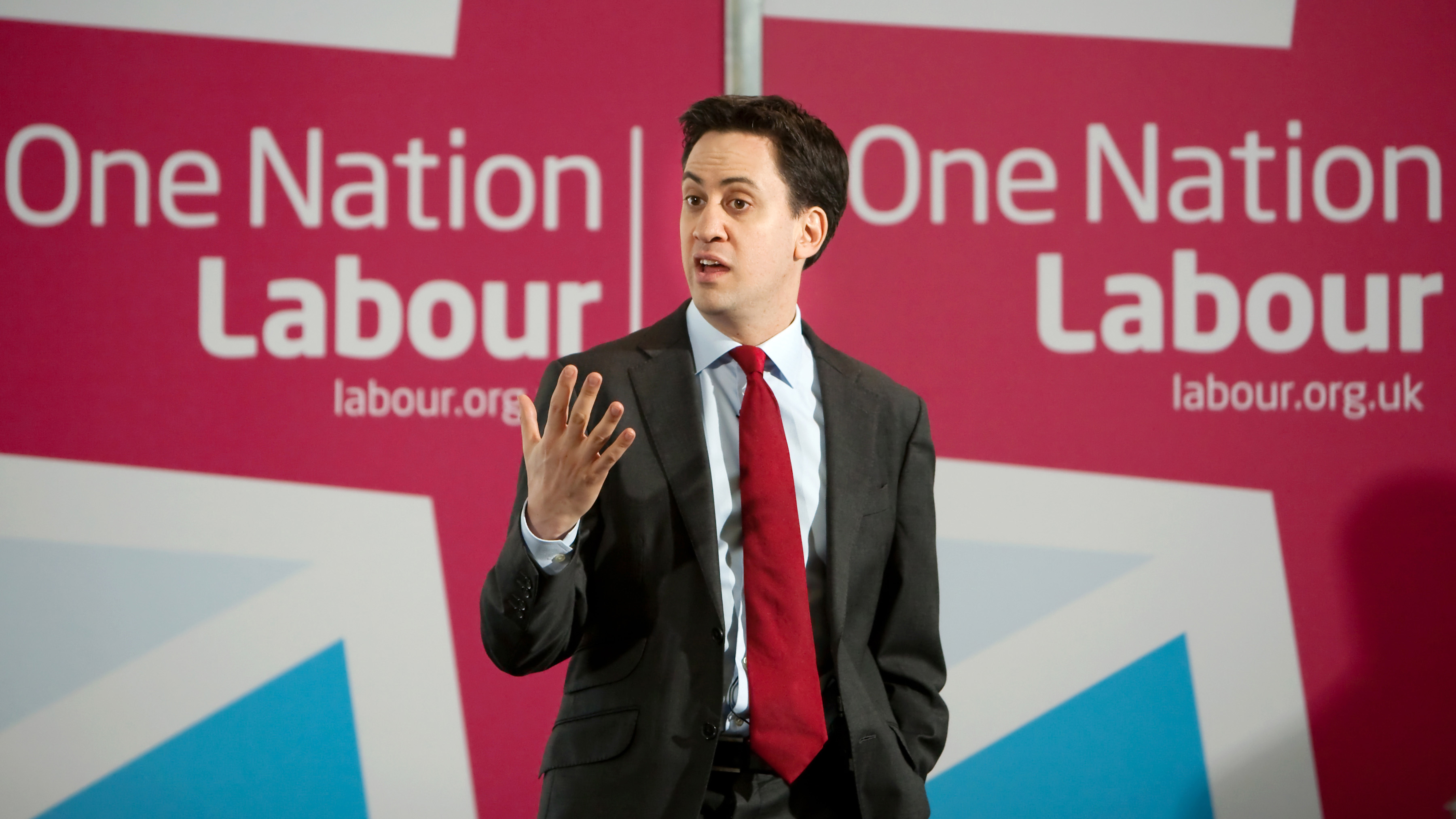
Labour politician Ed Miliband claims that his One Nation approach will help end disparity between physical and mental health.
So why shouldn’t mental health also be? It seems politicians are beginning to realise this and are attempting to bridge the gap between the two. Last year, at a debate on mental health in the House of Commons chaired by Conservative MP Nicky Morgan, four MPs came out about their personal mental health issues. This was significant not only in taking a step towards addressing mental health more openly, but also in the gesture’s symbolic value: making part of the public sphere those issues that society would seek to hyde.
In his speech, Miliband talked about the approach he called ‘One Nation’, where, he said, ‘nobody is left out, or written off’, and that included people suffering from mental illnesses. He felt that the first step in paving the way for a practical approach towards improving the mental health sector is to remove the taboo against it, making it something to be discussed freely in the household, the school and the workplace.
On a global scale, nearly 450 million people have mental health disorders and more than three-quarters of these people live in developing countries. According to WHO statistics, eight out of ten of them do not receive any treatment at all. Many of these nations are afflicted by disease, natural disasters and war, resulting in stress, depression, Post Traumatic Stress Disorder, anxiety, etc. Worse still, many developing societies carry an even greater stigma against mental illness, viewing it as a burden and a shame, and often rejecting treatment for a mentally ill family member.

This graph reflects how mental health dominates the spectrum of health issues.
There have been many cases of parents casting out a mentally ill child or locking him or her up in the house with no outside contact. Such cases of atrocity should serve as an example to ward against negative or even apathetic attitudes towards mental illness. Certainly they have prompted increased action towards aiding mental health issues worldwide.
Dr. Peter Singer of Grand Challenges Canada said:
Projects like Grand Challenges Canada aim to tackle issues that can lead to mental illness, such as alcohol and substance abuse, as well as delivering solutions such as counselling and health promotion. One such programme will use mobile phones to provide instant support to Nigerian women suffering from postnatal depression, while another will use local health networks and telemedicine to help Afghans with mental health conditions.
Such pro-activism is slowly transferring downstream into domestic governments, where politicians are beginning to pay more attention to the mental health sector. Even if it’s all talk at this stage, it’s a good start, because acknowledging the existing problems means that they are acknowledging that mental health in synonymous with health instead of existing as a separate entity, and thus should be treated with equal importance.
This article was originally published on Urban Times.