
I wrote a Facebook update asking my friends to share on what to do in the event of rape. And, Moraa Osoro a pal wrote in caps: REPORT. REPORT. REPORT. Adding, “If it is not reported, it never happened.”
The last bit was particularly loud for me, that if it is not reported, it never happened!
It is estimated that only 1 out of 20 women in Kenya will report a rape and only 1 in 6 will seek medical assistance. Why then do fewer people report sexual abuse?
My discussion with some more friends and referring to some sites hinted that these cases go unreported because survivors of such abuses most times are dismissed, victimized or treated like suspects when they go to report.
I remembered a lady, a survivor of rape during the 2007/2008 post-election violence (PEV), was told by the police to go back and get raped, again so that she could get new evidence needed to report the case. She had showered before coming to the police station.
This broke my heart as it echoed the easiness of dismissing rape and the ‘we-don’t-care-what-you-went-through’ attitude that accompanies it. This, sadly, puts the burden of proving innocence on the victim.
Furthermore, it is a psychological crime that lasts far longer than the physical scars. This psychological trauma is contributed largely by certain fears. Such as:
- That people, particularly their relatives, would know what happened to them and they would be judged.
- Of being blamed. We know of people saying, especially where a woman was raped is that she asked for it because of the way she wad dressed.
- People outside her family knowing she had been sexually assaulted.
- Their identity being revealed in the news media if it is reported.
Becoming pregnant and contracting a sexually transmitted disease or even HIV/AIDS is a physical manifest of the crime.
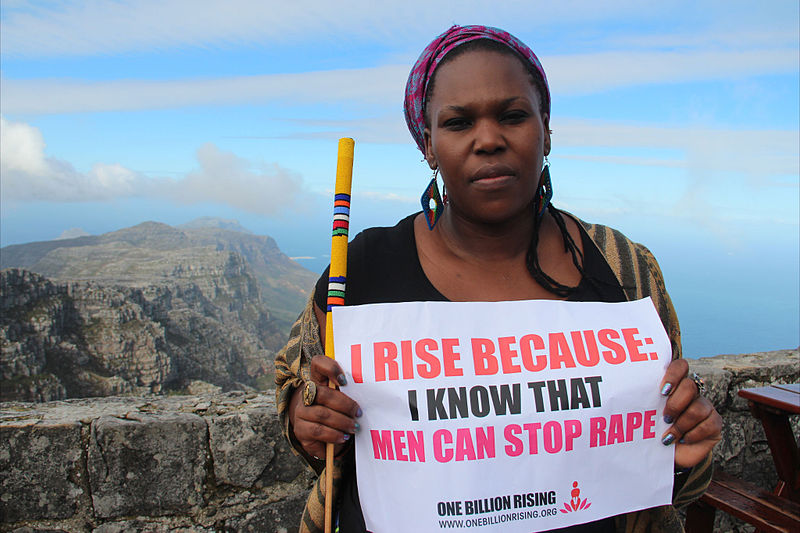
Andrea Dondolo is a South African actress and activist. Image credit: DFID – UK Department for International Development
I chanced to talk to a rape survivor recently, she said she went to a counseling session but stopped after the first visit as she felt she was relieving the ordeal all over again by talking about it.
Clearly, this shows that their concerns (rightly so) begin and end with the psychology of the rape survivor. Despite treatment where the physical scars may heal; the invisible searing psychological battles exist.
In addition, Lydia Muthiani, the deputy executive director of the Coalition on Violence Against Women (COVAW), comments that “rape is an ‘invisible crime’ in Kenya because it is underreported and rarely acted on judicially”
A report by her organization echoes her words:
“Rape is the most highly under reported crime in Kenya. It is estimated that only 1 out of 20 women in Kenya will report a rape and only 1 in 6 will seek medical assistance. Relying on reported cases will therefore not provide a genuine picture of what is truly happening on the ground.”
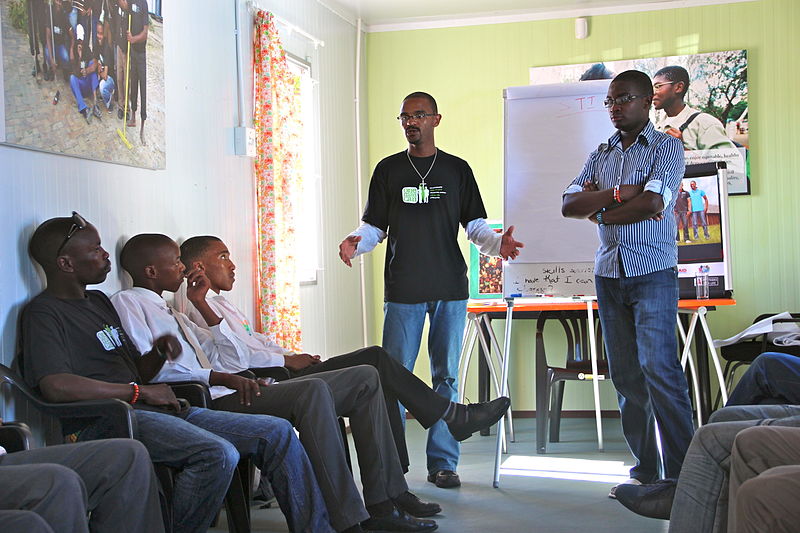
UK aid is supporting the Sonke Gender Justice programme in South Africa to run 227 men and boys groups on transforming attitudes to girls and women, to tackle the root causes of violence in and out of prison. Image credit: DFID – UK Department for International Development
Also, another research found out that during 2007-08 PEV at least 3,000 women were raped. Surprisingly, there were only 11 convictions related to those 3,000 cases.
This is because survivors are mostly afraid of what will become of them once they report it and that some know that their cases may thin out over time or when legal action is followed, the perpetrators may get away with lenient punishments such as cutting grass.
We all have a stake in whether rape in the country will be addressed or not. Rape is a very sensitive issue and viewed differently by different cultures. Nonetheless, it has far reaching impacts not only to the survivor but to her family and by extension the Nation (particularly how it protects its citizens).
Lastly, we can never overemphasize that each of us is at the risk of rape, and in case it happens:
- It should be reported within 72 hours to hospital.
- Report the matter to the police as soon as possible.
- DO NOT clean any part of the survivor’s body.
- DO NOT wash or destroy the survivor’s clothes.
- WRAP the clothes in a KHAKI envelope.
- DO NOT put the clothes in a plastic or polythene paper bag. This will cause the clothes to sweat.
- DO NOT wrap the clothes in a newspaper as newspapers have chemicals which interfere with the protozoa.
- DO NOT tamper with anything at the crime scene.
Rape doesn’t have to be an invisible scar or crime anymore.
Report it, talk about it and help others through it. Silence is NOT golden.
And lastly, these thoughts ace my views on rape: http://www.potentash.com/rape-is-not-a-casual-word/
This first appeared here
About the Author





