
In the first part of this feature, astonishing new statistics regarding food waste across China were revealed. As more and more consumables are left on plates each year, the Chinese government is forced into increasingly hazardous methods which could spell trouble for future attempts to regulate global climate change…
Through lack of any suitable alternative, most of the aforementioned waste in China is reluctantly sent to landfill. Each neglected morsel of food sent to these sites is buried and concealed underground. As a result, both the soil and surrounding atmosphere are polluted with a variety of threatening gases and chemicals. This makes the use of landfill a deplorable but often unavoidable course of action for most developed countries. The environmental risks posed by such methods are certainly not unknown.
Research into landfill has estimated that the sites used for this process significantly contribute to China’s position as the top source of greenhouse gas and CO2 emission in the world. It seems as though what initially appear to be a few extra scraps of meat and vegetables left on the plate eventually transform a seemingly innocent scenario into a serious threat towards the ongoing battle against global warming.
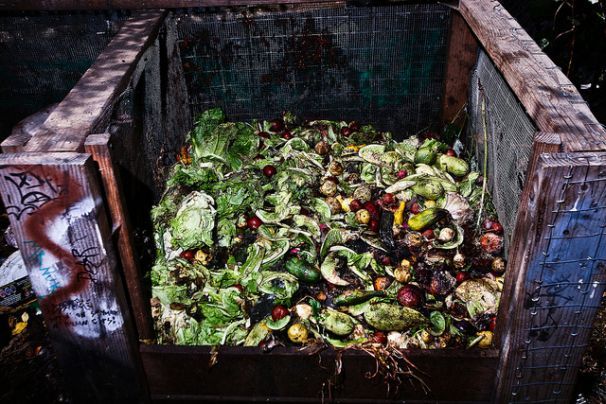
Food waste for landfill. Image Source: http://bit.ly/1z5OtD2
Of course, it is clear why the government seeks an alternative to landfill. In order for the Chinese to continue contributing to the worldwide fight against food waste, the sources of this issue’s prominence in China should first be uncovered.
In traditional Chinese dining culture, it is thought that to devour every bit of food at mealtimes is a suggestion that the portion was not large enough. In turn, this can often lead to disrespecting the host, who is led to believe that they have not provided a satisfactory meal. As such, some experts are beginning to point towards attitudes surrounding food as a potential source of this complication. It is traditional, cultural norms such as this which are likely at the root of the problem due to the way in which they often encourage consumers to leave sustenance on their plates rather than polish them off.
Aside from this, a number of other sources are also pointing fingers towards what is believed to be a worryingly underdeveloped system of agriculture in China. Here, experts are beginning to argue that the infrastructure of Chinese farms and rural areas is simply not receiving enough attention financially.
Unfortunately, this lack of financial support means that rural China is largely unable to match the extreme wealth and prosperity seen across that of urban China. It is true to say that the Chinese have vastly improved their agricultural infrastructure over recent years but, sadly, this has not been enough. A significant level of underdevelopment remains, meaning that the widespread loss of valuable food product continues to be facilitated.
More specifically, it is the small and independently owned family farms that are thought to be at the root of this lack of development. It has been reported that this type of environment does not possess enough clean or dry storage facilities, nor an effective way of getting products from field to market before they start to spoil. These agricultural steadings are known to dominate the farming workforce in most rural areas and, as such, are in need of further development before agriculture can begin to support the fight against product wastage more effectively.
Furthermore, even in 2013 the previously mentioned Wu Zidan still sought to create a sense of awareness around this issue as a means of tackling it. Here, he suggested that China was losing as much as 16.53 million tonnes of grain annually. It is believed that this is due to poor agricultural storage and transportation methods that are often vulnerable to pests and moisture.
Thankfully, recent campaigns led by Chinese media networks mean that a quick resolution to the food waste challenge might not be so unfathomable. In 2013, President Xi Jinping himself was even leading a stance against wastage after publicly praising an article in favour of restricting the tossing of vital food product.
Here, he almost instantly sparked the popular ‘Clean Your Plate’ campaign – an educational endeavour which hoped to inform the nation of the severity of food waste in China. In turn, it was hoped that the population would be encouraged to dish out less and wipe up more. A strong continuation from this policy was also launched in October, as the state media of China waged a similar but refreshed war on food waste.
Policies such as this are essential in presenting the fact that the Chinese government and people are well aware of this issue and the dangers it poses to the environment. As such, it seems as though plans to challenge it in the future are well underway.
However, while educational campaigns such as this are essential in bringing more cultivated product to the plate (and taking less to landfill), it seems as though the simple act of instructing against such a staggering amount of food waste should not be seen as the only solution to what is becoming an increasingly daunting problem. While the continued push against it is important, accelerated research into additional means of reducing food waste across China is now more necessary than ever before.
So, let’s hope these dangers are not ignored. In turn, we might hope to witness a continued (yet heightened) attack on food waste – not just in China, but across the world.
Sources
About the Author





