
Western media and thinkers, as crude as that categorisation seems, tend to oversimplify matters when dealing with “Jihadist” groups such as Al Qaeda. Like any “human institution”, however totalitarian it may seem, balances of power and a wide array of factors define the internal politics and decision making process of these groups as well. Documents that were released by American authorities from Osama bin Laden’s last home, shows a deep divide between two major schools of thought inside his organization. They also show that its chief, when assassinated at the famous American raid in Pakistan, was in the midst of a heated debate and revisionist attempt aiming at changing methods and creating a new, less sanglant, image. Bin Laden seemed to be especially dismayed about the activities of Al Qaida’s branch in Iraq.
“The Syrian branch” of the pan-nationalist group provided a momentary but valuable break from the group’s crippling legacy and a chance to materialize the more pragmatic revisionist approach to Jihad, until it formidably collapsed on itself.
The Front for the Salvation of the Levant, was the name of the most successful rebel armed unit in the Syrian Revolution (English for Jabhat al-nusra). The fame of the group quickly rose after the start of the war effort to oust the Assad regime, under the leadership of a certain “Al Fateh Abou Mohamed Al Joulani”. Reports painted a picture of a well armed and organized group that established itself as a backbone in most strategic frontlines. Heavy blasts and resounding victories earned it heavy media coverage and popularity among Syrian peaceful protesters and admiration among other armed rebels alike.
On the 11th of December 2012, the US State Department took a controversial step by designing the Front as a terrorist organisation “allied with Al Qaeda”. The following Friday saw the prime of the groups’ popularity. Thousands of Syrians took to the streets in a series of protests under the banner of “There is no terror but Assad’s terror”. These protests dealt a heavy blast to the intents of the designation: by bringing the front closer to “the mainstream” rather than isolating it from other FSA factions and popular bases. While the front’s ideological adherence to a Jihadist Al Qaeda view of the struggle was clear, the front insisted, at that time, that it was organizationally independent and mostly Syrian.
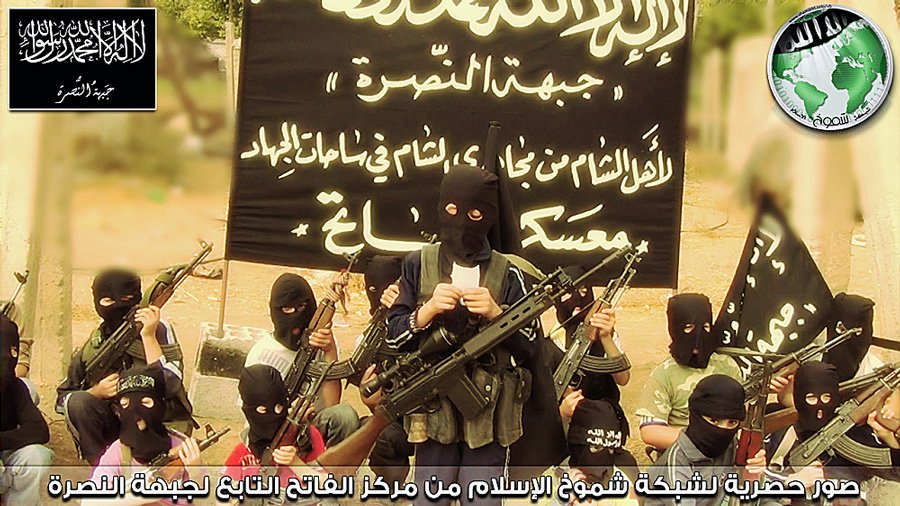
Pictures from an al-Nusra training camp published on Ansar, a jihadist forum.
The shocking turn of events happened when the leader of Iraq’s Al Qaeda “Al Baghdady” unilaterally announced the unification of the Syrian front and the Iraqi branch under the name of “Islamic state of Iraq and the Levant”. Al Fateh Abou Mohamed Al Joulani’s response was widely anticipated and awaited. The former chose to pledge allegiance to Al-Zawahiri, the overall leader of Al Qaeda, and to ignore the unification decree that he described as unnecessary and may be harmful.
After Joulani’s announcement of allegiance, the front was completely exposed and what were doubts became facts: Jabhat Al-nusra is affiliated with Al Qaeda. This also presented a rare case where Al Qaeda’s internal disputes are exposed and aired live on international media. Al Zawahiri’s intervention in reaction to the feud was futile. He dismantled the union and reappointed Al Joulani as responsible for the Syrian front while criticising the individualistic decision making by both leaders.
Shortly following the dispute, Jabhat al-nusra practically ceased to exist. “Al Baghdadi” moved to Syria from Iraq where he took over command of the most trained and efficient factions of the front. The remaining fighters left Aljoulani to join other rebel groups. Videos are circulating since then of Baghdadi’s fighters slaughtering “enemies” and clashing with other Syrian rebels as well. The popularity of the group has vanished (as the group itself vanished). With it vanishes the most “revisionist” and reformist Al-Qaeda faction and the fate of the whole organisation seems to look very pale. The internal authoritarianism in Bin Laden’s organisation is taking a toll at its chances of survival. It has proven more robust than any “revival” attempt inside the organization. These organizational/tactical failures and a series of Ideological setbacks (mostly the success of mostly-peaceful or armed nationally-based revolutions) are eroding Al Qaeda’s support base and achieving what billions of dollars in counter terrorism expenditures have failed to reach.
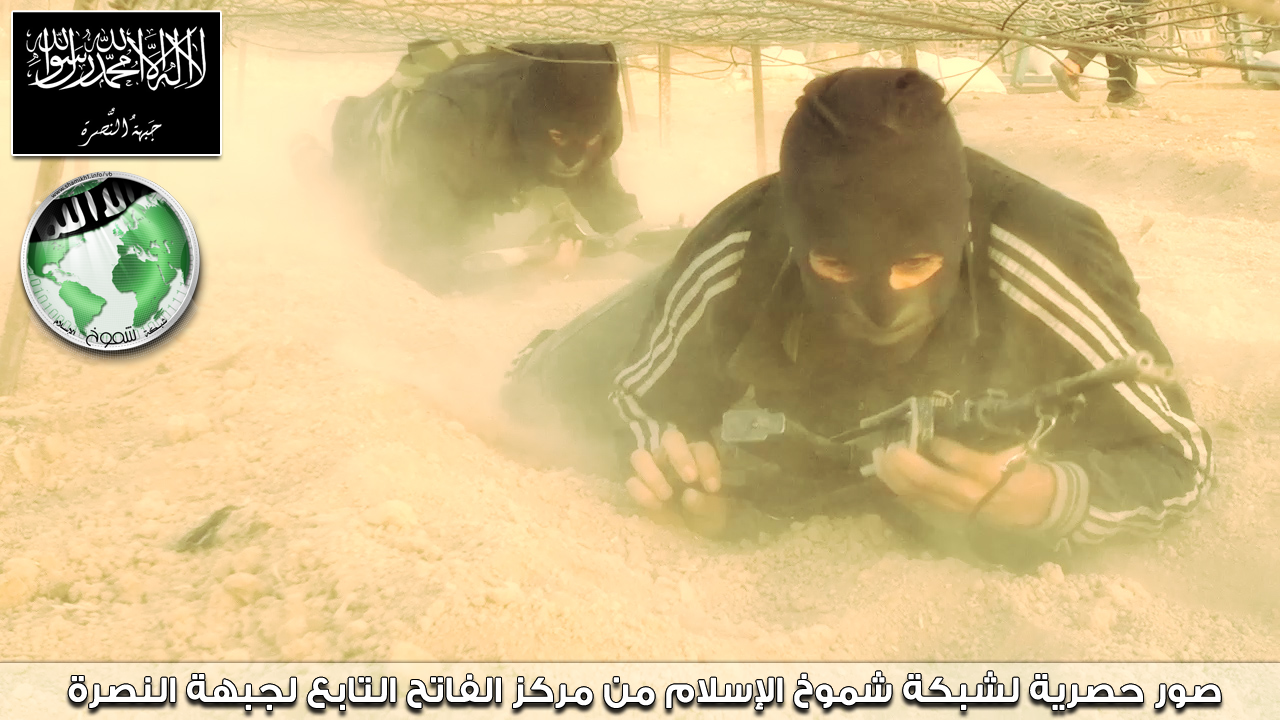
Pictures from an al-Nusra training camp published on Ansar, a jihadist forum.
Some are even asking if this may this be meticulous work and careful orchestration by intelligence agencies and counter terrorism agencies? No time soon will there be a satisfying answers and researchers will have to await the declassification of relevant documents during the coming decades.
The most destructive effect of the dissolution of the front into a pan-Iraqi/Syrian Al Qaeda in the threat of open war between military forces opposed to Assad, which seems imminent as aggressions are escalating between the “more moderate” FSA and Al Qaeda.
However, the most positive effect of the collapse of the front is reinforcing that Al Qaeda in all its forms and its ideological readings can only be a destructive, sanglant, criminal and counterproductive body that actually impedes the march towards liberty that many Muslim-majority states are choosing to walk.
About the Author






[…] Related: The Rise & Fall of a “Terrorist” Group: Jabhat al-Nusrah, Syria […]