
Western USA is feeling the burn. Not only was last month Nevada’s hottest June ever recorded, but when the temperature peaked at 47.2°C (116°F) in Vegas just two days ago, it tied with the hottest temperature ever recorded there. Similarly, Australia has just come out of its hottest summer on record. South Australia hit an astonishing 49.6°C (121°F) and record monthly averages were broken across the nation. Commentators have been calling it Australia’s “angry summer”.
Is this all a sign that the planet is getting hotter? Well, maybe…but not necessarily.
There’s an abundance of confusing information floating around about climate change. I’d say that a lot of this can be blamed on the rhetoric surrounding ongoing political debates. Just because politicians can’t agree on policy, does not mean that scientists don’t agree on the science.
When a recent Pew Research Centre survey asked “do scientists agree that the earth is getting warmer from climate change because of human activity?” 43% of Americans said “no.” An analysis by John Cook University on the other hand, has found 97% of research agrees that climate change is “anthropogenic”. In other words, the climate change ‘debate’ doesn’t actually exist in the scientific community.
The media loves to jump on stories that claim that what you see outside your bedroom window is another sign that the world is changing. This is sensationalism at its best. People love to talk about the weather and journalists love to talk about climate change. It’s a match made in heaven.
When we discuss the climate, we’re referring to the long-term behaviour of the atmosphere. When we’re talking about weather, we are talking about what’s happening outside our windows right now. While the record temperatures in the US could be the result of increasing baseline averages or extreme events, these conditions are not actually evidence.
Weather patterns fluctuate very randomly, and with temperature records only generally dating back a number of decades (Vegas only started recording temperatures in 1937), local temperatures are not exactly the best point of reference.
So, what is the evidence?
Firstly, we know that carbon dioxide and other gases trap heat. This is a fact. Without water vapor, CO2, and other radiatively-active trace gases in the air, the planet’s average temperature would be about 34°C cooler than it is at the moment.
Secondly, ice cores in Greenland and mountain glaciers give scientists a pretty clear idea of the increases in the levels of CO₂ in the atmosphere. With the cores allowing us to see back hundreds of years, they show us that CO₂ levels were stable over the last millennium but have risen significantly in recent decades. The concentration of CO₂ in the atmosphere is currently 40% higher than it was before the industrial revolution.
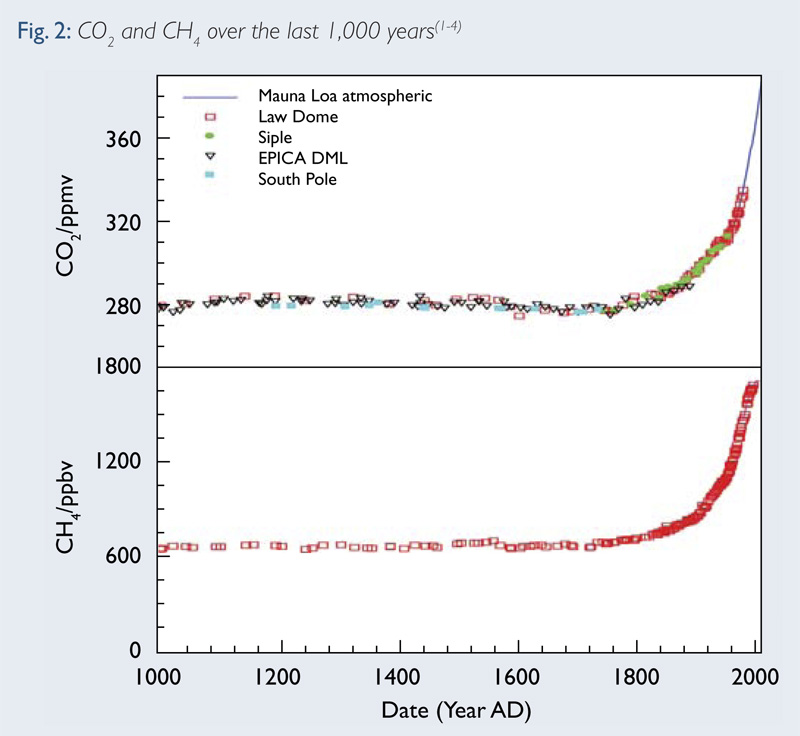
Samples taken from ice cores demonstrate increase in CO2 and CH4 levels (Source: British Antarctic Survey).
So, we know that CO₂ traps heat and we know that CO₂ levels are rising. That’s the best evidence that we have for climate change – plain and simple.
Yes, the US is experiencing a summer much like that of Australia’s “angry” one, but just remember that the weather is not the climate. Day-to-day, month-to-month or even year-to-year peaks and troughs will never match the evidence that we obtain from long-term scientific data. So the next time you hear a news report that says the hot or cold weather is adding to the climate change ‘debate’, it’s probably best to just ignore it.
On that note, I’ll leave you with this…
About the Author





