
When journalists are arrested because they’ve taken photos for their articles, we ask, where is freedom of expression? When there is denial of accessibility, we ask, where is transparency? When the corrupt hands are out of jail, we ask, where is accountability? But when political leaders are assassinated during a “democratic transition”, what shall we ask for?
The assassination of Chokri Belaid on February 6th earlier this year, is a sorrow for Tunisia not only because it is an act of killing a human being but also an act of extreme censorship to a leader who revealed corruption and vocally criticized Ennahda, the Islamist ruling party. This is not censoring YouTube or Daily-motion, hacking blogs, Facebook Pages and Twitter accounts or dispersing protests with tear gas. This is censoring the heartbeat of the country forever. In less than six months since Belaid’s murder, during the Republic Day, which is our annual celebration marking Tunisia’s foundation as an independent republic, we witnessed the assassination of Mohamed Brahmi, leftist politician and member of the National Constituent Assembly. Both secular opposition figures were killed in a similar attack. However, while the first assassination is an act of extreme form of censorship, I would describe the second assassination as a pure act of terrorism to spiral the country into more unrest and impunity. Both were marginal leftist politicians but the assassinations had different escalating intentions and threats. Belaid’s murder maybe attempted to censor the voice of the voiceless, but Brahmi’s murder, hit by 14 bullets, for sure sought to create a climate of chaos putting Tunisia at the edge of a civil war.
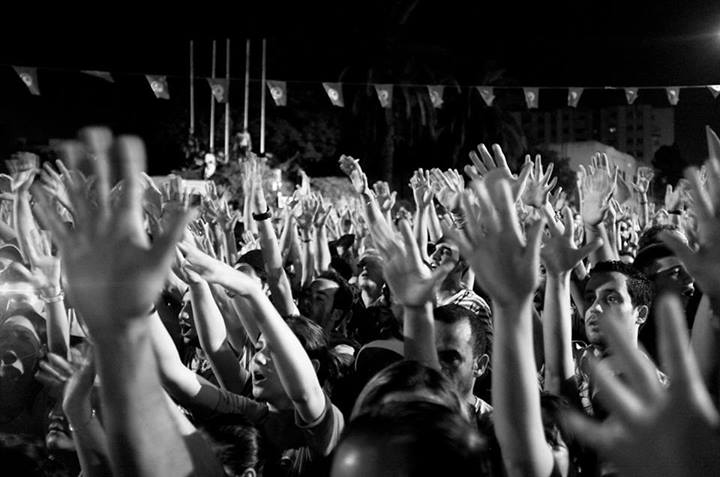
Image Credit: Hamidedine Bouali/Facebook
One the one hand, people’s reaction towards Belaid’s assassination was marked by shock, frustration, gloominess and had multiple questions, where the government at the time remained silent and promised investigation. The assassination of Brahmi, however, disrupted immediately demands for the dissolution of the Islamist-led government with anger, fear and panic. One of the main reasons for this is the statement by the government itself that the same gun had been used in Thursday’s killing as in the Belaid attack. The Minister of the Interior also announced that “authorities have identified 14 Salafists suspected of involvement in both assassination, and most were believed to be members of the local hardline Islamist group Ansar al-Sharia”, Tunisia’s most prominent Salafi jihadi movement.
The announcement meant to calm down the popular anger by providing concrete detection. However, blaming the salafists as the scapegoats didn’t work. People, indeed, question the competence and honesty of the government and this delegitimizes the Constituent Assembly. It also needs to be remembered that the assembly has been delegitimized during the last few months because of its failure to manage public expectations, finalize a new constitution and prepare the elections within one year, as promised and even its members have been accused of holding onto their seats. Lastly, I would consider the police repression as another reason of the increasing number of protesters. The police violent management of mass demonstrations has always been a continuous turmoil since the revolution which makes people feel that their freedoms are at stake.
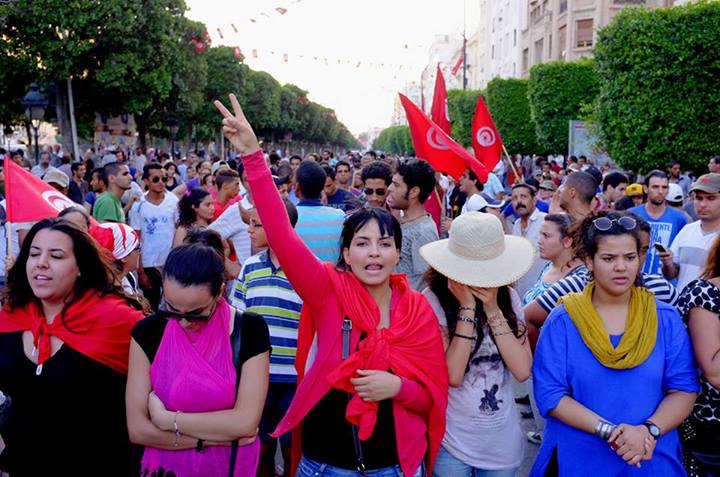
Image Credit: Hamidedine Bouali/Facebook
On the other hand, the reaction of the key opposition leaders was marked by opportunism. Within 24 hours of Brahmi’s murder, the opposition called for a “National Salvation Government”, which will obviously be an unelected body to “save” the country. A clear shift in positions of some opposition leaders raises the question of short-term personal gains over long-term stability for the country. For instance, AhmedNejib Chebbi, the leader of Hizb al-Joumhouri, changed his position overnight from refusal to dissolve the assembly to an instant call for the dissolution.
Beyond public division, political instability and police violence, I want to end on a positive note despite of the gloomy picture of Tunisia’s transition. These two tragic events in Tunisia’s history are marked by two powerful women that clearly showed Tunisia’s woman as an icon of fight in the frontline of the battlefield. Basma Belaid called yesterday for breaking the fast in front of the National Constituent Assembly in Bardoo which was positively received by thousands of people who joined the sit-in, in solidarity. Brahmi’s wife and daughter were the first to occupy the street where Mbarka Brahmi delivered an immovable speech at the heart of the protest to unite the people. The Tunisian woman is not the woman who will stay home crying her heart out for her dead husband with the hope for the authorities to protect her but she is that women who makes her sorrow a national demand for justice and accountability.
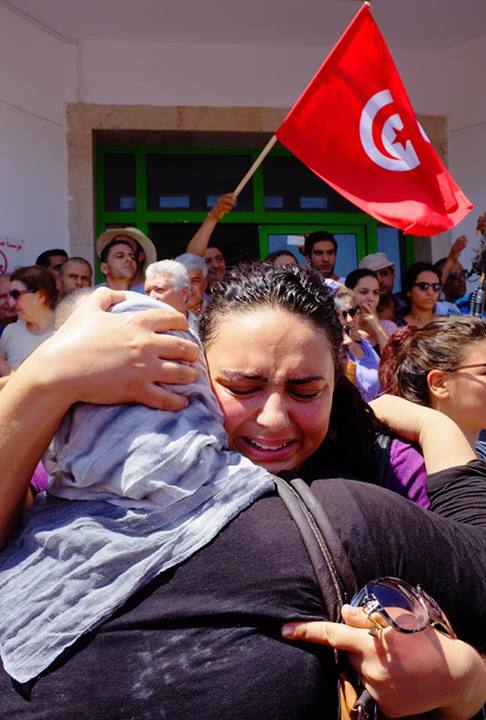
Image Credit: Hamidedine Bouali/Facebook
About the Author





