
Uganda is and remains among the most corrupt nations in the world. To many donors and investors, Transparency International’s corruption perceptions ranking provides a basis for choice of countries where investment is likely to yield desirable results, and Uganda’s poor performance could cause it to lag in its ability to gain foreign investment.
As TI further argues, corruption is a major threat facing humanity:
“Corruption destroys lives and communities, and undermines countries and institutions. It generates popular anger that threatens to further destabilise societies and exacerbate violent conflicts.”
Violent conflicts due to corruption further facilitate crime, and destroy sustainable investment and development for nations already prone to challenges of poverty and poor governance. A case in point is northern Uganda, which has suffered civil war since 1986. Now the region is finally coming out of war, but a new enemy; official corruption, has attacked the region, rendering it helpless.
The World Bank estimates that Uganda receives over 16% direct official aid funding annually as development assistance. In 2008, 2009 and 2010, Uganda received USD 14,230,000, 11,190,000 and 13,070,000 respectively in aid. In the year 2012 alone, Uganda received about $16 billion. Unfortunately, the poverty head count still stands at 24.5% (below the poverty line) of the entire population.
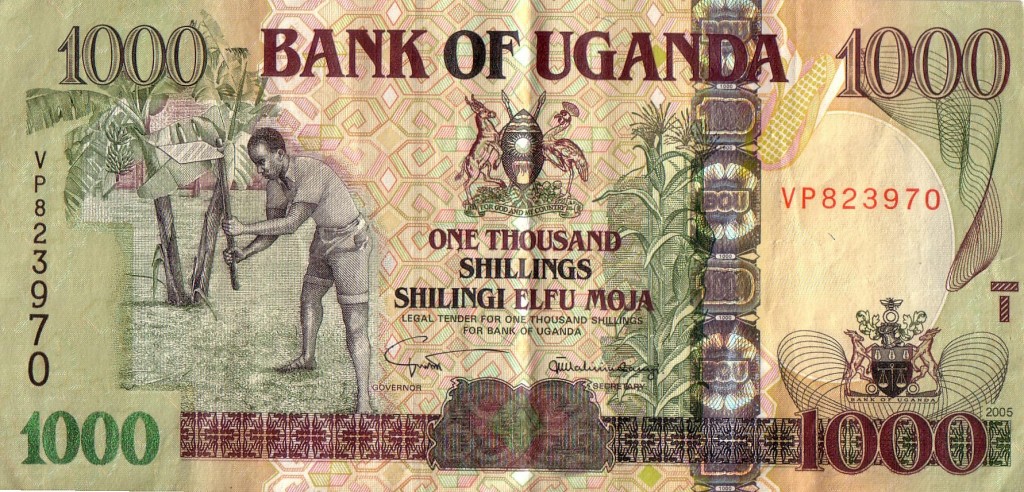
Uganda remains one of the most corrupt countries in the world, and almost 25% of the country lives below the poverty line. Image credit: Wikimedia Commons
Uganda depends substantially on donor funding for development. According to a 2011/2012 report by Uganda’s Ministry of Finance, Uganda’s external assistance includes grants and loans. Loans are largely concessional, with a grant element of no less than 35%. External assistance flows to Uganda has averaged about US$ 760 m annually between 2001 – 2010, registering its highest inflows of about US$ 1.2 Billion in 2006/07 financial year. The average flows generally represent 25% of budget revenue and 6% of GDP.
Disturbingly, most of the funds are lost to corruption due to lack of transparency and citizen participation in development processes.
A statement released by the Norwegian ministry of Foreign Affairs in November 2012 quotes the Norwegian State Secretary expressing deep concern with regard to the trend of corruption levels in Uganda. More than £10 million of development aid had been confirmed stolen at the Office of Uganda’s Prime Minister. This was followed by a freeze of aid to Uganda by a number of donor countries, Norway among them.
Arguing for Transparency for Development Results, Francis Mulwa (2008) believes that if development aid is to yield results, it is no longer an option that citizens aren’t involved in planning and implementing development projects:
“Peoples’ commitment to a cause for results is directly symmetrical to the level at which they are involved in the initial decision making processes for same causes.”
In his famous book “Syndromes of Corruption”, American Political Scientist Michael Johnston (2005) classifies Uganda under the category of “Official Moguls”, a concept and practice of “reach out and squeeze someone”. Johnston asserts that in these types of corrupt nations, “powerful politicians and their favourates hold all the cards,” and essentially “few individuals take over and own everything”
Although Uganda is naturally mineral rich and fertile for agriculture production, it remains one of the world’s poorest countries, largely dependent on donor aid.
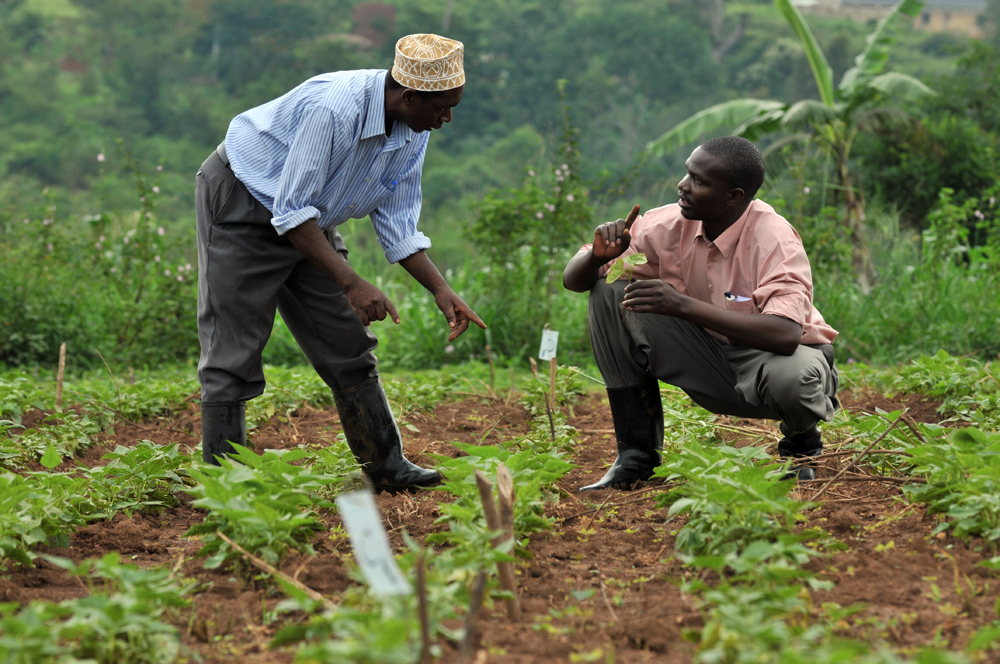
Despite being rich in natural resources, Uganda remains one of the poorest countries in the world. Image Credit: Neil Palmer (CIAT)/Flickr
According to the official website of Trading Economics, the net bilateral aid flows from DAC donors; total (US dollar) in Uganda was last reported at 1161980000 in 2010. Net bilateral aid flows from DAC donors are the net disbursements of official development assistance (ODA) or official aid from the members of the Development Assistance Committee (DAC).
DAC members are Australia, Austria, Belgium, Canada, Denmark, Finland, France, Germany, Greece, Ireland, Italy, Japan, Luxembourg, Netherlands, New Zealand, Norway, Portugal, Spain, Sweden, Switzerland, United Kingdom, United States, and Commission of the European Communities.
As to where these funds end up remains an area open for further investigation. It often seems like “bottomless pit.”

Image Credit: Dave Proffer/Flickr
In most of rural Uganda, the problem of poor, broken or total absence of infrastructure is evident. During rainy periods of the year, where community roads exist, they are impassable, although in some places roads still do not exist. Even in the capital Kampala, the state of roads has been a central debate and source of sharp criticism against the current government. School and hospital infrastructure is also often either absent or poorly made. This is now largely known as “shoddy work”.
Uganda’s corruption challenges seem to be getting worse as time goes by. The biggest trouble is the inadequate or literally absent political will to fight corruption in the country. In such a situation, corruption has gone beyond individuals. It is an instititutionalised problem. The political class has captured the state, and institutions no longer function properly, causing a deep governance setback.
Such a case was in recent years witnessed in the infamous “Temangalo NSSF Land Scandal” involving Ugandan Prime Minister, then Minister for Security, Amama Mbabazi. Mbabazi reportedly pressurized the then Executive Director of Uganda’s Social Security Fund (NSSF) to buy his own land at a price higher than the official normal price of land in that same area.
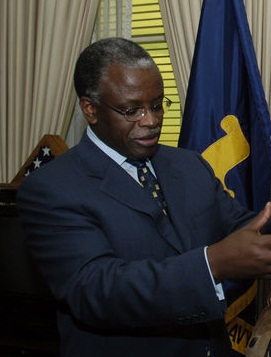
Ugandan Prime Minister Amama Mbabazi has been accused of corruption. Image Credit: Helene C. Stikkel.
In November 2012, the Daily Monitor, an independent Ugandan newspaper, revealed that development aid funds had been diverted to buying 8 cars for to government ministers. The government is increasingly in the habit of diverting development funds to administration and luxuries for ministers. This can be called “official waste”.
When this happens, the money does not often reach the intended beneficiaries, who do not know anything about the provisions of such programme work plans and budgets, and cannot, therefore, hold government to account. The government is also a loser in such cases, as such people are increasingly disgruntled and likely to vote against them, or physically engage in social rebellion once they are able to mobilise each other.
Participatory development planning in Uganda has been given the “back door” function. Although the National Development Plan emphasises citizen participation into the planning and budgeting cycle of the country, this democratic principle is only found on paper. What is often seen to be done is that the so-called ‘experts’ sit in selected expensive hotels and come up with master plans for lifting the poor out of poverty, without asking the poor what they need, or want, done for them. There is a significant lack of citizen representation in the development planning processes.
Corruption reduces democracy to the bare concept of “citizens electing their own dictators, and “people feeding government.” In its sense of meaning, democracy should be about government elected by the people, for the people, and government feeding the people. Formal systems of planning is supposed to proceed in an integrated bottom-up manner. In practice, however, the system scarcely articulates at all between levels.
The government of Uganda, given the current accountability and corruption it confronts no longer has another option, but to consider citizen empowerment and involvement in the development process at all levels, lest no results shall be realized. Vision 2020 remains in jeopardy unless citizen voices are intentionally amplified, particularly by the government, for whom it was voted to serve.
Citizens need to be empowered and enabled to be part of state business, to own it as if it was their own (indeed if the state is about people, then people are about the state). The ideal empowerment of citizens should aim at introducing a “ bottom-up approach to development planning and implementation”
It seems like the journey is not about to be over in Uganda. It has only just begun.
About the Author






its absurd that our government instead of joining hands to fight corruption, rewards the corrupt officials with major public offices to embezzle more money. what a shame?
Unless otherwise as a youth i think we need to wake up and rescue our country the practice but social wellbeing is halte due to corruption
[…] Read full article…. http://archive.the-ipf.com/uganda-and-the-culture-of-corruption/ […]
Wow I will not ask my Ugandans friend about this let me just keep our friendship stronger after all patriotism is above friendship.