
For those of us Venezuelans who fall under the category of ‘opposition’, president Chavez’s death has come to represent a new hope for change. Beyond the respect we have payed for Mr. Hugo Chavez’s death, the memory of all the abuse and overpowering of his regime is still present, for which his death leaves in us only a new chance to hope for a change in our country.
Nevertheless, Mr. Chavez’s legacy is by no means negative when the story is told from the perspective of those who truly believed in his project. Today Chavez remains in the memory of many Venezuelans as the man who gave them justice, recognition, and, more importantly, hope. Chavistas describe him as the person who gave them back their freedom, and brought them life (something which might be seen as ironic as crime statics rose considerably after Chavez became president). What is more impressive is that, since his death was announced, Chavez became, not only, the supreme leader of the revolution, but in some cases Saint Chavez, where a chapel was built in his honor.
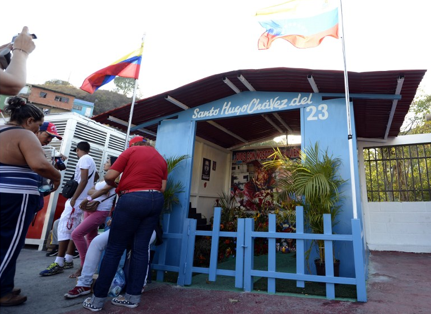
Within this surreal world in which we Venezuelans live in, some still remember Chavez calling George Bush the devil at the UN, but others remember him as a saint. There are those who remember the president as the man who fired 20000 employees of the National Oil Company (PDVSA) during a national television broadcast, because of ideology differences, and some who called him a hero.
We hope for change.
Because, even though some believe that he truly fought for justice, it is the case that if you reveal your true position towards the government, you are denied job opportunities within public administration. Moreover, day to day, Venezuelans endure the lack of efficiency of Mr. Chavez’s policies to provide basic goods, such as milk, flour, eggs, oil, coffee, butter, medicines, and, ironically sometimes gasoline. Walking on the streets is now more of an adventure or a extreme sport than a pleasure, and worse, the average Venezuelan is been taxed monthly with an inflation rate of 3%, according to the Central Bank of Venezuela.
The upcoming campaign will be harder than last time, as it has not started officially and Maduro, Chavez’s appointed successor, is already taking advantage of his presidential power for political propaganda. He has mentioned Chavez’s name in public speeches 4935 times since his death was announced, and transmits daily an hour-long broadcast with campaigning messages. Nevertheless, Mr. Capriles, former presidential contender in 2012 presidential elections, has reaffirmed his conviction to be once more a candidate against a totalitarian regime, despite the huge disadvantage in which he is in, and has already, in two weeks, traveled trough all Venezuela calling people to take part in this new opportunity for change.
Only time will tell what the future holds for Venezuela.
About the Author





