
On Wednesday, the people of Catalonia celebrated their national day. Every year the streets of Barcelona fill with crowds donned in their national flag and colours. They are not only celebrating their culture and history but also protesting for an independent Catalonia, separate from the rest of Spain. Catalans are fiercely proud of their culture and language, speak to most locals and they will describe themselves as Catalan first and Spanish second. Many a tourist could be forgiven for arriving in Barcelona with their Spanish phrase book in hand not realising the first language spoken here is Catalan.
Catalonia has long had to fight for its culture. Suppressed by Franco during his dictatorship the language was banned and its identity suppressed. Church sermons where to be delivered in Spanish, books written in Catalan were destroyed and any activities associated with Catalan nationalism was banned. After Franco’s death in 1975 Catalonia recovered its political and cultural autonomy and has fought for independence every since.
Spain’s current economic climate has only added fuel to the fire. This small region in Spain’s far north-east corner is one of Spain’s most profitable industrial hubs. Given the countries staggering debt, political scandals and all time high unemployment rates to the tune of 26.3%, second to Greece as the highest in the EU, it comes as no surprise that Catalans leader Artur Mas is pushing for a referendum after the 2012 elections backed the pro-independence parties.
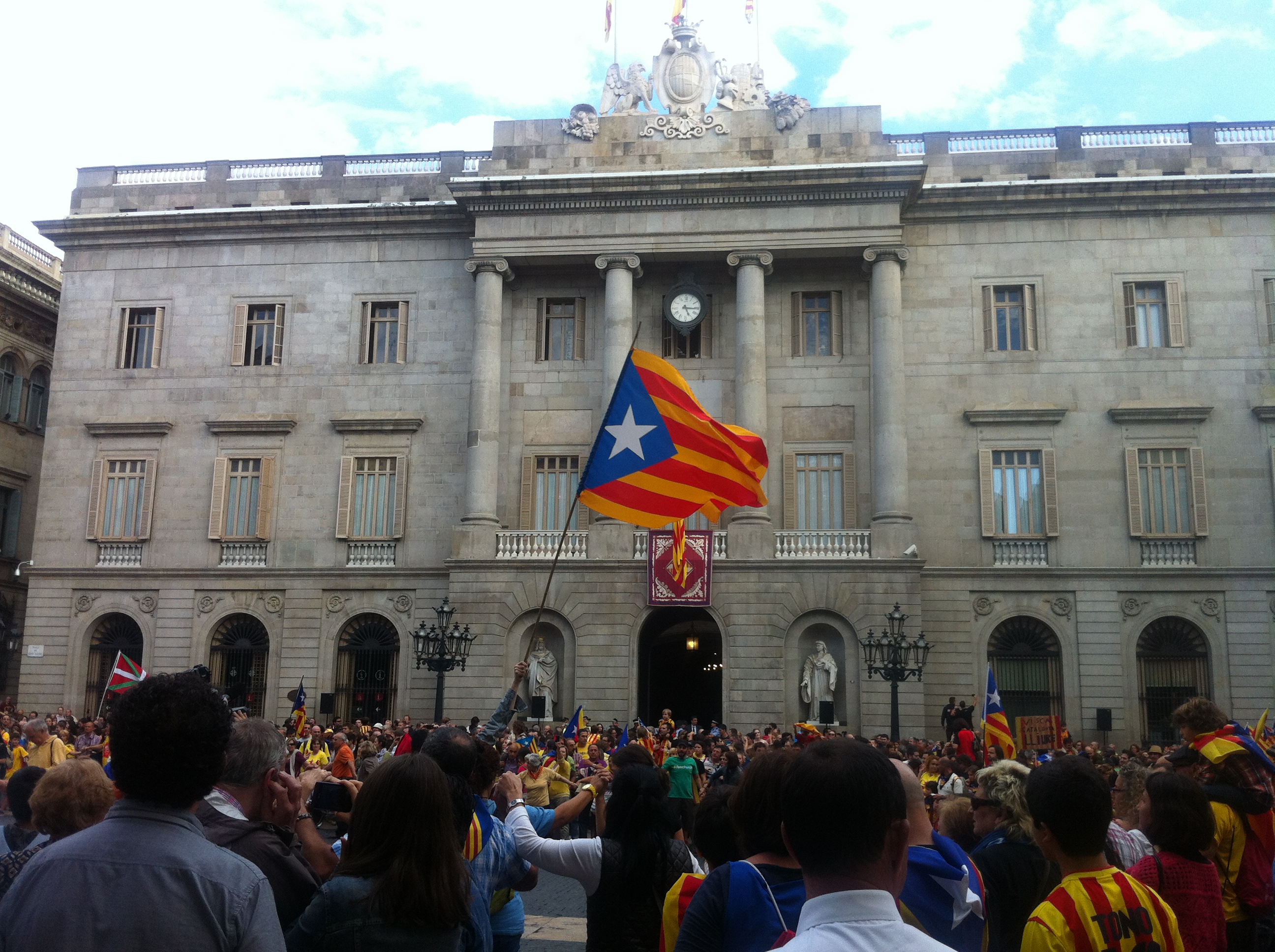
Supporters in Plaça Sant Jaume wave the Catalan flag on Catalonia’s national day.
This year to to mark the fight for independence a 400km long human chain was formed around the region, spreading through its main city Barcelona, and out to the villages. Starting at the French border moving down through Barcelona and along the cost towards its border with Valencia. Surrounding Catalonia the chain represented the regions determination to be become autonomous and was a symbol of the popular public support for independence.
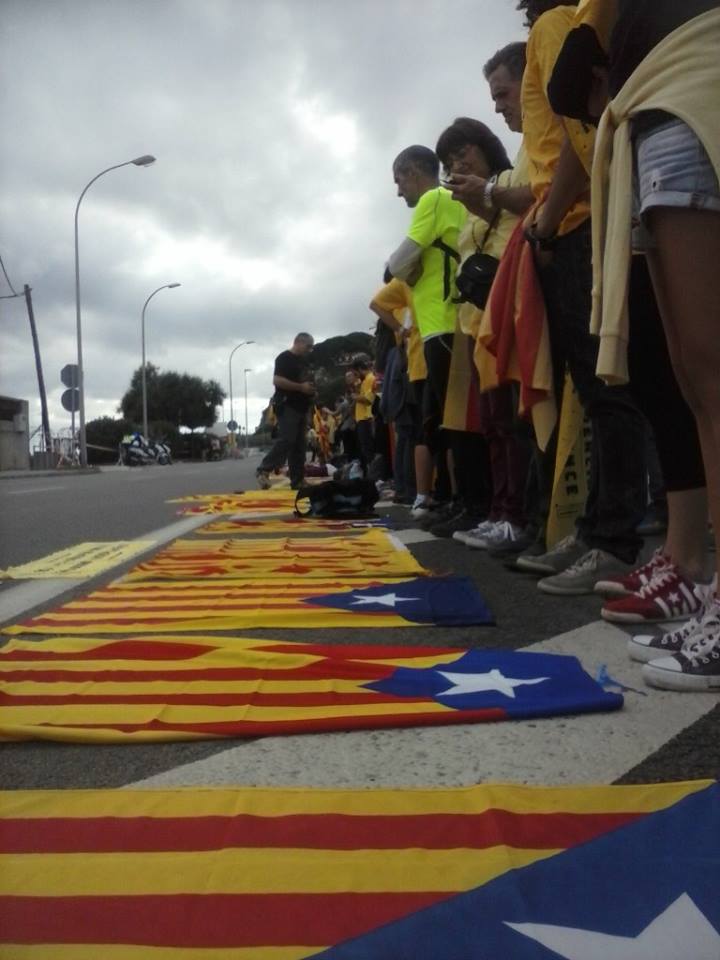
The human chain ran through the villages, into Barcelona and down the coast towards Valencia. Image credit: Oliver Bravo
Carme Forcadell, president of the Catalan National Assembly
Artur Mas has been urging Madrid to allow the region a referendum on independence in 2014. A recent poll showed that 81% of Catlans support the vote with 52% of those questioned saying they would vote for independence. Madrid is resisting the call for a referendum, seeing it as an unnecessary separation. With the rest of Spain strongly opposing the idea and Madrid claiming that a referendum in Catalonia would be “unconstitutional” it remains to be seen whether Artur Mar will succeed in his bid for a referendum and if Catalonia will ever one day be independent from Spain.
About the Author






[…] an article on IPF outlined a few weeks ago, things seem to be moving in Catalonia, a region in north-eastern Spain. […]
Catalonia shall join EU as an independent state as soon as posible.