
In about 24 hrs, polling stations around the country will open doors to 14 million Kenyans – expected to participate in their fifth national elections since the introduction of the multiparty system of democracy in 1992 and their first under the new constitution – recently enacted in 2010.
This election is critical since, it will not only provide an opportunity to change the political leadership for the next five years but will also trigger a series of constitutional changes which are set to transform the distribution of power and resources as well as citizen relationship with the state – as a result the stakes for this elections are even higher. Since the introduction of the multi-party system, severe waves of politically instigated violence, murder and forceful displacements of people, have been part of the election cycle – effectively instigated to subvert the ballot.
The intensity, spread and the dynamics of these elections conflicts have been escalating in every subsequent election. The most recent bout of conflict – in 2007/2008 – was the worst in Kenya’s recent history. In the aftermath, the citizen was left traumatized by the wanton murder of 1500 people and the forceful displacement of over 600,000 households – all in a month’s work.
Certainly, the fear of an impending war – has generated a dense air of suspicion and dead energy – which has given way to a flood of presumptuous, contrived and somewhat passive aggressive appeals for peace and calm now occupying conversations on social media spaces.
Truth be told, the stakes are high – while the individual is afraid of the consequences of another conflict he/she still has to make a political choice – to inform the impending voting action. Ideally these decisions should not be mutually exclusive. However, the contradiction is that the identity narratives informing the political choice in this elections -is for most part – the same identity narratives which have been exploited since the first bout of multiparty election conflicts in 1992.
At the heart of these narratives is an intense power play between tribal communities jostling for perceived or relative political and economic power – as a pretext for accessing rightful wages or accrued dividends and royalties for their membership in the republic.
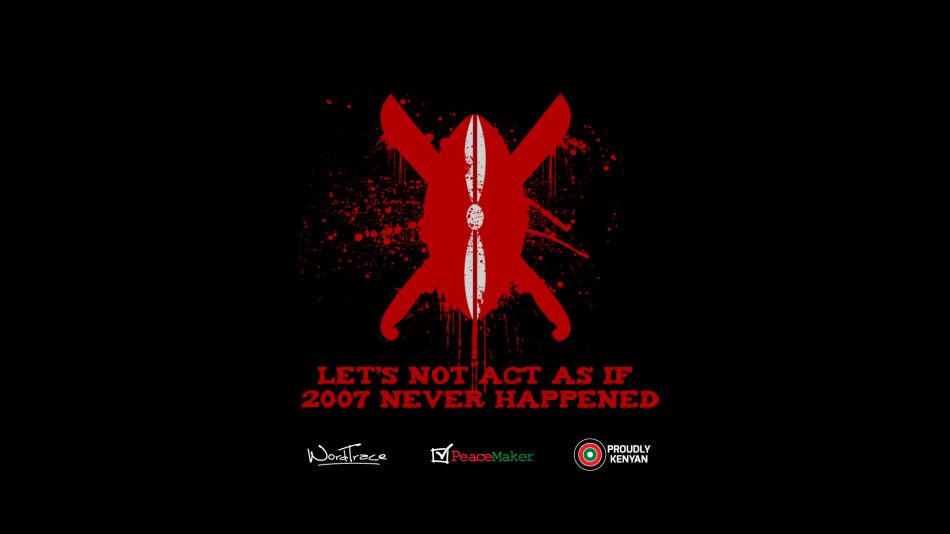
In the space between the citizens’ vulnerable identity narratives and their aspirational political personas is a cognitive dissonance which exposes the national discourse to guilt and fear. I am not surprised that most of these campaigns have not examined their propositions – which are in part the problem – instead these are reactions to a shared fear of brutality.
In fact if a peace message is asking anyone to calm down, to deny their political opinions for appropriateness’ sake, speak in second person, or in a national language about the glorified unitary Kenyan identity – the campaign is premised on a grand deceit.
Kenyans – like most humans – are not violent, ruffians eager to rape, plunder and loot whimsically. In fact, those who engage in conflicts – including in the 2007 election conflict – felt they had a righteous cause.
They fought to ‘achieve or regain’ their sense of ‘justice.’ They fought the kind of injustice – which we only understand when told in our mother’s language. The injustice that has names familiar to ours, meted on men in our families – to our grandfathers even to our uncles – the type that only women live to tell. The type not documented on any history books, but told from our mother’s memories. These are the narratives that bring us home or send us to war – and even this time, the ever so narratives are present behind the facade of the internet memes.
Let us imagine for one minute that there were ‘dark forces’ at work and god forbid, there is a ‘spontaneous outbreak of violence,’ how would the citizen react to this information? Will he or she find it surprising? Would it then be necessary to find someone to blame for the violence? perhaps the poor in the slums? or the uneducated in the rural areas? Or the excitable youth at the jobless corner? Blame the politician? do we ever blame our mother’s? No?
For one part, I wonder whether the messages are a convenient, self-congratulating façade for those who cannot face up to our fear of brutalization, the vulnerabilities in our narratives or our shifting loyalties. Or could it also be in part a subtle propaganda to condition the citizen into accepting society’s status quo? Could this be the most convenient bullshit that keeps people from dealing critically and creatively with the reality of their narratives? Could this be the campaign which allows the citizen to look and sound patriotic while allowing the political elites unparalleled latitude for tribal organizing? Is it a convenient façade? who knows?
If indeed these messages are meant to encourage peace and cohesion, I join Njonjo Mue to ask that they also “… be directed to the institutions that failed us the last time – the political elite, the IEBC, the security agents and the courts. It is they, not us (citizens), who will determine whether we have a peaceful election. If they once again try to subvert the sovereign will of the people, we shall take a stand and defend our Constitution” – for the sake of lasting peace.
About the Author





