
Since the end of its civil war in 2009, Sri Lanka has been criticised for its handling of thousands of Tamils displaced during the conflict and has faced a barrage of war crimes accusations. Now the government has laid out plans for promoting tourism at the expense of those who suffered most.
Deep in the jungle of the northern Mullaitivu district of Northern Sri Lanka, is the former LTTE (Liberation Tigers of Tamil Eelam) operations hub, now a ghost town. Visitors are offered a guided tour of the hub which comprises of a 3 story underground bunker, a firing range, a film hall, a semi-underground garage and a funeral parlour for fallen comrades. The package also includes a tour of the shipyard where the tigers held the decaying remains of a Jordanian cargo ship, Farah III.
Although these guides provide a rare glance into the inner workings of the LTTE, the majority of tourists are missing the “bigger picture”. What is glaringly absent are the details of the suffering faced by the Tamils who lived in fear of the LTTE and the aftermath of 30 years of civil war that has destroyed the social and economic infrastructure of the region. Instead the visitors, mainly Sinhalese seem intent on seeing war relics rather than truly comprehend the devastation that took place here.
“…most signs are in Sinhala only, little English and no Tamil. To many this seems to say to the Tamils, this isn’t really your country. One of the damaging attitudes that they would say triggered the war decades ago.” The BBC writes.
Since the end of the war, the military has taken an active role in the economy of the North and East by posting various checkpoints to control transportation, annexing civilian land and establishing High Security Zone restrictions. Schools have been shut down too, endangering children’s education. Furthermore, fishing restrictions have been placed on fishermen. It has been reported that over 200 families have been displaced in several towns in Mannar district.
Beaches in Trincomalee and Batticola are being commandeered by the government who are forcing the people off the land and denying them access to the beaches, seriously jeopardizing their futures in order to build resorts, villas and hotels. It seems that in its rush to improve tourist numbers, it has begun appropriating Tamil areas and landmarks.
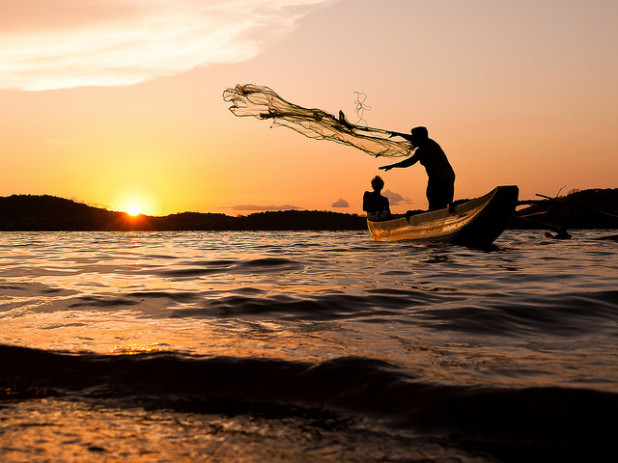
Image credit: james_gordon_losangeles/Flickr
The Mannar peninsula, which consists of MannarTown, and several smaller townships, including Talaimannar and Pesalai, were LTTE strongholds and caught in the middle of the civil war for at least three decades. The Navy runs a lucrative boat service for tourists to Mannar, preventing the Local Government officials or local businessmen from engaging in such activities.
There has also been active promotion of Sri Lanka at various international travel fairs. The Sri Lanka Tourism Promotion Bureau (SLTPB) under the guidance of the Ministry of Economic Development recently participated in an international travel fair in Chengdu, Western China. These have been part of the government’s efforts to promote Sri Lanka’s tourism industry. The Tourism Board plans to take part in another 6 international travel fairs in China alone. Along with the respective Sri Lankan embassies, the SLTPB has held successful tourism campaigns in India, Russia and Kazakhstan.
On 5th September 2011, the Ministry of Economic Development launched the Tourism Development Strategy which will last from 2011 to 2016. The objective of the new strategy is to achieve a target number of 2.5 million tourists by 2016. The World Bank got behind Sri Lanka in its initiative to revamp its image to bolster tourist numbers. However, there are no clear or definite figures of how of this money has been allocated towards building hotels and towards housing the displaced.
This increased tourism has led to repercussions for the environment and this in turn affects the locals and their livelihoods. The issue of poor environmental management, referring to the establishment of camp sites within the country’s nature reserves has been raised despite this not being permitted under the Flora & Fauna Act. Furthermore the Sri Lankan government has accused NGOs of attempting to limit Sri Lanka’s growth, under the façade of concerns over developments in the name of tourism. There is serious failure to address the plight of the locals or even acknowledge the suffering of the thousands who still remain displaced or are missing.
Many have criticized the Sri Lankan government of portioning significant amounts of investment and money from tourism to its defence budget. Sri Lanka continues to expand its already vast military in order to maintain order and control over Tamil territories. Despite accusations by the international community of war crimes, this has not deterred tourists from the West and India from making Sri Lanka their holiday destination.
This article was written by Gaanashree Wood and was originally published on World Outline.
About the Author






[…] War Tourism in Sri Lanka | International Political Forum Since the end of its civil war in 2009, Sri Lanka has been criticised for its handling of thousands of Tamils displaced during the conflict and has faced a barrage of war crimes accusations. Now the government has laid out plans for promoting tourism at the expense of those who suffered most. Deep in the jungle of the northern Mullaitivu district of Northern Sri Lanka, is the former LTTE (Liberation Tigers of Tamil Eelam) operations hub, now a ghost town. Visitors are offered a guided tour of the hub which comprises of a 3 story underground bunker, a firing range, a film hall, a semi-underground garage and a funeral parlour for fallen comrades. The package also includes a tour of the shipyard where the tigers held the decaying remains of a Jordanian cargo ship, Farah III. Although these guides provide a rare glance into the inner workings of the LTTE, the majority of tourists are missing the “bigger picture”. What is glaringly absent are the details of the suffering faced by the Tamils who lived in fear of the LTTE and the aftermath of 30 years of civil war that has destroyed the social and economic infrastructure of the region. Instead the visitors, mainly Sinhalese seem intent on seeing war relics rather than truly comprehend the devastation that took place here. “…most signs are in Sinhala only, little English and no Tamil. To many this seems to say to the Tamils, this isn’t really your country. One of the damaging attitudes that they would say triggered the war decades ago.” The BBC writes. Since the end of the war, the military has taken an active role in the economy of the North and East by posting various checkpoints to control transportation, annexing civilian land and establishing High Security Zone restrictions. Schools have been shut down too, endangering children’s education. Furthermore, fishing restrictions have been placed on fishermen. It has been reported that over 200 families have been displaced in several towns in Mannar district. Beaches in Trincomalee and Batticola are being commandeered by the government who are forcing the people off the land and denying them access to the beaches, seriously jeopardizing their futures in order to build resorts, villas and hotels. It seems that in its rush to improve tourist numbers, it has begun appropriating Tamil areas and landmarks. The Mannar peninsula, which consists of MannarTown, and several smaller townships, including Talaimannar and Pesalai, were LTTE strongholds and caught in the middle of the civil war for at least three decades. The Navy runs a lucrative boat service for tourists to Mannar, preventing the Local Government officials or local businessmen from engaging in such activities. There has also been active promotion of Sri Lanka at various international travel fairs. The Sri Lanka Tourism Promotion Bureau (SLTPB) under the guidance of the Ministry of Economic Development recently participated in an international travel fair in Chengdu, Western China. These have been part of the government’s efforts to promote Sri Lanka’s tourism industry. The Tourism Board plans to take part in another 6 international travel fairs in China alone. Along with the respective Sri Lankan embassies, the SLTPB has held successful tourism campaigns in India, Russia and Kazakhstan. On 5th September 2011, the Ministry of Economic Development launched the Tourism Development Strategy which will last from 2011 to 2016. The objective of the new strategy is to achieve a target number of 2.5 million tourists by 2016. The World Bank got behind Sri Lanka in its initiative to revamp its image to bolster tourist numbers. However, there are no clear or definite figures of how of this money has been allocated towards building hotels and towards housing the displaced. This increased tourism has led to repercussions for the environment and this in turn affects the locals and their livelihoods. The issue of poor environmental management, referring to the establishment of camp sites within the country’s nature reserves has been raised despite this not being permitted under the Flora & Fauna Act. Furthermore the Sri Lankan government has accused NGOs of attempting to limit Sri Lanka’s growth, under the façade of concerns over developments in the name of tourism. There is serious failure to address the plight of the locals or even acknowledge the suffering of the thousands who still remain displaced or are missing. Many have criticized the Sri Lankan government of portioning significant amounts of investment and money from tourism to its defence budget. Sri Lanka continues to expand its already vast military in order to maintain order and control over Tamil territories. Despite accusations by the international community of war crimes, this has not deterred tourists from the West and India from making Sri Lanka their holiday destination. This article was written by Gaanashree Wood and was originally published on World Outline. Reply […]