
Not a lot of people have ever heard of Taiji, a small town nestled in the Southern-Central region of Honshu, Japan. The name certainly does not cross the minds of a lot of people who take their kids to watch funny flippered animals jump through hoops at marine parks. But in the past few days, Twitter and other social media websites have been abuzz with news of a gruesome and equally unheard of annual event in Taiji.
Traditionally a whaling town, Taiji was exposed for its horrifying acts of animal cruelty in the 2009 film, The Cove. At great risk, the filmmakers and a team (including Sea Shepherd’s Ric O’Barry) brought to the world disturbing footage from beyond the tarpaulins and barricades erected along the public beach to shield the view of the merciless massacres of dolphin families by the hundreds. The movie sparked international outrage at the atrocities being committed in absolute secrecy, so much so that every year, at the start of the hunting season, activists and protesters travel to the site to bear witness and share, through electronic means, what the international media has so far neglected – the inhumane slaughter of over 20,000 intelligent mammals for profit. This year saw an encouraging number of Japanese activists calling for an end to the dolphin drives.
They made use of social media in the hopes that the images would focus the attention of the world on the little Japanese cove where year after year whole pods are killed for their meat, or dolphins ripped away from their families to be sold for $200,000.
Netizens around the world geared up for a media storm on the 4th of September in an attempt to relay the messages and images of Japanese and international activists . The objective of the media storm was majorly to contact state representatives in Taiji, Wakayama, to contact Japanese embassies in their respective countries and confront them about the killings, and finally to build pressure on Japanese and other news agencies all over the world to cover the little known dolphin drives that continue well in March of the following year. A list of contact details was circulated on the web (largely via twitter) and emails and tweets were then sent out.
If news of the slaughter wasn’t unbearable enough, the manner in which it is carried out can only flood the heart with grief. The killings in the cove are achieved in phases. First, banger boats go out to sea armed with metal poles that they bang together to confuse the pods (who communicate through an extremely sensitive sonar system) and drive them toward the killing cove. This is where the second phase begins.
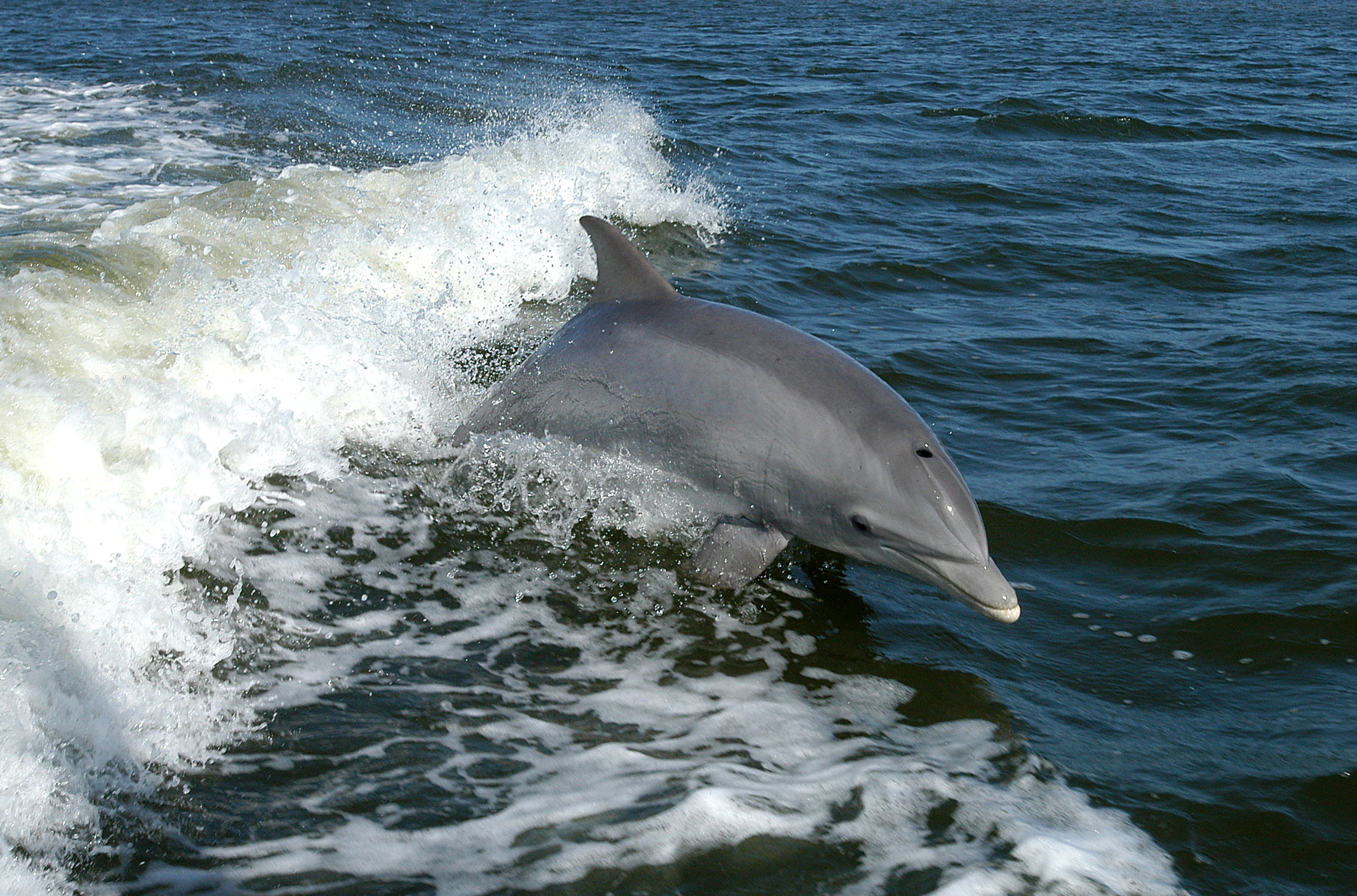
Dolphins can be ripped away from their families to be sold for $200,000. Image Credit: Wikipedia
It is here that they are cordoned off from open water by nets. It is here that the Taiji hunters close in on them. It is here that dolphin’s swim desperately through water red with their family’s blood. It is here where their cries reach a deafening crescendo as they are slaughtered or carried away for ‘show business’.
While thousands of cetaceans are expected to be killed in the cove during 2013’s hunting season, there is the baffling matter of the preference of dolphin meat by the Japanese. It is negligible. In Taiji itself, people have given up eating dolphin meat altogether. The Japanese government has in fact, intentionally discouraged people from consuming dolphin meat because it contains dangerous levels of mercury, cadmium and other chemicals. But this does not stop dolphin meat being disguised and sold as whale meat.
There seems to be no end to the nightmare in the cove, but ongoing efforts by wildlife conservation organizations, like Action for Marine Animals and dedicated activists like O’Barry and Satoshi Komiyama, are hopefully surging towards a day when the sun will rise on a clear blue cove, with the dolphin pods safely weaving through the currents, far, far away.
About the Author





