
The various awards won by Twelve Years a Slave are hugely significant, but Kenyan Lupita’s Nyong’o’s win for best supporting female could be particularly paradigm-shifting.
In 2002, Halle Berry became the first black woman ever to win the Oscar for Best Actress in a Leading Role, while Denzel Washington became only the second black male, after Sidney Poitier back in 1962, to win the top male award.
Not surprisingly, pundits foresaw a new era for black stars in Hollywood, as did Halle Berry, who said in her acceptance speech that her win had ‘opened the door’ for other actresses of colour.
But 12 years later, ahead of the 2014 Academy Awards, only 12 more black people had won an Oscar in ANY category, out of a possible 288 awards that have been dished out over that period. That’s about 3%.
Not much to write home about there.
http://www.youtube.com/watch?v=OHcVTIJda9E
It is strangely fitting then, that after an unforeseeably quiet 12 years for blacks in Hollywood following that heady night in 2002, a movie called ’12 Years a Slave’ should so resoundingly sound the rallying call for what is now being popularly dubbed the ‘Black Invasion’ of Hollywood. Black British director Steve McQueen took the award for best picture, while Kenyan newcomer Lupita Nyong’o took best supporting actress and another Black Brit, John Ridley, took Best Writing.
This was undoubtedly a historic night not only for black people in the film industry, but also for the film industry itself. It shows that both the film-going public and The Academy can be persuaded of the importance of remembering the history of racial oppression and subjugation and are not afraid to confront and applaud the depiction of said history when it is dealt with with the right kind of poignancy, insight and integrity. This, in turn, could prompt important and still necessary steps towards a more racially equal society in both Hollywood and the world at large.
But we should be careful that in boiling last night’s results down to this kind of broad hyperbolic speculation about the new black revolution in Hollywood, we don’t subsume some of the more specific battles that were won, or are still being fought, into its midst.
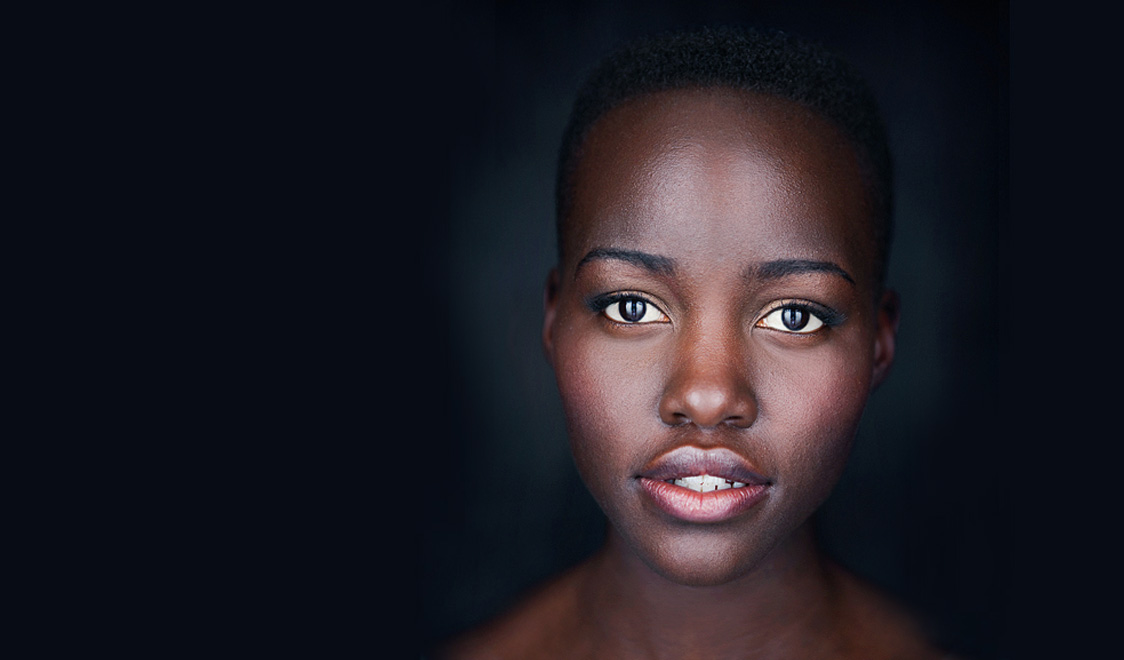
Perhaps the most important of those battles involves Lupita Nyong’o. She was not merely only the seventh black woman ever to win an Oscar in any category; she was the first black AFRICAN woman to win an Oscar full stop. When she said in her acceptance speech that “no matter where you are from, your dreams are valid”, this could be seen to suggest, building on Halle Berry’s speech 12 years earlier, that Hollywood’s door had now been opened to African women as well as American women of colour.
http://www.youtube.com/watch?v=pN3BEkHd1b8
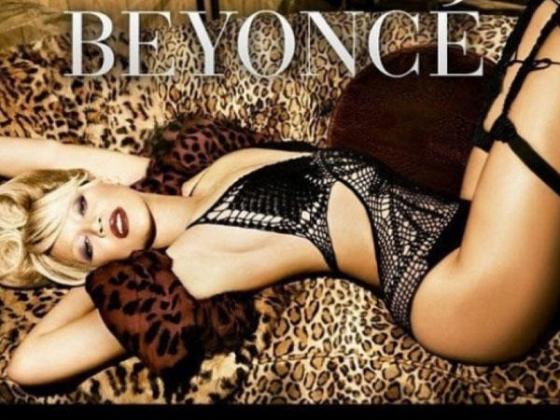
Higher profile ‘black’ film roles still almost always go to lighter-skinned actresses, and there’s a good chance that most (or any) of the ‘black’ girls you see in magazines or music videos (especially those that are held up as sex symbols) are also on the fairer side (Beyonce, light-skinned to begin with, seems to look paler and blonder every week).
Lupita herself said at a recent Essence Magazine awards ceremony that she was “teased” and “taunted” about her skin as a child and that she used to pray to God at night that she would “wake up lighter skinned”. She went on:
But the discovery of Sudanese British model Alek Wek eventually made Lupita realise her dark skin could be beautiful too, and she now hopes that she can similarly inspire other young women; hopes that having her “presence on (their) screen and (her) face in magazines” might lead “young girls on a beautiful journey” and that they will “feel the validation” of their “external beauty”, but “also get to the deeper business of being beautiful inside.”
And it’s not only in Hollywood or even The West that such awareness needs to be encouraged. Numerous African women (and men for that matter) still use special creams and lotions to make their skin lighter, with 77% of Nigerian women admitting to using such products (this is a multi-million dollar industry in India too). It is also still uncommon to see an African woman sporting her natural hair rather than a straight-haired weave or wig. For those that do, people all too quickly presume that they are either trying to make some kind of ‘statement’ or are just too lazy to deal with their ‘difficult’ hair ‘appropriately’.
There is still, then, a considerable amount of work that needs to be done to change enduring insidious and inherently racist ideas of what is and is not beautiful. Lupita Nyong’o cannot fight this battle on her own, but the recognition she has achieved is certainly a step in the right direction. It’s important that powerful bodies like The Academy continue to give a helping hand along the way and ensure that the legacy of dark-skinned African actresses in Hollywood is more than a mere flash in the pan.
So let’s hope the next twelve year period is a little brighter, or in another sense darker, than some of history’s previous ones.
This article was originally published on Urban Times.
About the Author





